On the evening of August 4, 1964, the United States stood at a crossroads.
President Lyndon B. Johnson appeared before the nation with alarming news: North Vietnamese patrol boats had allegedly launched a second unprovoked attack against the destroyer USS Maddox in the Gulf of Tonkin.
The announcement stunned the American public.
Within days, Congress passed the Gulf of Tonkin Resolution, granting the president broad authority to use military force in Southeast Asia without a formal declaration of war.
The resolution became the legal foundation for the massive escalation of American involvement in Vietnam.
Hundreds of thousands of troops would eventually be deployed.
More than 58,000 Americans would lose their lives.
Millions of Vietnamese would be caught in a conflict that reshaped global politics for generations.
But there was one problem.
The attack that justified the escalation may never have happened.
The First Incident
The controversy begins with an event that was very real.
On August 2, 1964, the USS Maddox was conducting intelligence-gathering operations in the Gulf of Tonkin off the coast of North Vietnam.
During the mission, three North Vietnamese torpedo boats approached the destroyer.
A confrontation followed.
Shots were fired.
Aircraft from the USS Ticonderoga assisted the Maddox, and the North Vietnamese vessels withdrew.
There is little dispute that this first encounter occurred.
The second encounter is where history becomes far murkier.
The Night of August 4
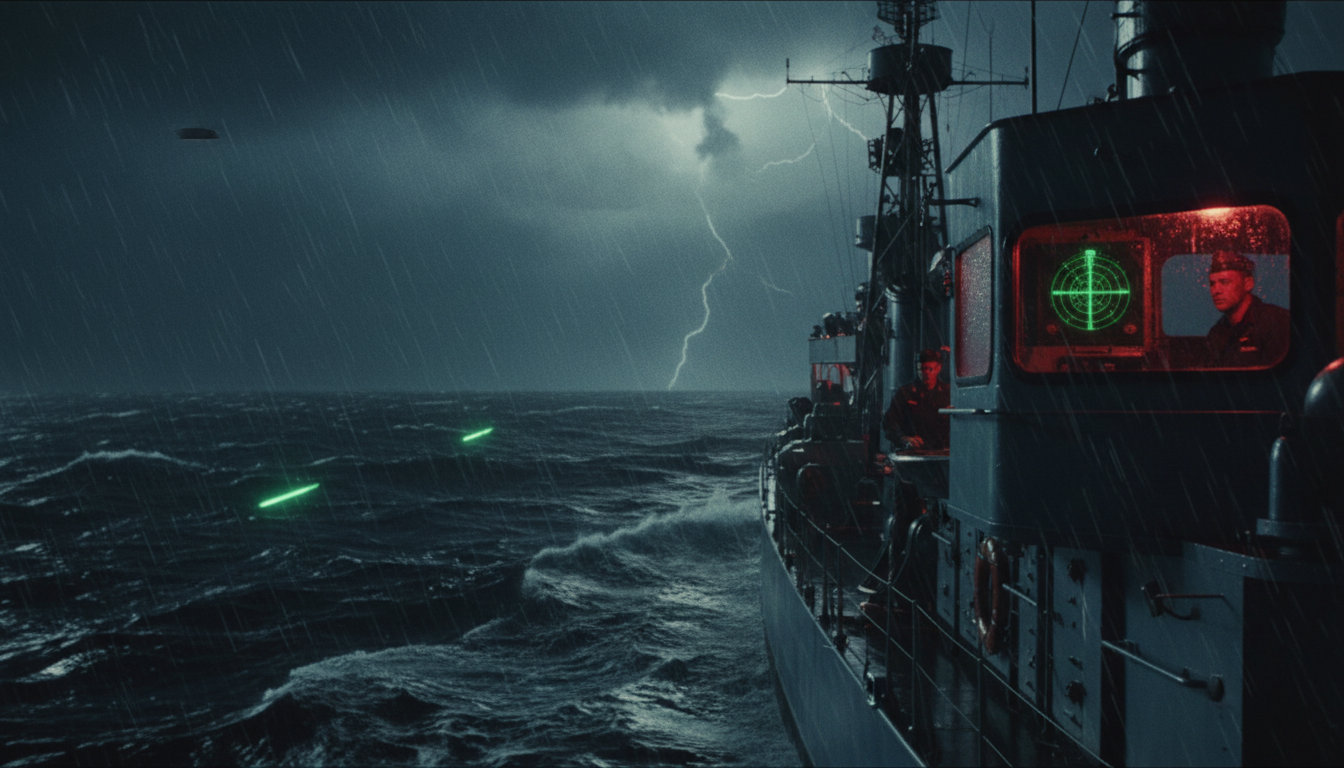
Two days later, reports began arriving from the USS Maddox and the USS Turner Joy suggesting that another attack was underway.
Radar operators detected possible targets.
Sonar crews reported what they believed were incoming torpedoes.
Weapons were fired into the darkness.
For several hours, confusion reigned across the Gulf of Tonkin.
Yet even while the incident was unfolding, serious doubts were already emerging.
Captain John Herrick, commander of the task force, sent messages questioning whether any attack had actually occurred.
Weather conditions were poor.
Radar returns appeared inconsistent.
Sonar operators may have been interpreting wave patterns and ship maneuvers as hostile contacts.
Herrick later recommended a complete review of the evidence before drawing conclusions.
His warning arrived too late.
Washington Responds
Inside Washington, the reports were treated as confirmation of North Vietnamese aggression.
President Johnson ordered retaliatory airstrikes against North Vietnam.
Congress quickly moved forward with the Gulf of Tonkin Resolution.
On August 7, 1964, the measure passed overwhelmingly.
Only two senators voted against it.
The resolution effectively handed the president authority to wage war without a formal declaration from Congress.
What began as a disputed naval encounter became the trigger for one of the largest military interventions in American history.
The Declassified Documents
For decades, questions lingered.
Historians, journalists, intelligence analysts, and military personnel continued examining the evidence surrounding the alleged second attack.
Then came a series of declassified documents.
In 2005, the National Security Agency released historical studies examining the Gulf of Tonkin events.
The documents revealed that intelligence reporting had been deeply flawed and that evidence supporting the second attack was far weaker than originally presented.
One NSA historian concluded that available signals intelligence had been misinterpreted and that no convincing evidence existed that North Vietnamese vessels attacked American ships on August 4.
The review found that critical information raising doubts about the attack had been overlooked, ignored, or excluded from official reports.
The result was one of the most consequential intelligence failures in modern American history.
Mistake, Misinterpretation, or Something More?
The central question remains controversial.
Did political leaders knowingly misrepresent the evidence?
Or did they act based on faulty intelligence during a rapidly developing crisis?
Some historians argue that the administration genuinely believed an attack had occurred.
Others contend that officials selectively used intelligence that supported a preferred policy outcome while minimizing contradictory information.
The reality may lie somewhere between those explanations.
What is clear is that key decision-makers possessed information suggesting significant uncertainty about the alleged attack.
Yet public statements often conveyed far greater confidence than the evidence justified.
The Resolution That Changed History
The consequences were enormous.
The Gulf of Tonkin Resolution became the legal basis for escalating U.S. military operations throughout Vietnam.
American troop levels increased dramatically.
Bombing campaigns expanded.
What had been a limited advisory role evolved into a full-scale war.
By the time the conflict ended, the human and political costs were staggering.
The incident became a case study in how intelligence assessments, political pressure, and military decision-making can combine to alter the course of history.
The Legacy of Tonkin
Today, the Gulf of Tonkin Incident remains one of the most frequently cited examples of disputed intelligence leading to military escalation.
Unlike many historical controversies, the debate is not whether uncertainty existed.
Declassified records clearly show that doubts about the second attack emerged almost immediately.
The controversy centers on how those doubts were handled and communicated to policymakers, Congress, and the public.
For critics, the episode demonstrates how governments can use incomplete information to justify major military actions.
For historians, it shows how decisions made during moments of crisis often depend on imperfect evidence.
And for many Americans, it remains one of the most consequential "what if" moments of the twentieth century.
If the second attack never occurred, then one of the defining turning points of the Vietnam War was built upon an event that existed primarily in radar screens, sonar readings, and assumptions made in the darkness of a stormy night.
References
Government Documents
-
National Security Agency Historical Study: "Spartans in Darkness: American SIGINT and the Indochina War, 1945–1975"
-
NSA Gulf of Tonkin Archive
Historical Sources
-
U.S. Department of State – Gulf of Tonkin Documents
-
National Archives – Gulf of Tonkin Resolution
Books and Research
-
Edwin E. Moïse, Tonkin Gulf and the Escalation of the Vietnam War
-
Robert Hanyok, Skunks, Bogies, Silent Hounds, and the Flying Fish
- NSA historical analysis of the incident.
- https://www.nsa.gov/news-features/declassified-documents/gulf-tonkin/
-
Encyclopaedia Britannica – Gulf of Tonkin Incident
Further Reading
-
Pentagon Papers Archive
-
Library of Congress – Vietnam War Collections
-
Miller Center, University of Virginia – Gulf of Tonkin
Note: The first Gulf of Tonkin incident on August 2, 1964, is well documented. However, extensive declassified evidence released by the NSA and later historical investigations concluded that the alleged second attack on August 4 almost certainly did not occur as originally reported. Historians continue to debate whether the resulting escalation stemmed primarily from intelligence failures, political motivations, or a combination of both factors.