The Warren Commission found a lone gunman; House investigators later said probable conspiracy, on disputed acoustics. The dispute since then runs through four official records and two voices from outside them: a researcher who defends the acoustic finding, and the House committee's own chief counsel, who later wrote that the CIA had obstructed his committee. The National Archives' 2025 release of withheld records is the latest step.
The Warren Commission's conclusions, 1964
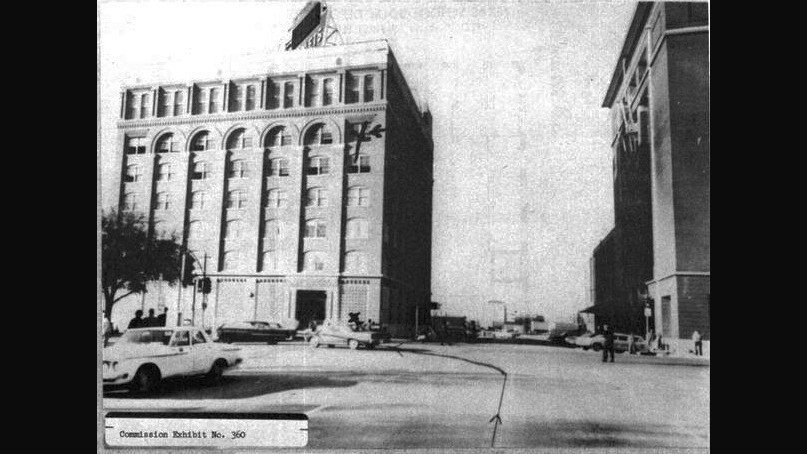
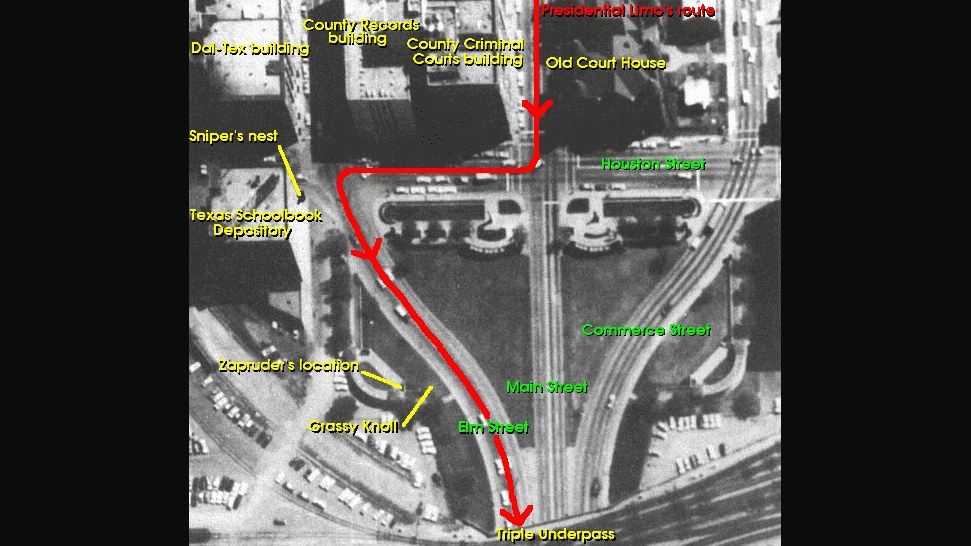
Chapter 1 of the Warren Commission report, "Summary and Conclusions," states that the shots that killed President Kennedy and wounded Governor Connally were fired from the sixth floor window at the southeast corner of the Texas School Book Depository, and that there is "no credible evidence" of shots from the Triple Underpass, ahead of the motorcade, or from any other location. The weight of the evidence, it says, indicates three shots, and there is "very persuasive evidence" that one bullet caused the President's throat wound and the Governor's wounds, though Connally's testimony gave rise to some difference of opinion. It found no evidence that Lee Harvey Oswald or Jack Ruby was part of any conspiracy, domestic or foreign, and concluded that Oswald acted alone. It added that because of the difficulty of proving negatives, the possibility of others being involved "cannot be established categorically."
Warren Commission, Chapter 1: https://www.archives.gov/research/jfk/warren-commission-report/chapter-1
The House committee's findings
The Summary of Findings of the House Select Committee on Assassinations agrees that Oswald fired three shots and that the second and third struck the President. It then states: "Scientific acoustical evidence establishes a high probability that two gunmen fired at President John F. Kennedy," and that the committee believes the President "was probably assassinated as a result of a conspiracy," while it is "unable to identify the other gunman or the extent of the conspiracy." It found that the Soviet and Cuban governments were not involved, that anti-Castro Cuban groups and organized crime, as groups, were not involved though individual members might have been, and that the Secret Service, FBI and CIA were not involved. It found that the Warren Commission failed to investigate the possibility of conspiracy adequately, partly because other agencies did not give it all relevant information, and presented its conclusions in a fashion "too definitive."
HSCA Summary of Findings: https://www.archives.gov/research/jfk/select-committee-report/summary.html
The 1982 acoustics review
The National Academies' page for the Report of the Committee on Ballistic Acoustics (1982) says the Dallas police recorded sounds from an open microphone during the assassination, and that two research groups working for the House committee concluded with 95 percent probability that the recording held impulses showing a shot from the grassy knoll. The National Research Council committee studied those reports and the recordings. Its findings, as the National Academies print them: the acoustic analyses do not demonstrate a grassy knoll shot, there is no acoustic basis for the 95 percent claim, the impulses were recorded about one minute after the President had been shot and the motorcade told to go to the hospital, and reliable acoustic data do not support a conclusion that there was a second gunman.
Committee on Ballistic Acoustics, 1982: https://www.nationalacademies.org/publications/10264
The case for the recording
In the seventh edition (2022) of his essay "The HSCA's Acoustical Evidence: Proof of a Second Gunman," Michael T. Griffith wrote that the committee hired Bolt, Beranek and Newman to study the police dictabelt, that Mark Weiss and Ernest Aschkenasy of Queens College reviewed the work, and that a reconstruction in Dealey Plaza on 20 August 1978 matched one impulse to the grassy knoll. He wrote that the echo patterns occur in the correct topographic order, that the open microphone moved at about the limousine's speed, and that supersonic N-waves appear only where the microphone could record them. He argued that the 1982 panel did not examine items that supported the committee, used a faulty transcript and shifted times on the tape, and had no acoustical scientist among its members. He also noted that critics point to a "hold everything" transmission as showing the impulses came a minute late.
Griffith, The HSCA's Acoustical Evidence: https://maryferrell.org/archive/essays/mgriffith/hscaacous.pdf
The chief counsel's second thoughts
G. Robert Blakey, chief counsel to the House committee, told FRONTLINE in 1993 that the case against Oswald was "open and shut." In an addendum published in 2003 he wrote: "I am no longer confident that the Central Intelligence Agency co-operated with the committee." He wrote that the Agency did not tell the Warren Commission or the committee of its financial and other connections with the DRE, an anti-Castro group Oswald had dealt with, which he called "willful obstruction of justice," and that the officer brought in to help the committee find documents, George Joannides, had been the Agency's contact with the DRE at the time. He concluded that he no longer believed the committee was able to conduct an appropriate investigation of the Agency and its relationship to Oswald.
FRONTLINE interview with G. Robert Blakey: https://www.pbs.org/wgbh/frontline/article/interview-g-robert-blakey/
The 2025 release
The National Archives states that on 18 March 2025, under President Donald Trump's directive of 17 March and in support of Executive Order 14176, all records in the President John F. Kennedy Assassination Records Collection previously withheld for classification were released, without redactions. Its page lists releases in March and April 2025 and another of 11,022 pages on 30 January 2026, and it notes that records under court seal, grand jury secrecy or tax rules fall under sections 10 and 11 of the 1992 records act.
National Archives, 2025 release: https://www.archives.gov/research/jfk/release-2025
Where the record stands
The 1964 report found one gunman; the House committee, on acoustic evidence, found a probable second gunman it could not name; the 1982 panel found that the impulses were recorded about a minute after the President had been shot. The case for a conspiracy, in these doors, rests on the committee's acoustic finding as Griffith defends it and on Blakey's account of the CIA's conduct toward investigators. The government's records, now released without classification redactions, stand beside all of them.