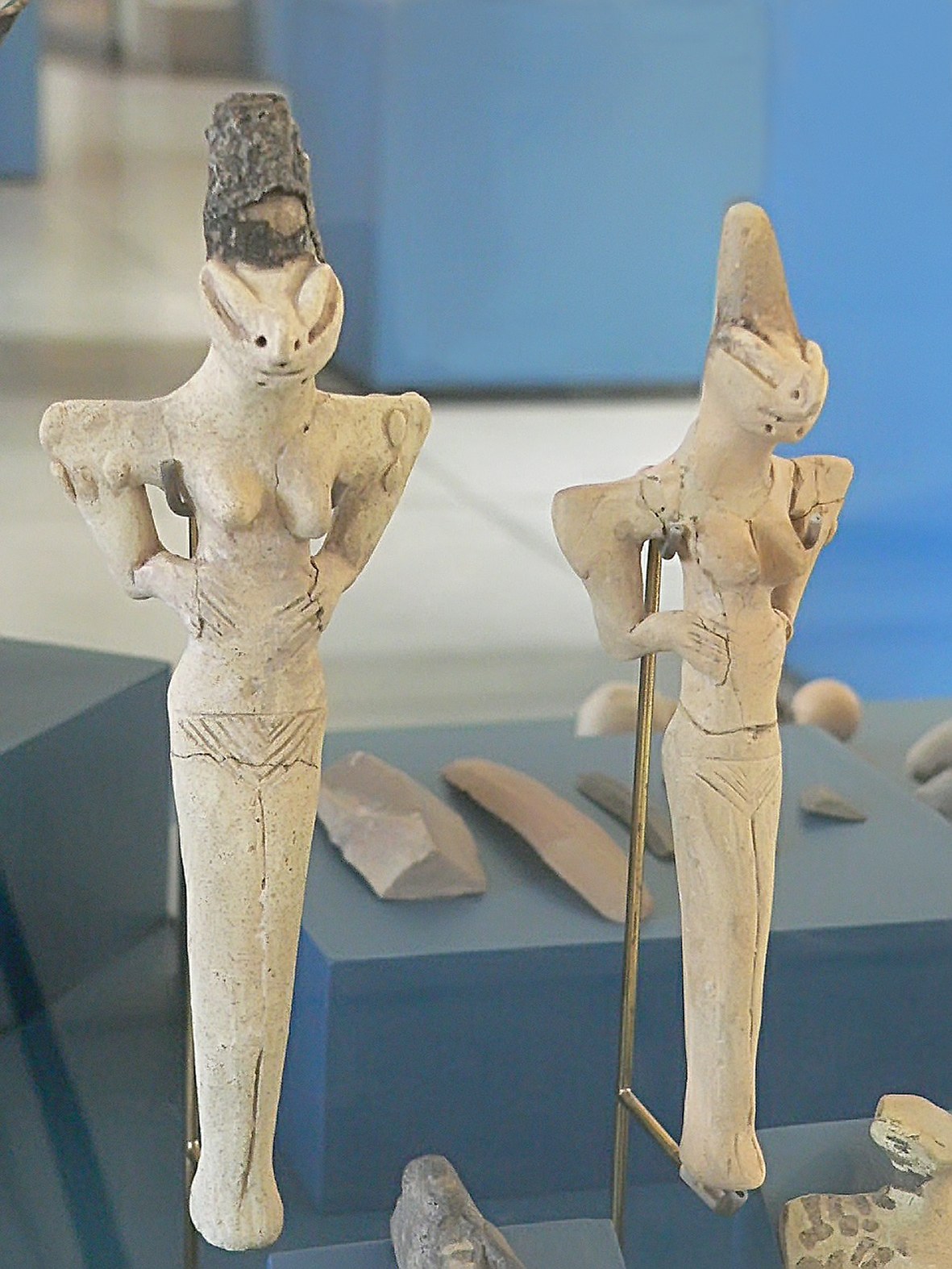
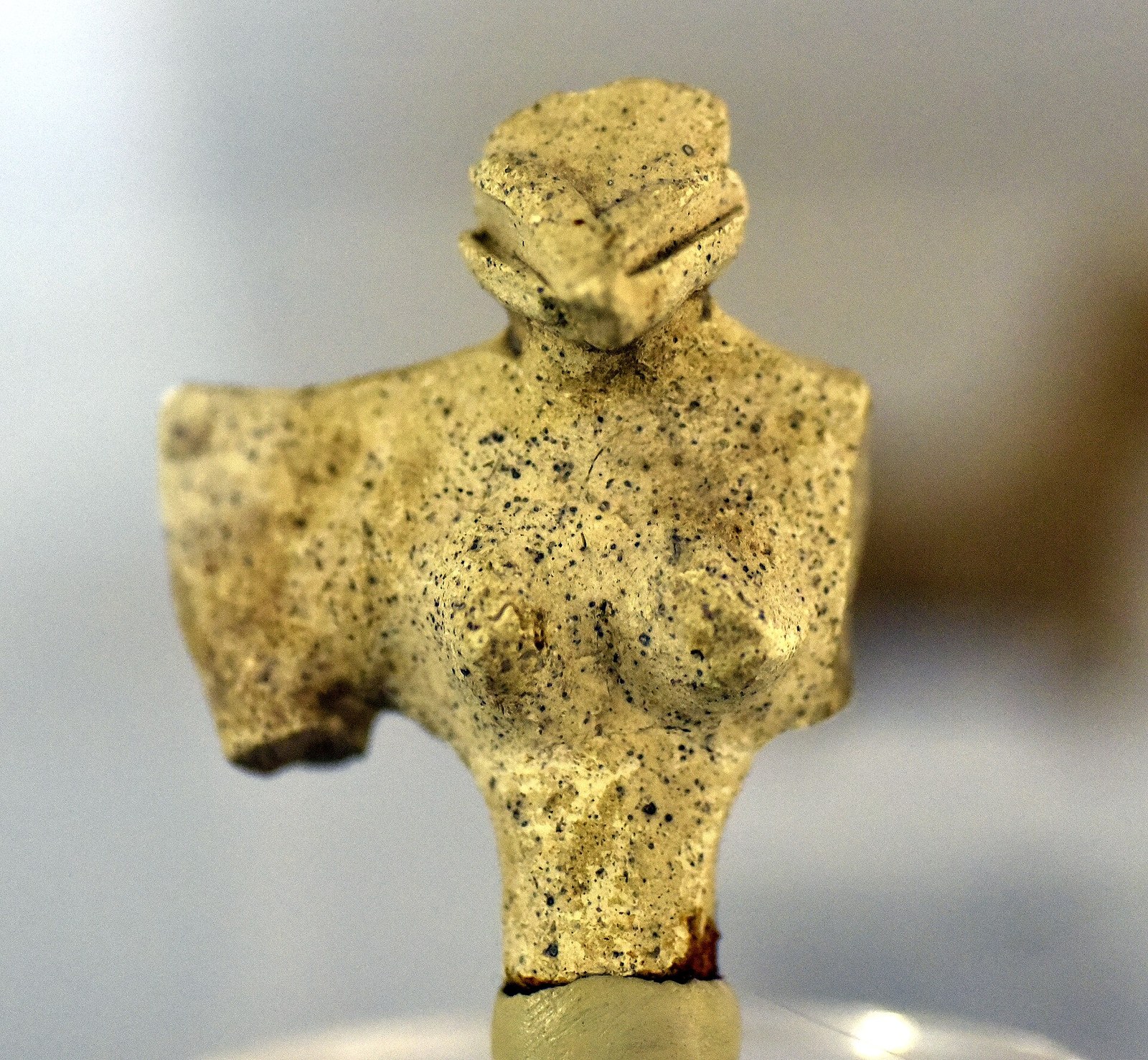
Clay figurines of the Ubaid period, found at Ur and other sites in southern Iraq, have slender bodies and tall domed heads. Their excavator described those heads as absolutely reptilian in character. Museum catalogues date examples from the sixth and fifth millennia BC, and later scholarship has offered other readings of the same faces. Adherents see portraits of reptilian beings, some of them the Anunnaki. This page sets out the excavation record, the museum holdings, and both readings, in the sources that state them.
The excavation record
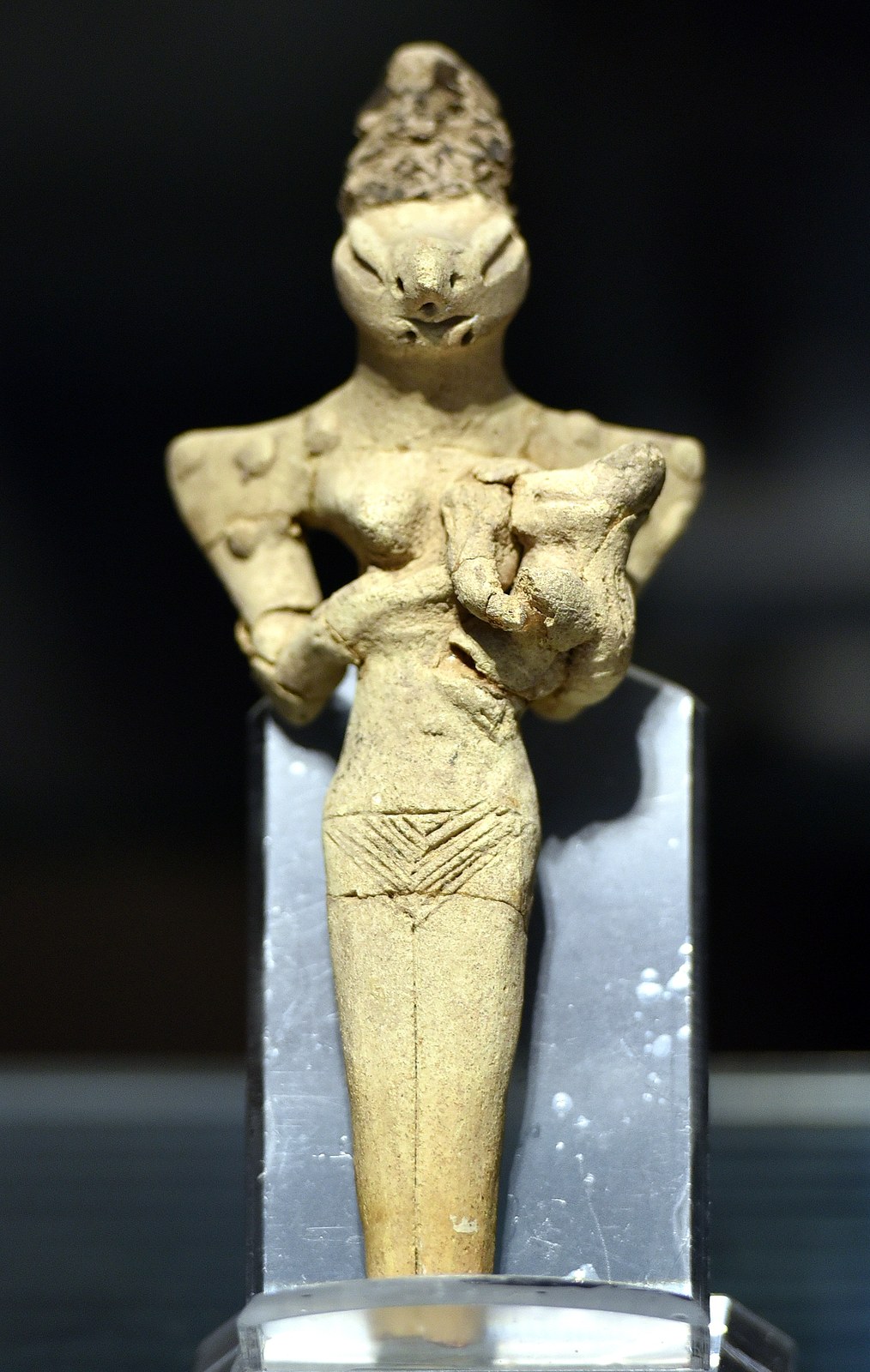
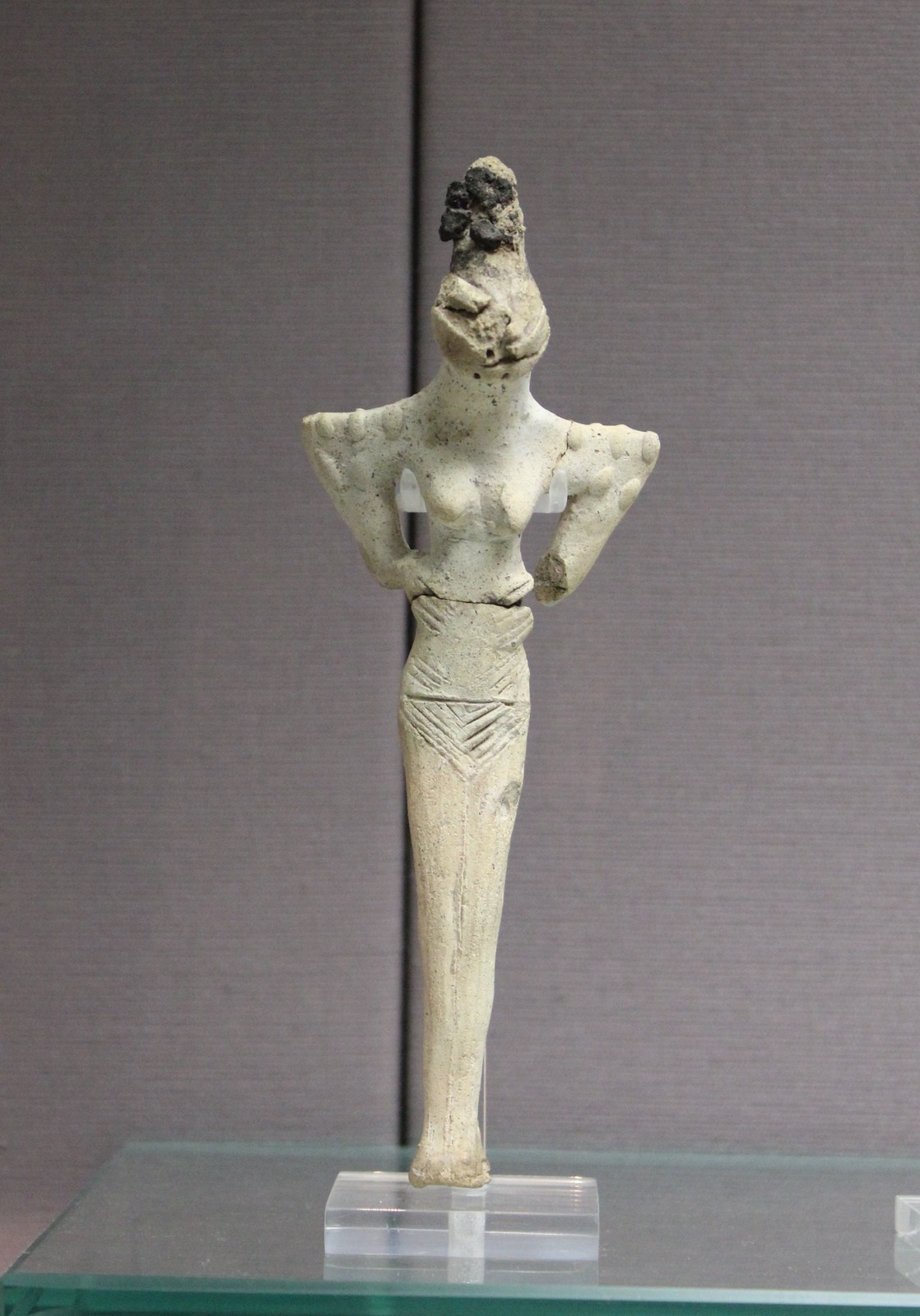
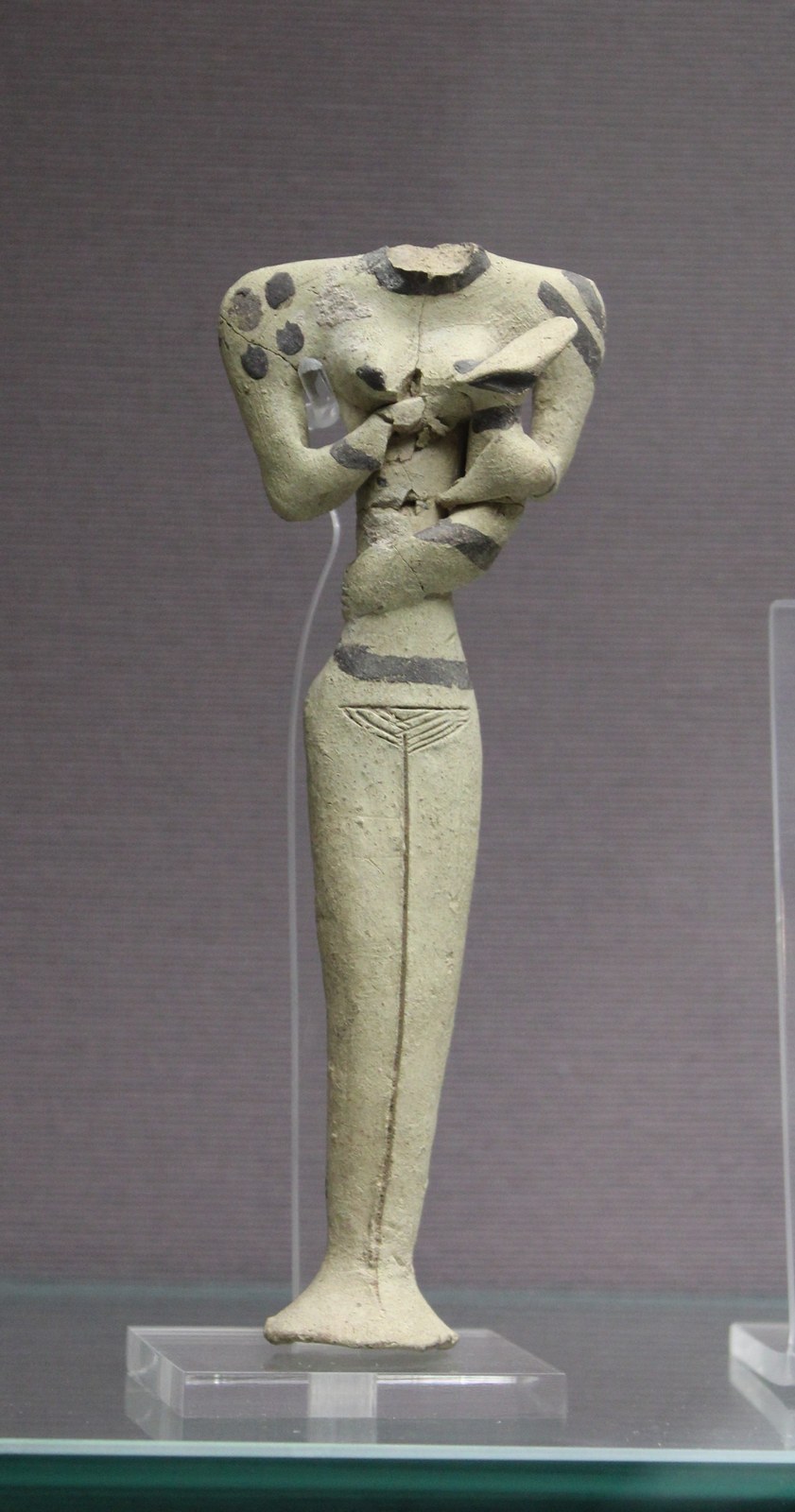
Sir Leonard Woolley's work at Ur reached deep pre-flood levels and graves. He describes nude female figures, some holding an infant to the breast, with painted or applied tattoo marks, and an elongated domed skull "originally covered with bitumen to represent hair." Of the head he wrote: "The rest of the head, unduly large, is absolutely reptilian in character." He describes a high cranium, membrane-like earless sides, thin tightly-drawn lips, a generally snake-like profile and enormous slit-like, slanting eyes. Two heads, catalogued as U.15398 and U.15516, have human faces instead.
Source: Sir Leonard Woolley, Ur Excavations IV: The Early Periods (British Museum and University Museum, Philadelphia): https://archive.org/details/urexcavations4
What Woolley thought they were
In his preliminary report Woolley called the subject "some kind of half-human demon." In The Early Periods he holds that the reptilian type was "adopted deliberately," that the animal figures are votive, and that the human figures, placed in graves and presenting features "emblematic of the gods of the Underworld," may be read as chthonic deities. His footnote cites Ningizzida, a god of the Underworld who has the snake as an attribute.
Source: Woolley, Ur Excavations IV: The Early Periods: https://archive.org/details/urexcavations4
Dating and museum holdings
The British Museum catalogue for 122872 dates the object 5900BC to 4000BC, places it on display in Room 56, Display Case 1, and describes a fired-clay woman "with hands on hips and reptilian head," hair represented by bitumen, excavated by Woolley at Ur, height 15 centimetres. The Penn Museum's 31-16-734, in the Middle East Galleries, is dated ca. 4500 to 4000 BCE and wears "a high coiffure or headdress originally covered with bitumen." Leon Legrain's 1944 bulletin describes the Penn group's "curious slanting eyes" and "bird-like heads and bitumen wigs."
Sources: British Museum, figurine 122872: https://www.britishmuseum.org/collection/object/W_1930-1213-172 ; Penn Museum, Human Figurine 31-16-734: https://collections.penn.museum/collections/object/136420 ; Leon Legrain, "The al-'Ubaid Painted Pottery," University Museum Bulletin, 1944: https://www.penn.museum/sites/bulletin/2590/
Where they come from
Aurelie Daems, writing in 2010, places Ubaid figurines in southern Mesopotamia: Eridu, al-'Ubaid, Tell el-'Oueili, Tello, Ur, Uruk, Rejibeh X, Hajji Muhammad, Nippur and Tell Uqair. Of 121 realistically modelled southern Ubaid figurines, about 79 percent are female, 4 percent male and 17 percent sexless. At Ur she counts 25 figurines; of 49 Ubaid 4 graves, six had one figurine and grave PFG/T had two. At Eridu, Hall's 1923 survey found a "drab pottery figure of a man," and the later excavation found nine more human figurines, one of them male and inside a grave.
Source: Aurelie Daems, "A Snake in the Grass: Reassessing the Ever-Intriguing Ophidian Figurines," in Beyond the Ubaid, Studies in Ancient Oriental Civilization 63, Oriental Institute of the University of Chicago, 2010, pp. 149-161: https://www.academia.edu/5150690/A_Snake_in_the_Grass_Reassessing_the_ever_intriguing_ophidian_figurines
Later readings of the heads
Later scholarship has offered other readings of the heads. Bitumen headdresses are already in Woolley, Legrain and the Penn and British Museum labels, not in Daems 2010. Daems, citing David Wengrow and P. R. S. Moorey, treats artificial cranial modification, an exaggerated hairdo, or ritual masks as open possibilities, and she warns that "ophidian" is a modern designation, not a proven identity. She also notes that many figurines were "too easily connected with a mother-goddess cult" and called fertility figures. Daems and Karina Croucher, writing for Encyclopaedia Iranica, explain infant head shaping and note elongated head shapes common on many Ubaid 4 figurines.
Sources: Daems 2010, as above; Aurelie Daems and Karina Croucher, "Prehistory of Iran: Artificial Cranial Modifications," Encyclopaedia Iranica: https://www.iranicaonline.org/articles/prehistory-of-iran-artificial-cranial-modifications/
The adherents' reading
Adherents read the faces as portraits of reptilian beings, some naming them the Anunnaki. The six sources above do not make that claim; it belongs to the adherents. Zecharia Sitchin's published identification of the Anunnaki from the tablets is a separate reading, and is not a claim about these figurines.
What stays contested
The figurines, their graves, and the museum dates are documented. Woolley called the heads absolutely reptilian in character and read the human figures as chthonic deities. Daems warns that the snake-like label is a modern designation, and reviews masks, hair, and infant head shaping as alternatives. Adherents answer that the potters were portraying real reptilian beings. What the potters were trying to show remains the open question.