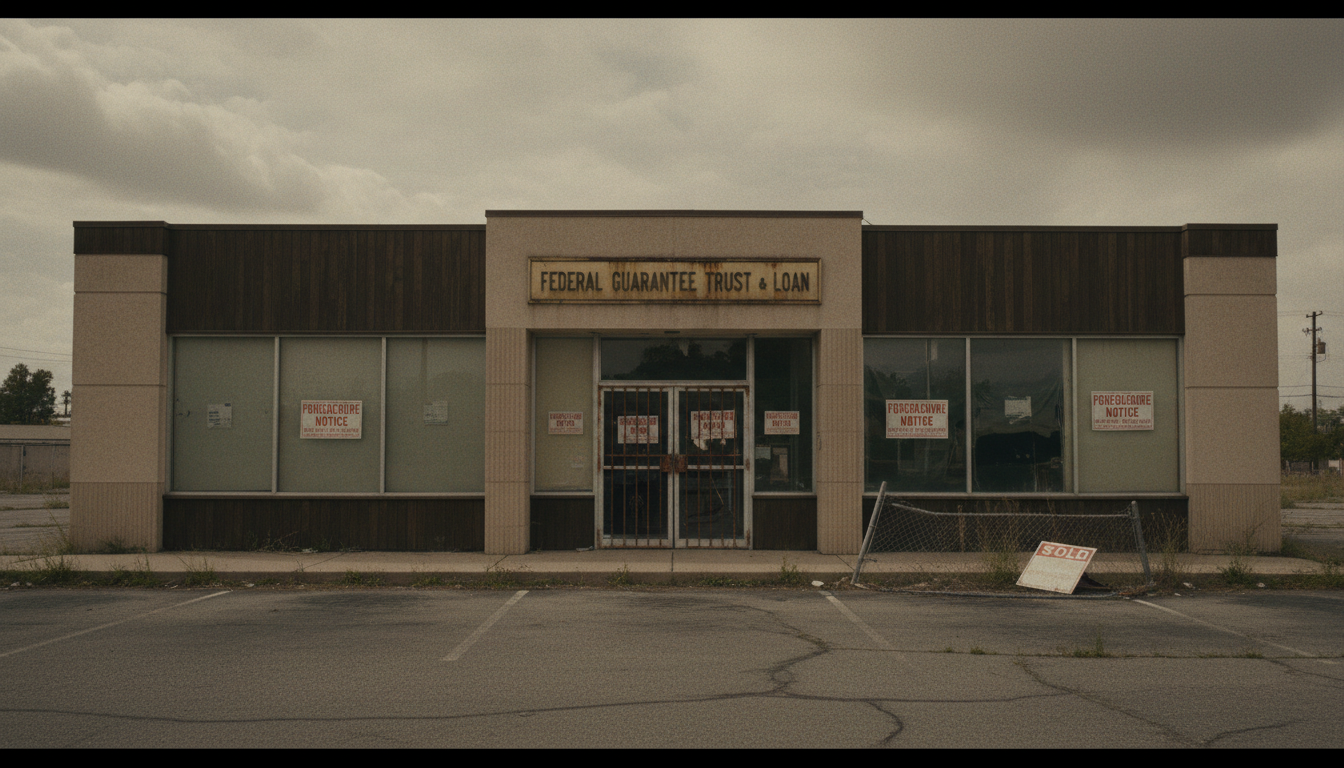
Savings and Loan Crisis
By the early 1990s, the Resolution Trust Corporation was selling off the carcasses of failed thrifts across the United States. More than a thousand savings-and-loan institutions had collapsed. Deposit insurance socialized losses. Speculative lending and outright fraud had privatized the upside.
Deregulation Meets Moral Hazard
Interest-rate shocks crushed thrifts that funded long mortgages with short deposits. Policymakers loosened asset rules to let them earn their way out. Many gambled on junk assets instead. Deposit insurance capped downside for managers playing with other people's money.
Fraud and the Keating Orbit
Charles Keating's Lincoln Savings became the emblem: political donations, Senate intervention, and a thrift stuffed with risky assets. The Keating Five ethics case fixed public attention on influence. It was not the only fraud file—only the most televised.
Taxpayer Residue
GAO and budget scorers argued for years about final cost, especially interest on financing. Order-of-magnitude agreement remains: this was a major public bill, not a boutique scandal.
Later Echoes
Incentive geometry from the S&L decade shows up again in later crises. Archive links to Enron and BCCI are about financial opacity and political proximity—not identical instruments.
The S&L crisis is documented failure of incentives, supervision, and ethics. Debates over exact dollar tallies do not reopen whether the industry burned.
FDIC’s historical S&L crisis pages are at https://www.fdic.gov/bank/historical/s&l/; FRASER hosts contemporary regulatory documents at https://fraser.stlouisfed.org/.
FDIC histories and Keating-five records settle moral hazard plus fraud in the thrift collapse; they do not make every later bank failure a carbon copy.