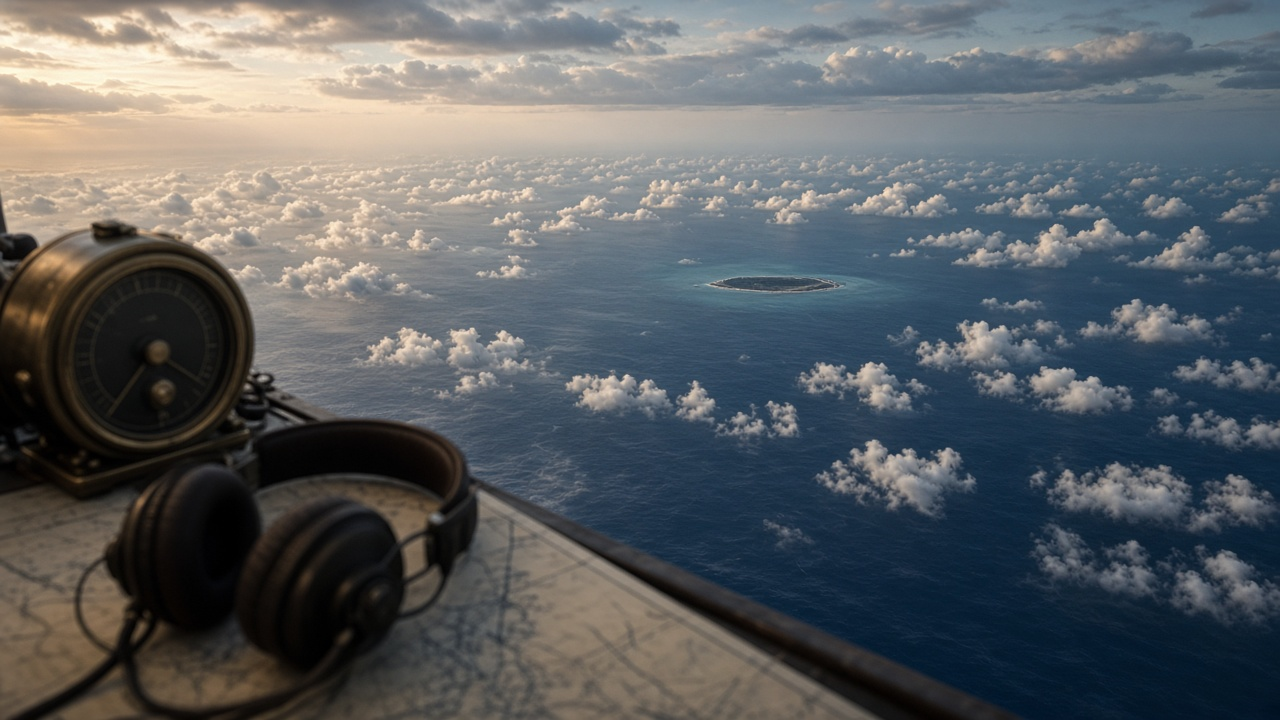
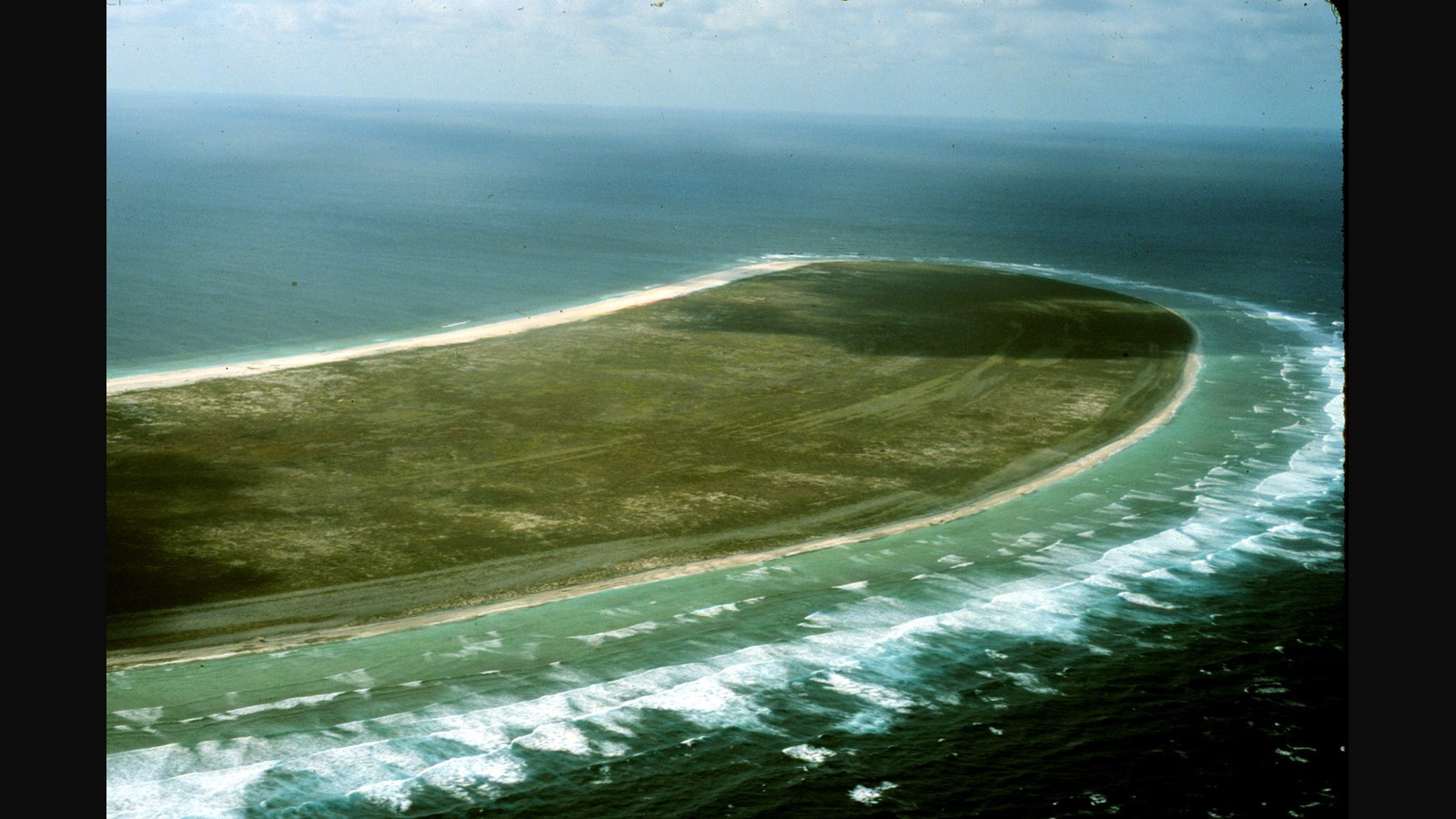
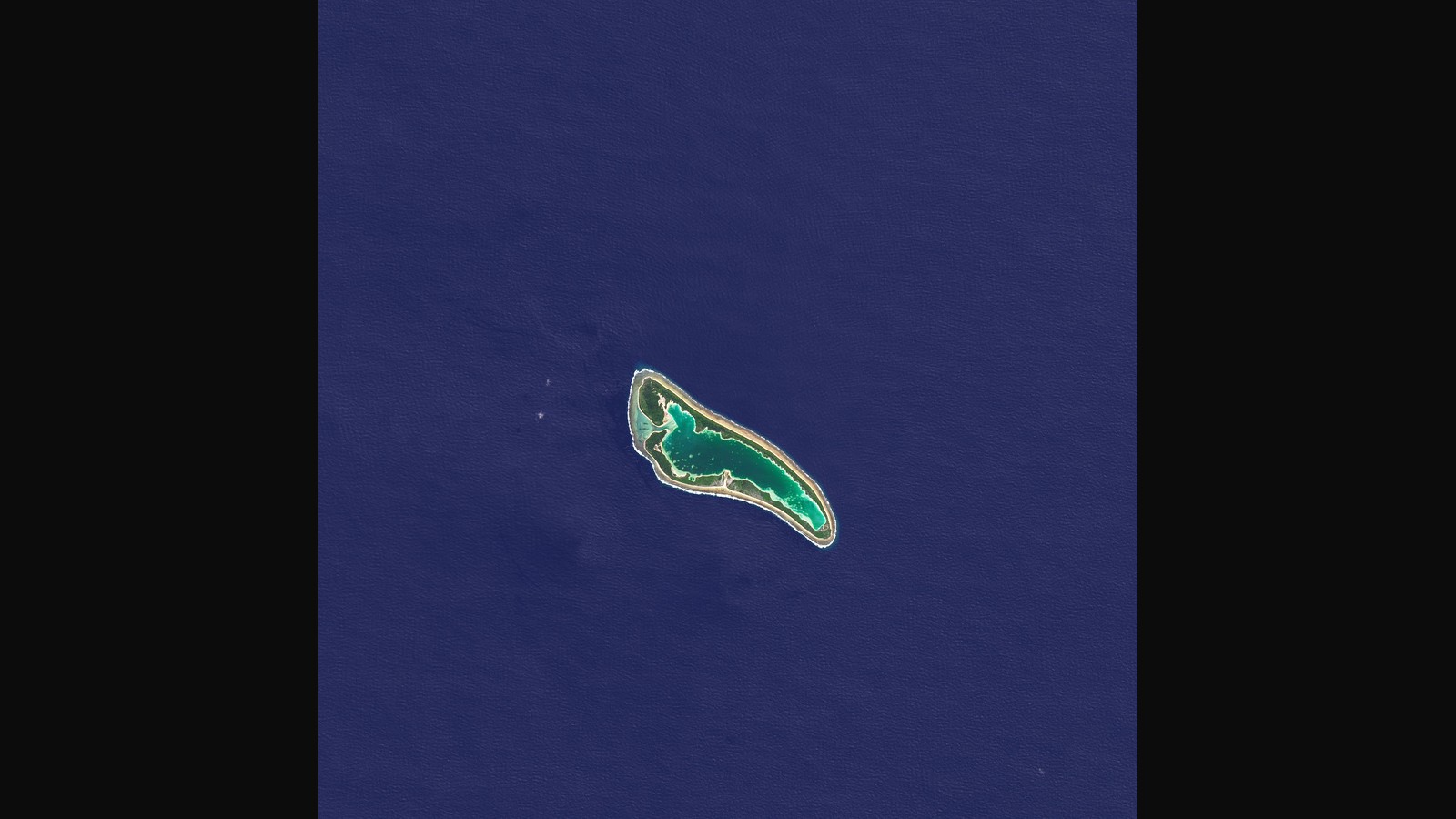
Some believe Amelia Earhart and Fred Noonan did not simply run out of fuel and sink near Howland Island in July 1937. Adherents split into two camps. One holds that the fliers came down in the Japanese-held Marshall Islands and died in captivity. The other holds that they landed on the reef of Gardner Island, now Nikumaroro, and died there as castaways. Both camps point to radio bearings, witnesses and artifacts, and the federal government is still releasing its Earhart records.
"On the line 157 337"
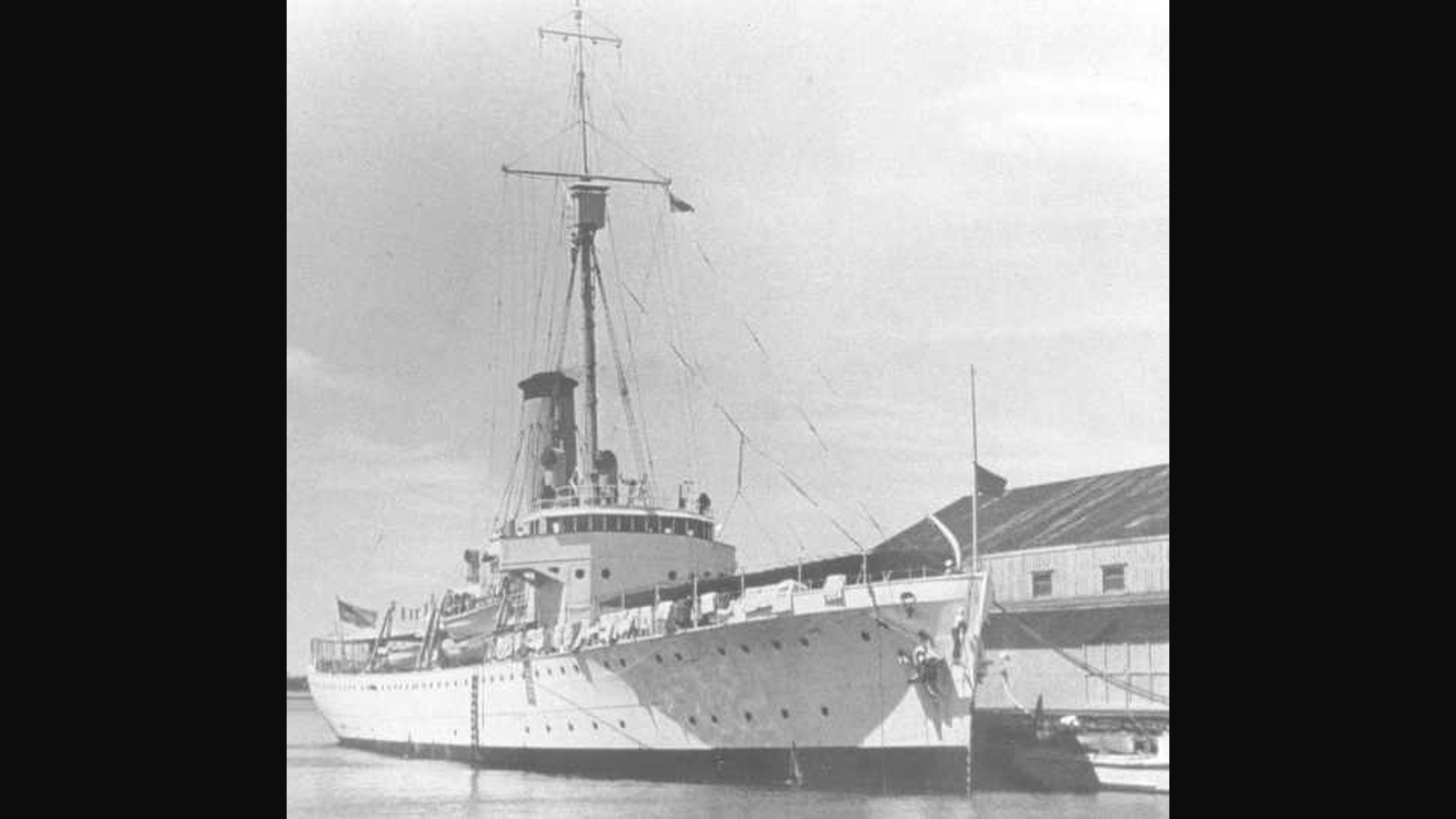
The National Archives at College Park holds the radio log of the Coast Guard cutter Itasca, which waited off Howland Island to guide the Electra in. The log was kept by Leo G. Bellarts. Through the night, it records the exchanges with call sign KHAQQ: trouble hearing, flying at 1,000 feet, reports of being 200 miles out.
At about 8:43 a.m. the last message was logged: "we are on the line 157 337 wl rept msg we wl rept." It was the last message the log records. Everything that followed, every search and every theory, begins with that line.
https://www.archives.gov/college-park/highlights/earhart-log
The official search
The Navy and Coast Guard search report for July 2 to 18, 1937, released by the National Archives in December 2025, sets out the official account. The search ran in three phases. First came the waters north of Howland, based on the Itasca's "well reasoned belief that the plane was north of and fairly near Howland." Then came the Phoenix Islands to the southeast, driven by radio intercepts and bearings. Last, the Lexington group covered a large square west and northwest of Howland. The battleship Colorado's work, the report says, "definitely" established that neither plane nor passengers were ashore in the Phoenix Group.
Its conclusion: "it is regretably unreasonable to conclude other than that the unfortunate fliers were not above water upon conclusion of the search." The report adds that later analysis discredited the radio intercepts that drove the early search, and complains of "false messages, interference, and confusion on critical frequencies." Adherents read those discarded intercepts the other way: as signs the plane was down on land, still transmitting.
"She landed at Mili"
The capture theory reached a wide audience in the 1960s through CBS correspondent Fred Goerner's book The Search for Amelia Earhart, which National Geographic calls "a bible of sorts to many Marshall Islands believers." Goerner argues that Earhart and Noonan "were taken prisoner by the Japanese after landing in the Marshalls and transported by ship to Saipan, where they died in captivity."
National Geographic's 2015 profile follows one of his heirs, Dick Spink, a science teacher who first went to the Marshalls on business and kept hearing the same story. "They say, 'She landed at Mili,'" he told the magazine. He interviewed dozens of Marshallese, narrowing the site to a stretch of coral shore where two fishermen said they saw her land. In their account the plane was later dragged to a Japanese transport ship. Spink has spent $50,000 of his own money on the search.
The FBI and the navigator's bookcase
The FBI's released file on Earhart contains a laboratory report dated December 31, 1990, sent to The International Group for Historic Aircraft Recovery (TIGHAR), which searches for the plane on Nikumaroro. The Bureau's laboratory examined a navigator's bookcase "suspected of having been part of Amelia Earhart's lost aircraft." It found paint pigments including lead chromate and titanium dioxide, and reported that "nothing was found which would disqualify this artifact as having come from the Earhart aircraft."
That is not a confirmation, and it does not claim to be one. But for castaway adherents it is a federal laboratory declining to rule an object out. The quotations here come from the first pages of the released file.
https://vault.fbi.gov/amelia-mary-earhart/
A rock on the seabed
The theory that the plane went into the sea has had its own recent test. In January 2024, NPR reports, the South Carolina company Deep Sea Vision announced that a sonar survey had captured an image of what it believed might be the Electra, on the ocean floor about 100 miles off Howland Island. The company had used an unmanned underwater drone and a 16-member crew in late 2023.
In November 2024 the company said the target was "just a natural rock formation." The plane was still missing, and the question of where it went was open again.
https://www.npr.org/2024/11/25/nx-s1-5205033/amelia-earhart-plane-rock-formation
Trees on the Taraia Peninsula
The newest chapter came on Nikumaroro itself. On October 18, 2026, Purdue University reported the results of the Taraia Object expedition, run with the Archaeological Legacy Institute. A shape seen in satellite imagery of the lagoon since 2020 turned out to be, most likely, a deposit of large trees, its shine due to a carbonate veneer. The team found no conclusive aircraft wreckage. It did recover a steel tube about 30 inches long near the peninsula, still under study.
The team did not give up its view. It "reiterated its collective belief in the broader castaway hypothesis," pointing to radio bearings from the Navy, the Coast Guard and Pan American that converge on Nikumaroro; to a 2018 analysis, in Purdue's summary, of bones found on the island in 1940, "strongly suggesting they belong to a woman of Earhart's stature"; to 1930s artifacts including a woman's shoe, a compact and a freckle cream jar; and to the "Bevington Object," a photo anomaly on the reef. Nearly nine decades on, the records are still coming out. Will they finally say where the Electra came down?