


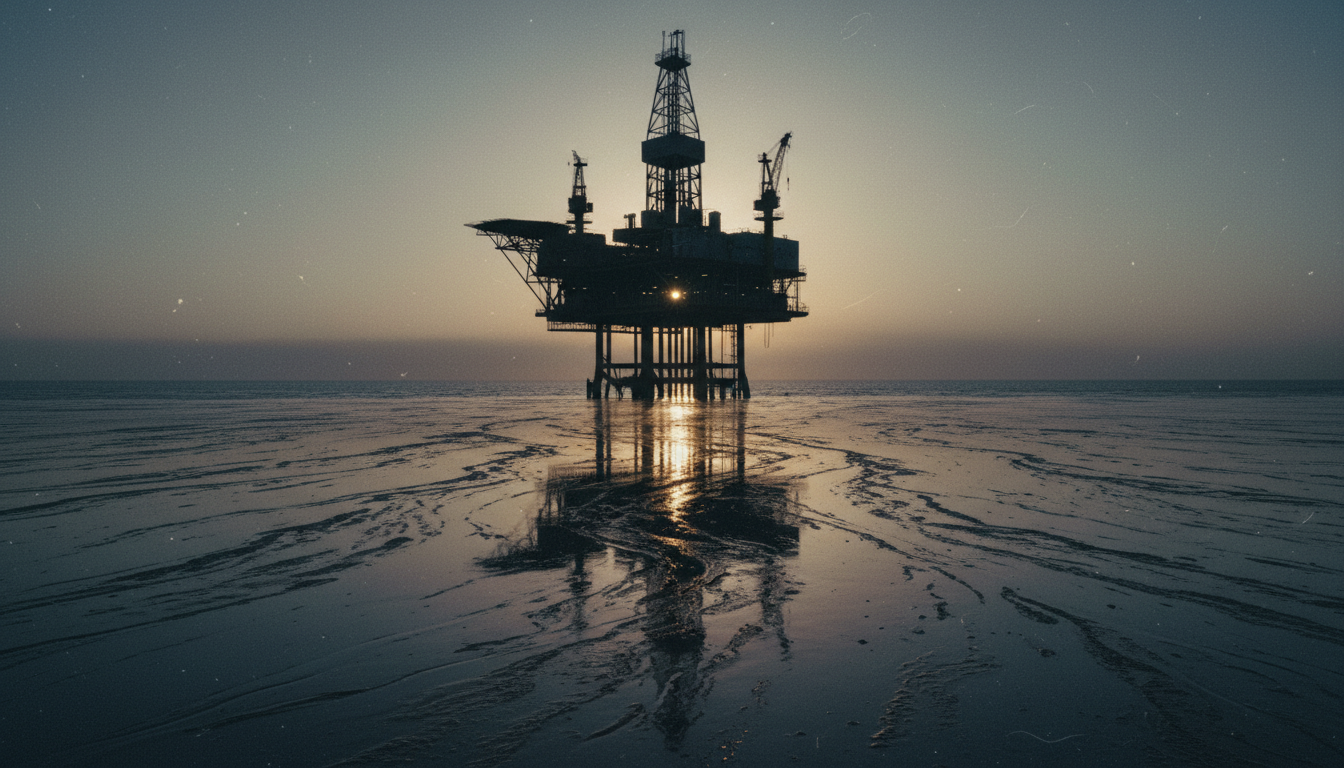
On 20 April 2010 the mobile offshore drilling unit Deepwater Horizon exploded on the Macondo well in the Gulf of Mexico. Eleven workers died. The blowout ran for eighty-seven days. Public argument after the fire often collapsed into blame theater—BP versus Transocean versus Halliburton, regulators asleep, executives spinning. The Archive file is narrower. Coast Guard and Interior investigators, a presidential commission, an Eastern District of Louisiana multidistrict docket, and a later consent decree fought over what the evidence actually showed: cement design, negative-pressure tests, blowout-preventer failures, and how far civil and criminal liability would stretch once the paper trail was forced open.
The Blowout, Not the Slogan
Macondo sat in Mississippi Canyon Block 252 under BP Exploration & Production as lease operator. Transocean owned and operated the Deepwater Horizon. Halliburton performed cementing. The temporary abandonment sequence on 20 April ended in a loss of well control, explosion, fire, and the rig’s sinking. Oil flowed into the Gulf until the well was capped in mid-July. Caption-ready frames: the burning MODU, the BOP stack on the seafloor, the surface slick. Those images are not the evidence fight. The fight is what hearings, labs, and later court findings said about why the barriers failed.
Official Posture: Joint Investigation and a Commission
Homeland Security and Interior convened a Joint Investigation Team of the U.S. Coast Guard and the Bureau of Ocean Energy Management, Regulation and Enforcement (BOEMRE)—the post-MMS offshore safety successor later split into BSEE and BOEM. Volume I covered Coast Guard jurisdiction over the MODU casualty. Volume II covered Interior jurisdiction over the blowout’s causes and regulatory violations. Seven public hearing sessions took testimony from more than eighty witnesses. The JIT’s September 2011 final release is the federal investigative door for cause findings against BP, Transocean, and Halliburton under offshore safety regulations.
BSEE JIT final-report announcement: https://www.bsee.gov/site-page/deepwater-horizon-joint-investigation-team-releases-final-report
BOEMRE/DOI Volume II PDF: https://www.bsee.gov/sites/bsee.gov/files/reports/blowout-prevention/dwhfinaldoi-volumeii.pdf
BOEM press PDF on the JIT release (14 Sep 2011): https://www.boem.gov/sites/default/files/boem-newsroom/Press-Releases/2011/press0914.pdf
Separately, Executive Order 13543 created the National Commission on the BP Deepwater Horizon Oil Spill and Offshore Drilling. Its January 2011 report to the President—Deep Water: The Gulf Oil Disaster and the Future of Offshore Drilling—is the civilian commission spine: root-cause narrative, response failure, and reform recommendations printed through the Government Publishing Office.
National Commission final report (GPO): https://www.govinfo.gov/content/pkg/GPO-OILCOMMISSION/pdf/GPO-OILCOMMISSION.pdf
What the Paperwork Actually Shows
Volume II does not read as a press softener. It walks cement slurry design and testing, the negative-pressure test misread, hydrocarbon ingress, and blowout-preventer performance under real conditions. It concludes that conduct by BP, Transocean, and Halliburton violated federal offshore safety regulations under BOEMRE jurisdiction and recommends heightened standards. The Commission’s Deep Water report places the same technical failures inside a culture of risk acceptance and a regulatory regime that had not kept pace with deepwater drilling. Those are agency and commission findings—not activist captions.
The Eastern District of Louisiana’s MDL No. 2179 became the civil litigation warehouse: United States Clean Water Act and Oil Pollution Act claims, private multidistrict proceedings, phase findings on gross negligence and willful misconduct, and the eventual April 2016 consent decree among BPXP, the United States, and the five Gulf States. The court’s oil-spill portal is the docket map for what survived settlement and what the governments forced into open judgment language.
EDLA MDL 2179 portal: https://www.laed.uscourts.gov/oilspill/oilspill.htm
NOAA’s Deepwater Horizon restoration planning pages and the Trustees’ Final Programmatic Damage Assessment and Restoration Plan / PEIS document natural-resource injury claims that ran beside the penalty fight—another official spine for “what the spill did” once lawyers stopped arguing only about days of discharge.
NOAA Gulf restoration plan door: https://gulfspillrestoration.noaa.gov/restoration-planning/gulf-plan
Why the Evidence Fight Stayed Contested
Early corporate messaging competed with incomplete flow-rate estimates, sealed technical exhibits, and a regulator (MMS) whose dual mandate for leasing revenue and safety had already been politically radioactive. The JIT and Commission forced testimony and document production into public sessions; MDL 2179 forced findings of fact that settlements alone could not erase. The so-what is not a cartoon of “they hid the oil.” It is the documented gap between first-week spin and multi-year agency, commission, and court paper that named regulatory violations, causation findings, and billion-dollar civil resolution.
Myth Discipline
Reject slogans that erase the eleven dead or invent a single devil-company plot beyond what Volume II and the Commission attribute. Reject rival conspiracy captions that treat every seal or delayed exhibit as proof of a federal cover-up of the blowout itself—the blowout was televised. Stick to JIT volumes, the GPO Commission report, EDLA MDL entries, and NOAA Trustee restoration text for volumes, findings, and settlement structure. Prefer those figures over rounded cable-news totals.
What the Paper Trail Settles
Settled on the documents: 20 April 2010 Macondo blowout and Deepwater Horizon loss; Coast Guard/BOEMRE Joint Investigation with Volume II regulatory-violation findings; National Commission Deep Water report (Jan 2011); EDLA MDL 2179 civil track culminating in the April 2016 United States–Gulf States–BPXP consent decree; NOAA Trustee restoration planning for natural-resource damages. Overclaim to refuse: treating early corporate messaging as the end of the file, or converting ordinary litigation sealing fights into a settled “government covered the blowout” verdict the commission and JIT papers do not support.
The tension that remains is institutional. Officials eventually produced cause findings and a historic civil decree. The same record shows how long it took for cement, negative-pressure-test, and BOP evidence to outrun the first spin cycle. Deepwater Horizon is that fight—read with the JIT volumes and the Commission report open.