Love Canal
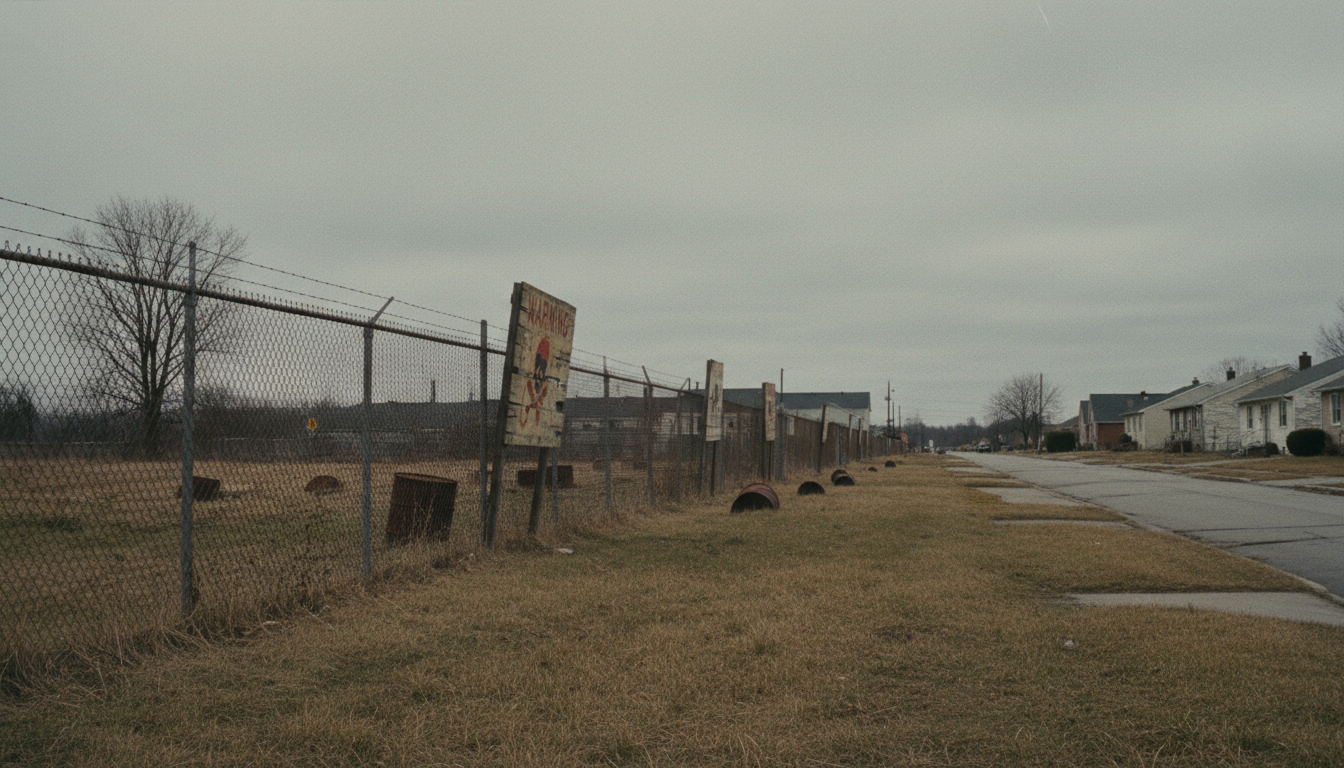
Children brought home oily residues on sneakers. Backyard gardens smelled wrong. In the late 1970s, residents of a Niagara Falls neighborhood learned their subdivision sat on and beside a chemical dump Hooker Chemical had filled for years before transferring the land. The place had a soft name: Love Canal.
A Canal Full of Barrels
Hooker used the old canal cut as a landfill for industrial wastes—acids, chlorinated compounds, residues of mid-century chemical manufacturing. Clay cover and transfer paperwork later became courtroom weapons. A school went up. Houses followed. Rain, construction, and time moved contaminants toward basements and play yards.
This was not a secret spraying conspiracy. It was disposal logic meeting real-estate logic with families in between.
Housewives With Clipboards
Lois Gibbs and neighborhood organizers mapped illnesses, demanded testing, and refused polite stalling. New York State health authorities declared emergencies. President Carter's federal emergency actions and relocation programs made Love Canal a national spectacle. Television crews arrived. So did lawyers.
EPA historical pages now treat Love Canal as foundational agency memory—the crisis that helped make Superfund politically inevitable. CERCLA's 1980 passage had multiple parents; Love Canal was the one Americans could picture as a schoolyard.
Corporate Defense Patterns
Occidental/Hooker's legal and public-affairs strategies contested liability scope, knowledge timelines, and causation for specific diseases. That fight is normal in toxic torts. What residents established in public opinion first was simpler: you do not build a childhood on a drum dump and call the odors "hysteria."
Compare Prohibition-era industrial alcohol poisoning elsewhere in the Archive: chemical markets harming civilians with paperwork somewhere in the chain. Different century, same genre.
What Epidemiology Can and Cannot Finish
Cancer clusters, birth outcomes, and chronic disease associations remain argued in journals and litigation. Contaminant presence, pathway plausibility, and institutional neglect do not. Archive readers should hold both truths: uncertainty about every individual diagnosis, certainty about the dump-under-the-subdivision design failure.
Chemtrails folklore is a different epistemic object. Love Canal's drums were buried, sampled, and entered into EPA history. Start there.
Superfund's Political Parentage
CERCLA had lobbyists, drafts, and compromise. Love Canal gave the statute a face: evacuated homes, crying testimony, visible drums. Environmental history that skips the neighborhood misses why national hazardous-waste law finally moved.
Health studies will remain contested at the margins. The land-use sin—residence on industrial waste—does not.