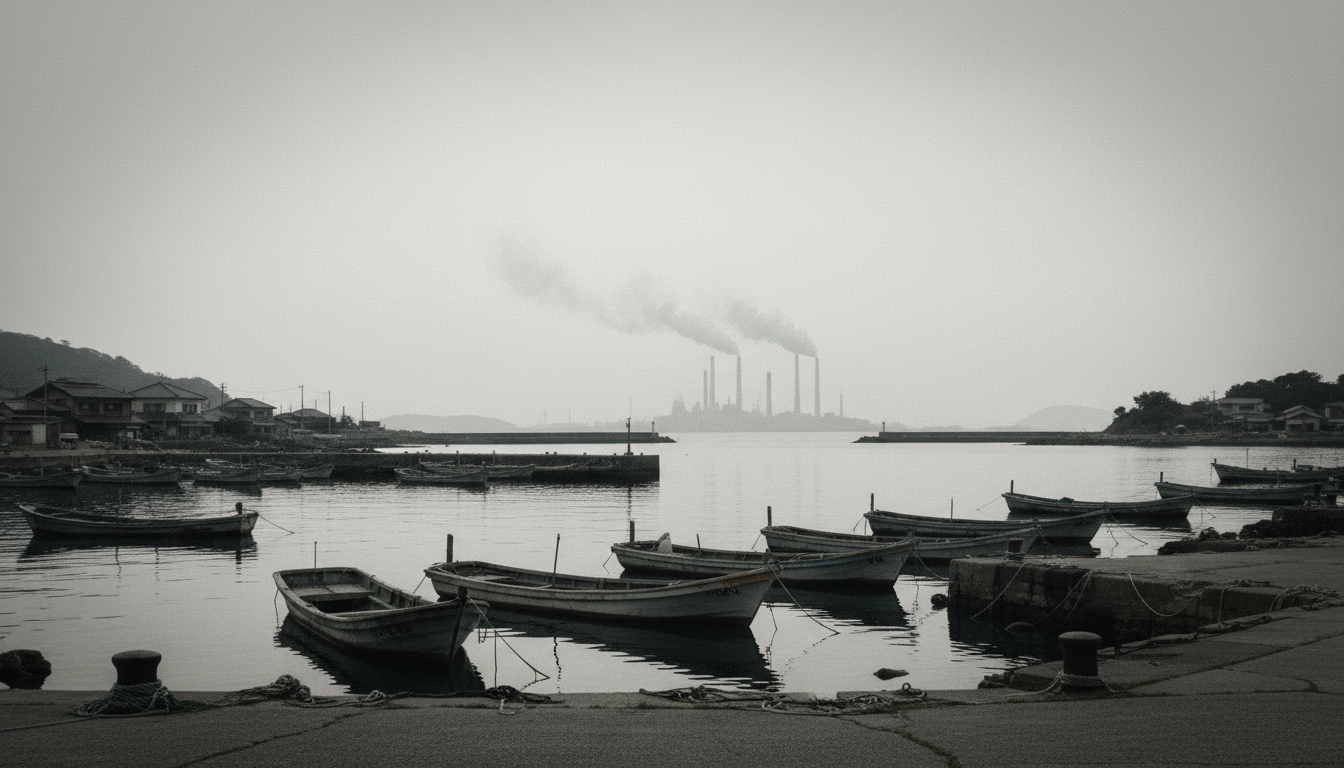
In May 1956, doctors in Minamata, Kumamoto Prefecture, reported a mysterious neurological disease. Cats had danced and died along the shore; fishers and their families lost sensation, vision, and coordination. The cause was methylmercury discharged with wastewater from the Chisso chemical plant into Minamata Bay. Japan’s government did not announce a collective official consensus on that cause until September 1968—more than a decade after clinical recognition. Courts later held Chisso liable and, in key rulings, found national and prefectural regulatory failure. The so-what is not another poison parable. It is how long recognition and liability lagged behind the chemistry already in the bay.
The Product: Industrial Methylmercury
Minamata disease is methylmercury poisoning that damages the central nervous system. Clinical signs include distal sensory disturbance, ataxia, visual-field constriction, hearing disturbance, and—when mothers were exposed—fetal Minamata disease with cerebral-palsy-like impairment. Japan’s Ministry of the Environment history pages separate this organic-mercury picture from inorganic mercury’s renal focus and summarize diagnostic and certification debates that continued for decades after the first cluster.
Ministry of the Environment — Minamata Disease: The History and Measures (portal / chapter family): https://www.env.go.jp/en/chemi/hs/minamata2002/
WHO/IPCS Environmental Health Criteria 101 — Methylmercury (1990): https://inchem.org/documents/ehc/ehc/ehc101.htm
Official Posture: Slow Consensus, Then Compensation Machinery
Chisso’s acetaldehyde process generated methylmercury as a by-product; wastewater entered the food chain through shellfish and fish. Local physicians and Kumamoto University researchers pressed the organic-mercury hypothesis years before Tokyo’s joint announcement. On 26 September 1968, the Ministry of Health and Welfare and the Science and Technology Agency stated the government’s consensus: Kumamoto Minamata disease was caused by methylmercury from Chisso’s acetaldehyde and acetic-acid facilities; Niigata’s parallel outbreak traced to Showa Denko’s acetaldehyde process. That statement is the official so-what date for cause. It is also an admission that recognition arrived late relative to the first 1956 reports and to ongoing discharge.
Acetaldehyde production at Chisso’s Minamata plant did not stop at the first hospital reports. The lag between clinical alarm (1956), growing scientific attribution to organic mercury, and the 1968 consensus left years in which contaminated seafood continued to reach households along the Shiranui Sea. That interval is the human cost the Environment Ministry’s own “lessons” literature now treats as a warning about delayed regulation.
Ministry of the Environment — Lessons from Minamata Disease and Mercury Management in Japan: https://www.env.go.jp/en/focus/docs/files/20110101-39.pdf
What the Court Record Shows
Civil litigation translated chemistry into liability. The 1973 Kumamoto District Court decision in the first Kumamoto Minamata suit recognized Chisso’s responsibility to compensate patients; parallel Niigata litigation had already fixed Showa Denko’s liability in 1971. Later waves sought national and prefectural liability for regulatory non-exercise. On 15 October 2004, Japan’s Supreme Court, in the Kansai lawsuit, held the national government and Kumamoto Prefecture jointly liable for a share of damages for failing to prevent the outbreak and spread—finding liability alongside Chisso rather than leaving the company as the sole deep pocket. Certification criteria adopted in 1977 (combinations of symptoms) remained contested; subsequent court recognition of patients who did not meet the full administrative checklist forced Environment Ministry process adjustments. The paperwork tension is dual: cause is settled; who counts as a victim, and for how long exposure windows run, stayed in litigation for generations.
Ministry reference chronology (recognition, suits, agreements): https://www.env.go.jp/en/chemi/hs/minamata2002/refer.html
From Bay to Global Treaty
The place-name became a global legal brand. The Minamata Convention on Mercury, adopted under UNEP auspices and opened for signature in 2013, commits parties to protect human health and the environment from anthropogenic mercury. EPA’s international-cooperation page and the UN Treaty Series registration door are the U.S./UN primary portals for the instrument that carries Minamata’s name into twenty-first-century chemicals law.
EPA — Minamata Convention on Mercury: https://www.epa.gov/international-cooperation/minamata-convention-mercury
UN Treaty Collection — Minamata Convention (XXVII-17): https://treaties.un.org/Pages/ViewDetails.aspx?src=IND&mtdsg_no=XXVII-17&chapter=27&clang=_en
UNEP — Minamata Convention text and annexes: https://www.unep.org/resources/report/minamata-convention-mercury-text-and-annexes
Why Delay Is the Archive Tension
Industry denial, scientific caution, and bureaucratic delay are all visible in the Japanese record; assigning a single villain caption erases the documented sequence. Chisso continued acetaldehyde-related operations into the late 1960s. Prefects and ministries had water-quality and public-health tools that courts later judged were not timely used. Patient certification fights after the 1968 consensus show that official cause recognition did not automatically equal official victim recognition. Prefer Environment Ministry chronologies, Supreme Court liability holdings, and WHO methylmercury criteria over viral “hidden for fifty years” slogans that skip the 1956 clinical start and the 1968 consensus date.
Sibling frames include Niigata Minamata disease (Showa Denko) and later No More Minamata litigation waves that continue to test certification thresholds against WHO hair-mercury reference discussions. Keep Kumamoto’s Chisso spine primary; use Niigata and later suits as liability siblings, not as proof that cause was never established.
What the Paper Trail Settles
Settled on the documents: 1956 outbreak recognition in Minamata; methylmercury from Chisso wastewater as the causal agent in the 1968 government consensus; WHO/IPCS toxicology of methylmercury; Chisso (and Showa Denko in Niigata) civil liability; 2004 Supreme Court share of state/prefectural liability in the Kansai line; Minamata Convention as the global mercury instrument. Overclaim to refuse: that no official recognition ever came, or that every certification dispute proves the chemistry was fake. Officials eventually named the plant and the compound. The paper trail asks why naming took twelve years—and why victim-counting took longer still. Internationally, the Minamata Convention exports the place-name into mercury trade, emissions, and artisanal-gold rules—an institutional memory of a bay that should have been enough warning the first time.