Agent Orange
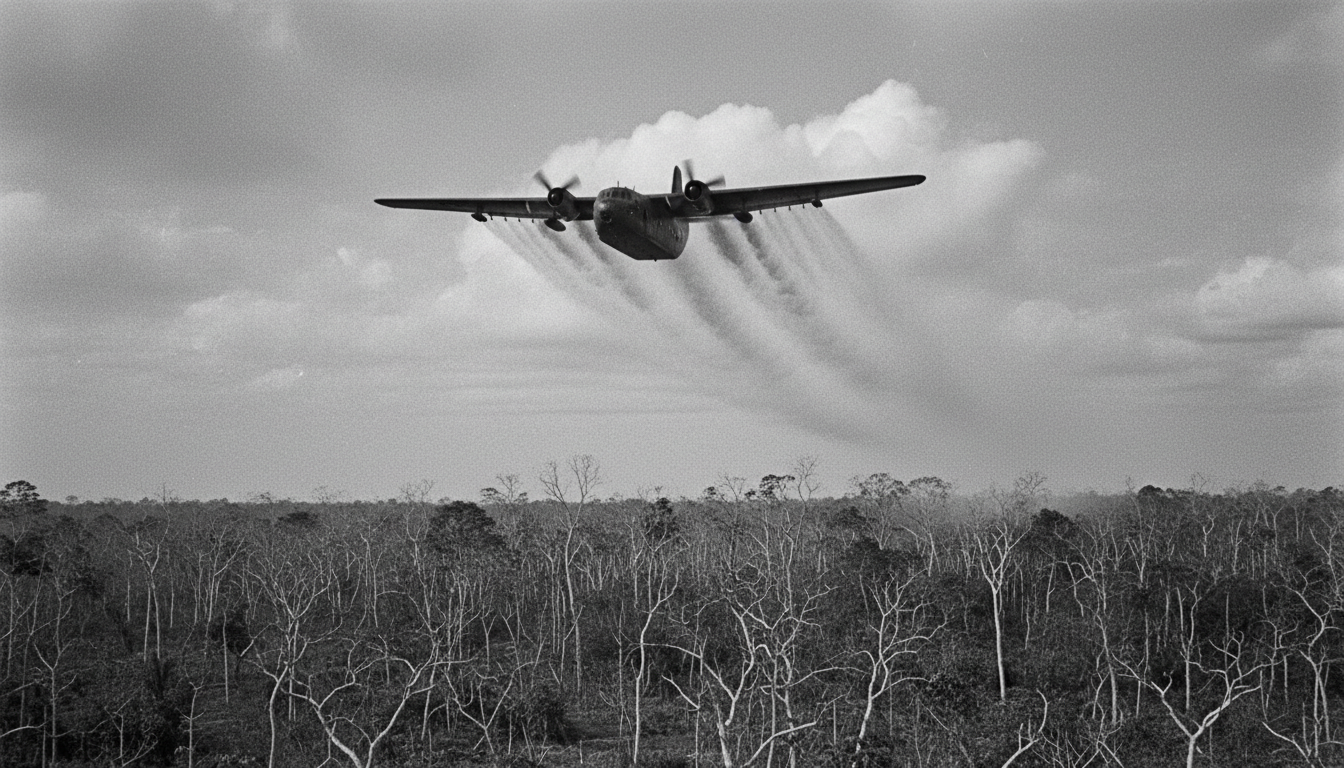
From the early 1960s into the 1970s, U.S. aircraft sprayed herbicide mixtures over Vietnam's forests and fields. One mixture, coded by an orange stripe on drums, became the proper noun for a generation of health fights: Agent Orange.
Defoliation as Strategy
The military goal was visibility and crop denial against guerrilla logistics. The chemical reality included TCDD dioxin contamination in 2,4,5-T production. Veterans returned with cancers, neuropathies, and children with defects that advocacy groups tied to exposure. Vietnamese civilians lived inside the spray map without a VA claim system.
Science did not settle overnight. Epidemiology is messy under war's record-keeping. Still, the VA's expanding recognition lists and the National Academies' periodic reviews built a governmental acknowledgment trail that denialism has to ignore.
Courts and Companies
Dow, Monsanto, and other producers litigated and settled with U.S. veterans in landmark deals. Vietnamese plaintiffs faced harder jurisdictional walls. Corporate archives and trial discovery remain part of how historians reconstruct who knew which contamination numbers when.
Vietnam Credibility Weather
Gulf of Tonkin and the Pentagon Papers elsewhere show a war thick with official storytelling. Agent Orange does not need those files to prove spraying happened—DoD records do that. They help explain why veterans distrusted early reassurances.
Sea-Spray's domestic bacterial releases are a different exposure story in a different decade. The ethical rhyme is non-consensual chemical citizenship.
Hold Steady
The U.S. sprayed dioxin-contaminated herbicides at scale. Health harms are recognized in multiple official channels even as dose-response debates continue at edges. Treat "Agent Orange explains every illness" as overclaim. Treat "it was harmless weedkiller" as contradicted by the government's own benefits regime.
Maps of Spray
Ranch Hand route maps and load records exist. So do soil dioxin studies with hotspots. The Archive prefers those over viral images with fake captions. Vietnamese and U.S. veteran epidemiological datasets both deserve space without forcing identical legal remedies.