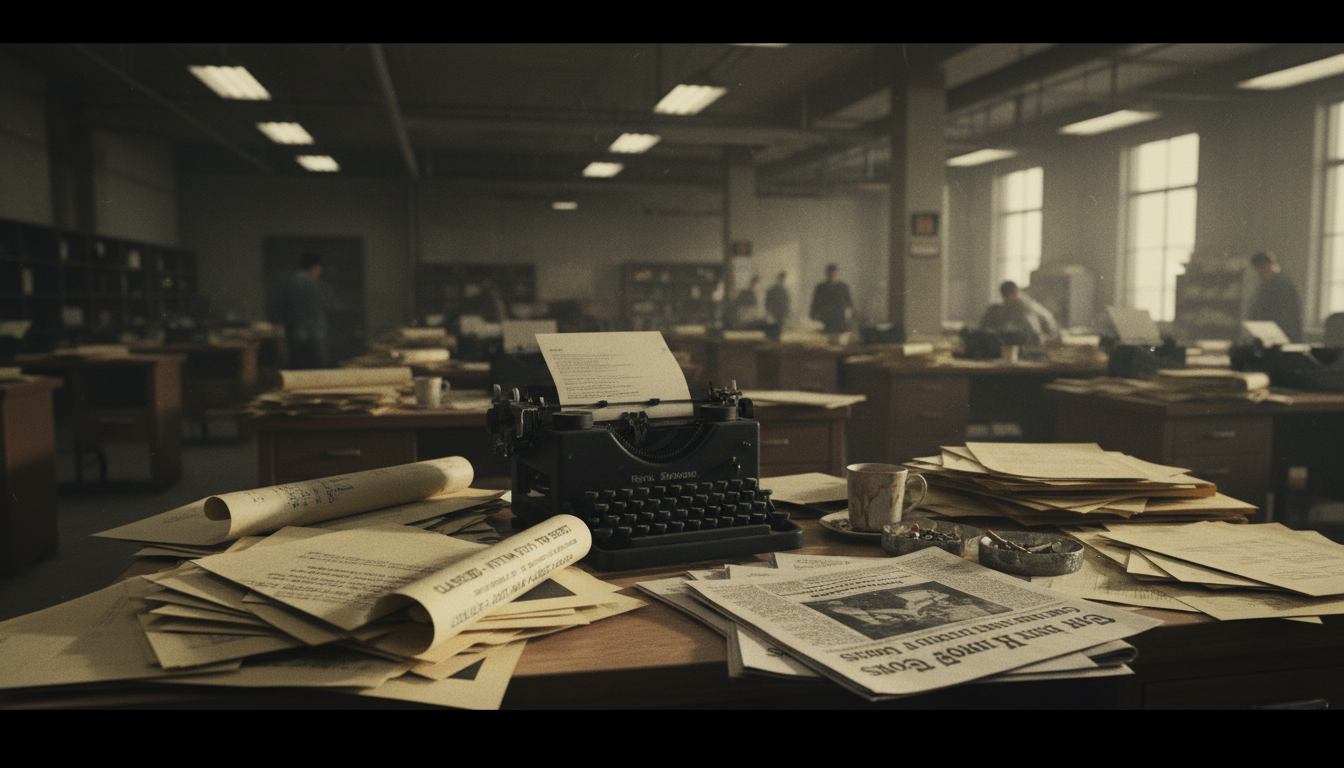
The Pentagon Papers
In June 1971 the New York Times began publishing a secret Defense Department history of U.S. decision-making in Vietnam. The study ran thousands of pages. Its unofficial name stuck: the Pentagon Papers. Daniel Ellsberg, who had helped produce and later photocopy the set, had decided the public deserved the government's own narrative of the war's dishonest momentum.
A Study Meant for Vaults
Commissioned under Robert McNamara, the history traced policy from 1945 through 1967. Internal analysts wrote about escalation choices, negotiated illusions, and political management of public consent. Read beside Gulf of Tonkin incident historiography, the Papers help explain how incident politics and strategic ambition braided.
Ellsberg first tried official channels, then chose the press.
Prior Restraint Fight
The Nixon administration sought to stop publication. New York Times Co. v. United States became the Supreme Court showdown over prior restraint. The Court sided with the newspapers. Espionage Act threats against Ellsberg later collapsed amid government misconduct in his prosecution—another Watergate-adjacent scar.
Press freedom lore sometimes floats free of the content. The content was damning enough: successive administrations had told the public a cleaner war story than their own classified chronology supported.
Conspiracy Versus Documentation
The Papers are the opposite of anonymous forum lore. They are a DoD study, now National Archives material, interpreted by historians for fifty years. "Conspiracy" here means coordinated official deception about a war—proven from the perpetrators' paperwork.
What Remains Live
Debates continue about Ellsberg's ethics, about how much the leak shortened or reshaped the war, and about modern Espionage Act uses against other leakers. The documentary floor does not move: the United States government wrote a secret history that contradicted its public Vietnam sales pitch, and newspapers printed it after a constitutional fight.
Reading the Volumes
National Archives hosts the study. Sample pages on escalation debates before treating any single quote as the whole war. Ellsberg's act sits inside a wider collapse of Vietnam credibility that Tonkin historiography also feeds.
Prior restraint doctrine after 1971 still structures leak fights. That legal residue is part of the Papers' living history.