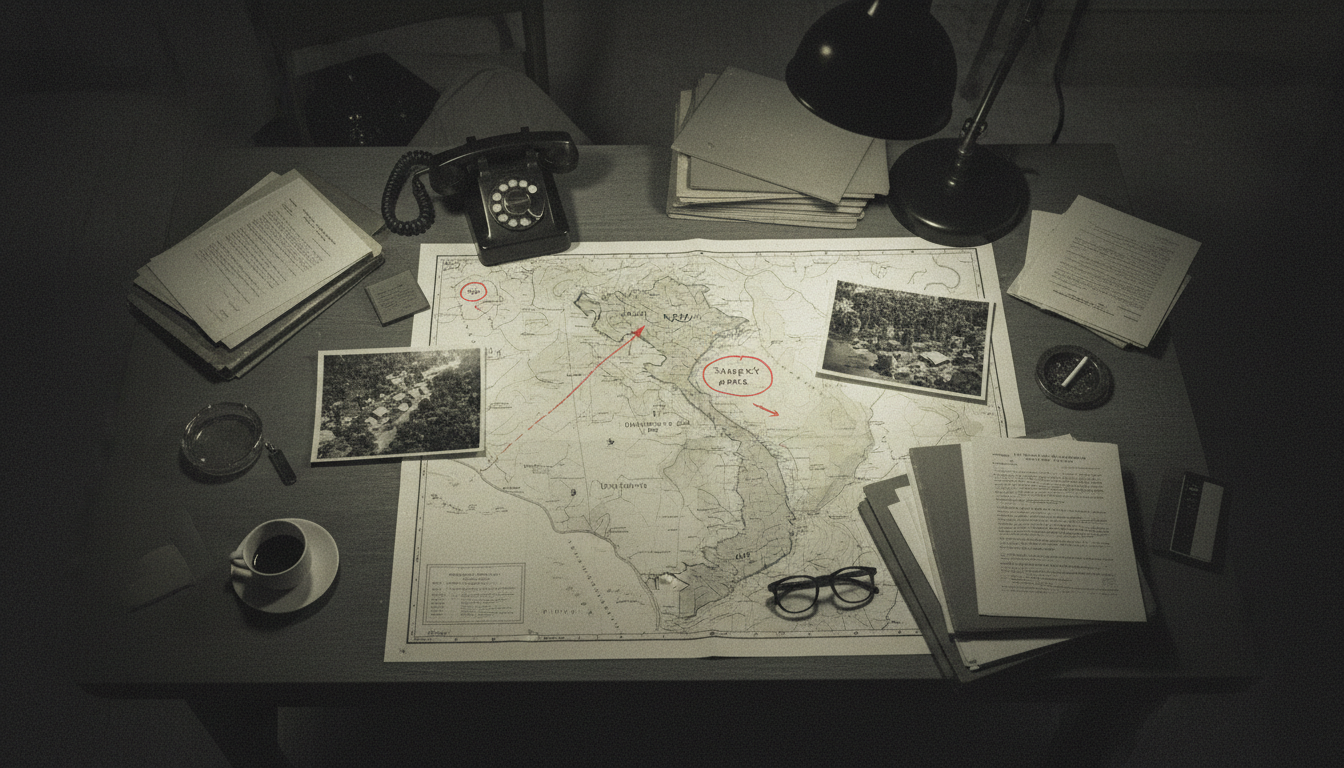
The Phoenix Program
In South Vietnam, pacification had a sharp edge with a bird's name. Phoenix—Phụng Hoàng in Vietnamese—aimed to dismantle the Viet Cong's shadow government by identifying cadres and "neutralizing" them. Capture was the brochure word. Kill was often the field word.
Infrastructure as Target List
Phoenix fused CIA advisory structures, U.S. military intelligence, and South Vietnamese police and provincial reconnaissance units. The theory was counterinsurgency orthodoxy: cut the political infrastructure, not only the main-force battalions. In practice, identity was muddy. Informants settled scores. Quotas distorted judgment. Detention centers accumulated stories that later hearings could not sanitize.
Official language preferred "neutralize." Journalists and veterans preferred plainer verbs when describing assassinations and torture. Both vocabularies appear in the historical fight over Phoenix's soul.
Hearings and the Numbers Problem
Early 1970s congressional scrutiny forced partial sunlight. Defenders called Phoenix a legitimate attack on an armed clandestine apparatus that itself used assassination. Critics called it a computerized death list with colonial incentives. Death tallies published over the years swing hard depending on who is counting and what counts as Phoenix versus adjacent violence. Wide ranges are a historiographical warning light, not a license to invent.
Tonkin and Pentagon Papers as Context
The Gulf of Tonkin Incident and the Pentagon Papers elsewhere in the Archive establish a wartime information culture where official story and operational truth diverged. Phoenix inherits that credibility weather. It does not require every Phoenix killing to be ordered from a Tonkin-style fabrication. It does require readers to distrust tidy briefings.
MKUltra cross-links are era-and-method atmospheric—secret coercive technique in the same long war—not proof that Gottlieb ran Provincial Reconnaissance Units.
What Survives Scrutiny
Phoenix existed. It targeted civilians suspected of infrastructure roles. It produced documented abuse alongside documented captures of genuine cadres. The unsettled zone is scale, command responsibility at each echelon, and how much "quota culture" turned intelligence work into body-count theater. Those fights belong in footnotes with sources—not in slogans.
Pacification Vocabulary
Phoenix lives or dies on definitions. If "infrastructure" means bomb-makers, one moral frame follows. If it means village tax collectors suspected by a rival, another frame follows. The program's paperwork tried to sound like the first while field incentives often fed the second.
Memoir disagreement is not a reason to erase the hearings. It is a reason to read more than one memoir.