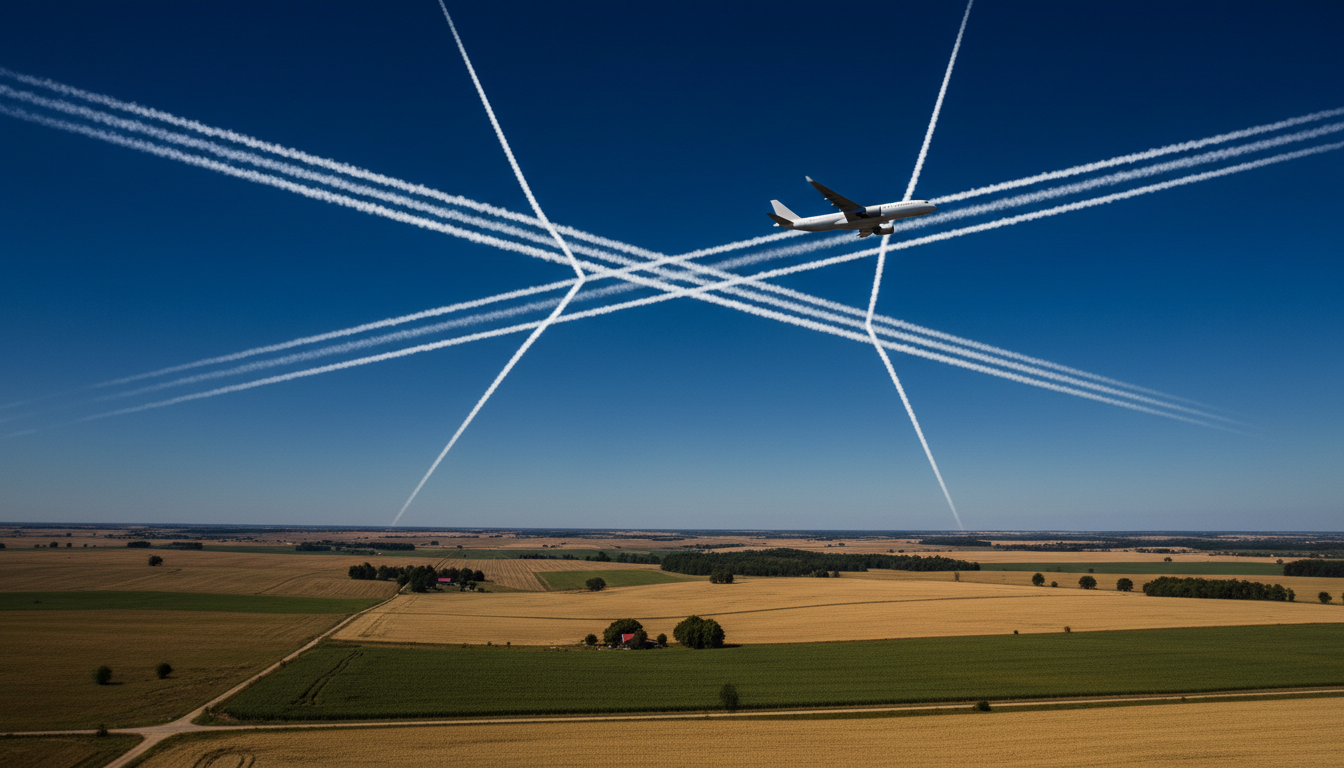
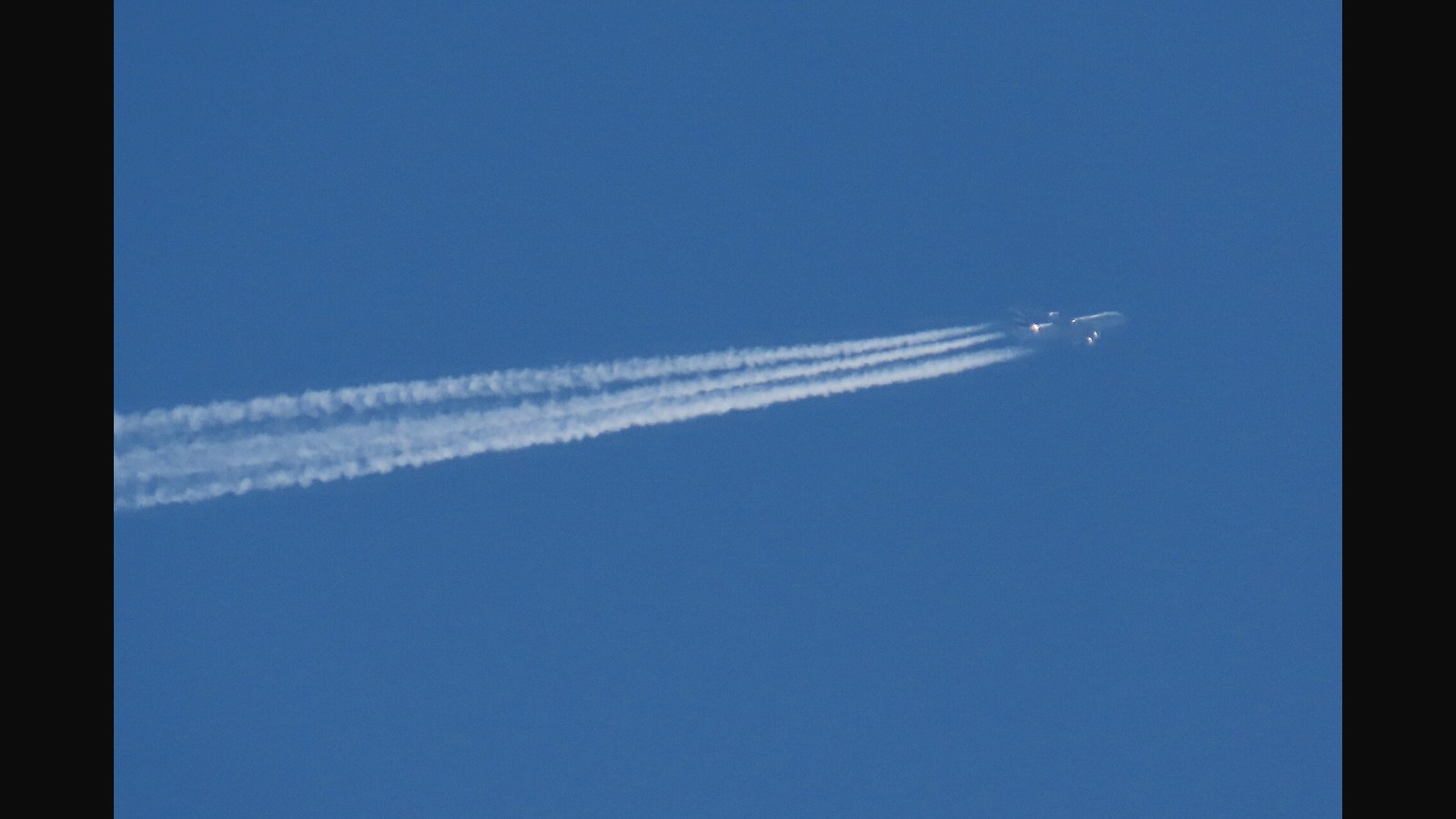
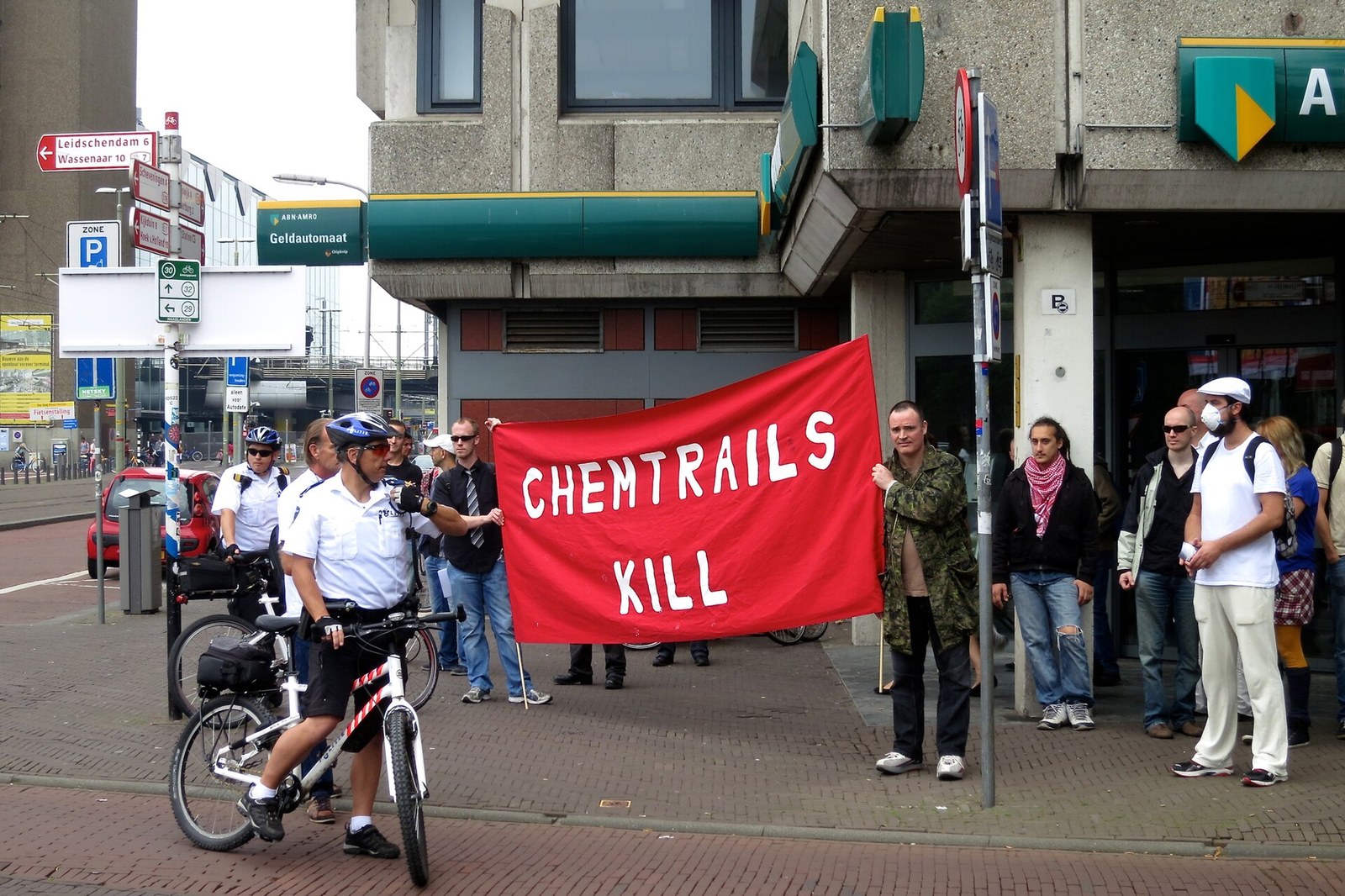
Adherents say lingering jet trails are chemical spraying; agencies and 76 of 77 surveyed experts say they are contrails.
The dispute sets the evidence collected by adherents, mostly photographs of trails and lab results for rain, snow and soil, beside contrail science from the Environmental Protection Agency, the Federal Aviation Administration and the National Weather Service, a 2016 survey of atmospheric experts, and a Harvard proposal for a small stratospheric aerosol experiment that was cancelled. The experiment was a published proposal to study aerosols from a balloon, not a record of aircraft spraying.
What adherents cite
GeoengineeringWatch.org keeps a "Lab Tests" listing of results its contributors offer as proof of aerosol spraying. It reports rainwater and snow samples from Chapel Hill submitted for "double-blind" laboratory analysis, and an Edmonton snow sample in which Norwest Labs report #336566 found aluminum at 0.148 milligrams per litre and barium at 0.006 milligrams per litre. It quotes a Mendocino County account that barium, aluminum and other metals were "being found under unusual circumstances" in drinking water supplies, links a hypothesized connection to US patent 7,320,858, and points to video said to show a jet "turning the spray on and off repeatedly." It also cites the use of barium and aluminum-coated strips in radar and stealth technology.
GeoengineeringWatch.org, Lab Tests: https://geoengineeringwatch.org/lab-tests/
The expert survey, 2016
Christine Shearer, Mick West, Ken Caldeira and Steven J. Davis reported in Environmental Research Letters that in an international survey nearly 17 percent of people said a secret large-scale atmospheric spraying program was true or partly true. They name Geoengineering Watch and Global Sky Watch among the sites that collect such evidence, which falls mainly into photographs of trails and elemental analyses of water, soil and snow, with particular weight on strontium, barium and aluminum. They surveyed 49 contrail experts and 28 experts on atmospheric deposition; 76 of the 77 said they had not encountered evidence of such a program. In one sample, 25 deposition experts rejected the results as evidence, one said they might be evidence, and two were unsure; most criticised sampling instructions that would mix sediment into water or use a jar with a metal lid. The authors say actual research programs that disperse material, such as cloud seeding, are seen by some as support for the theory.
Shearer et al., Environmental Research Letters 11 (2016) 084011: https://web.archive.org/web/20230124180346/https://iopscience.iop.org/article/10.1088/1748-9326/11/8/084011
The Environmental Protection Agency
The EPA says contrails are line-shaped exhaust clouds that form when hot engine exhaust meets very cold air at altitude, and that many contrails in an area mean many jets overhead. Persistent contrails form in supersaturated air, can last longer than a day, and may become cirrus clouds; current models indicate that persistent contrail clouds could have a small net warming effect, and the EPA supports FAA research on them. It describes "chemtrails" as a term some people use "to inaccurately claim" that contrails from routine air traffic are deliberate releases of dangerous chemicals or biological agents. It says legitimate spraying for farming or firefighting comes from low-flying propeller aircraft, not high-altitude jets, and that the federal government "is not aware of there ever being a contrail intentionally formed over the United States for the purpose of geoengineering or weather modification."
EPA, Information on Contrails from Aircraft: https://www.epa.gov/regulations-emissions-vehicles-and-engines/Contrails
The Federal Aviation Administration
The FAA says contrails are ice crystals formed when engine exhaust water vapor condenses on particles at cruise altitude, and that they will not form if the air is too warm or too dry. It says the FAA and the EPA "are not aware of any deliberate actions to release harmful chemical or biological agents from airplanes into the atmosphere," and that the FAA will act on any substantiated claims. It explains that persistent trails can drift hundreds of miles, that patterns can start and stop at pockets of humid air, that jet exhaust is about 71 percent carbon dioxide and 28 percent water vapor, and that jet fuel does not contain metal-based compounds because they would harm engine stability.
FAA, Contrails: https://www.faa.gov/contrails
The National Weather Service
The National Weather Service office in Flagstaff explains that contrails form when hot humid exhaust mixes with cold air of low vapor pressure, that their lifetime depends on the humidity already present, and that contrails have been recorded since the Second World War and from the Sahara to the South Pole. It states: "Persistence of contrails is neither an indication that they contain some kind of chemical, nor that it is some kind of spray." It notes that sailors have long read the persistence of contrails as a sign of coming weather, and that contrails are a concern in climate studies because they can spread into cirrus cloud.
National Weather Service, Flagstaff, Clouds and Contrails: https://www.weather.gov/fgz/CloudsContrails
A stratospheric experiment that was proposed
Harvard's Keutsch Group describes SCoPEx, the Stratospheric Controlled Perturbation Experiment, as a balloon experiment to study stratospheric aerosols relevant to solar geoengineering. It planned to lift instruments to about 20 kilometres and release 100 grams to 2 kilograms of material, likely calcium carbonate, then measure the perturbed air. It says the work "is not a test of solar geoengineering per se," that an advisory committee in March 2021 recommended suspending a platform test planned in Sweden for that June, and that SCoPEx was cancelled in March 2024.
Keutsch Group at Harvard, SCoPEx: https://www.keutschgroup.com/scopex
Where the dispute stands
Adherents cite persistent trails, metal readings in rain and snow, and published geoengineering research as signs of covert spraying. The agencies say persistent trails follow from humidity and that they know of no deliberate releases from high-altitude jets, and the surveyed experts said the samples and photographs did not show a secret program. SCoPEx was a small, public proposal to release at most a few kilograms of material, and it was cancelled in March 2024.