
A public record of inner-earth hypotheses has been in print since the late seventeenth century. This page gathers that record because the names Hollow Earth, Agarttha, and Shamballah still circulate beside a later official description of Earth's interior, and because those two pictures should be read in the documents that actually carry them. The fight is over the structure of the planet, not over whether the papers exist.
Halley's 1692 nested shells
In a paper printed in the Philosophical Transactions and "proposed to the Royal Society," Edmond Halley set out a hypothesis of the Earth's internal structure. He had already treated the globe as a great magnet with four magnetical poles. To account for the needle's changing variation he divided the planet. "The External Parts of the Globe may well be reckoned as the Shell," he wrote, "and the internal as a Nucleus or inner Globe included within ours, with a fluid medium between." The outer shell and the nucleus were both magnets, their poles not locked to the same places, so that a slow relative motion could shift the needle.
Taking the Earth's diameter as about eight thousand English miles, he allowed five hundred miles for the outer shell and another five hundred miles for a medium between, "capable of an immense Atmosphere" for an inner globe. The inward circles were "made nearly proportionable to the Magnitudes of the Planets Venus, Mars and Mercury." Mercury he supposed a solid ball of about two thousand miles diameter. He "adventured to make these Subterraneous Orbs capable of being inhabited."
Source: Halley, as read on archive.org: https://archive.org/details/philtrans00697664
Symmes's 1818 circular
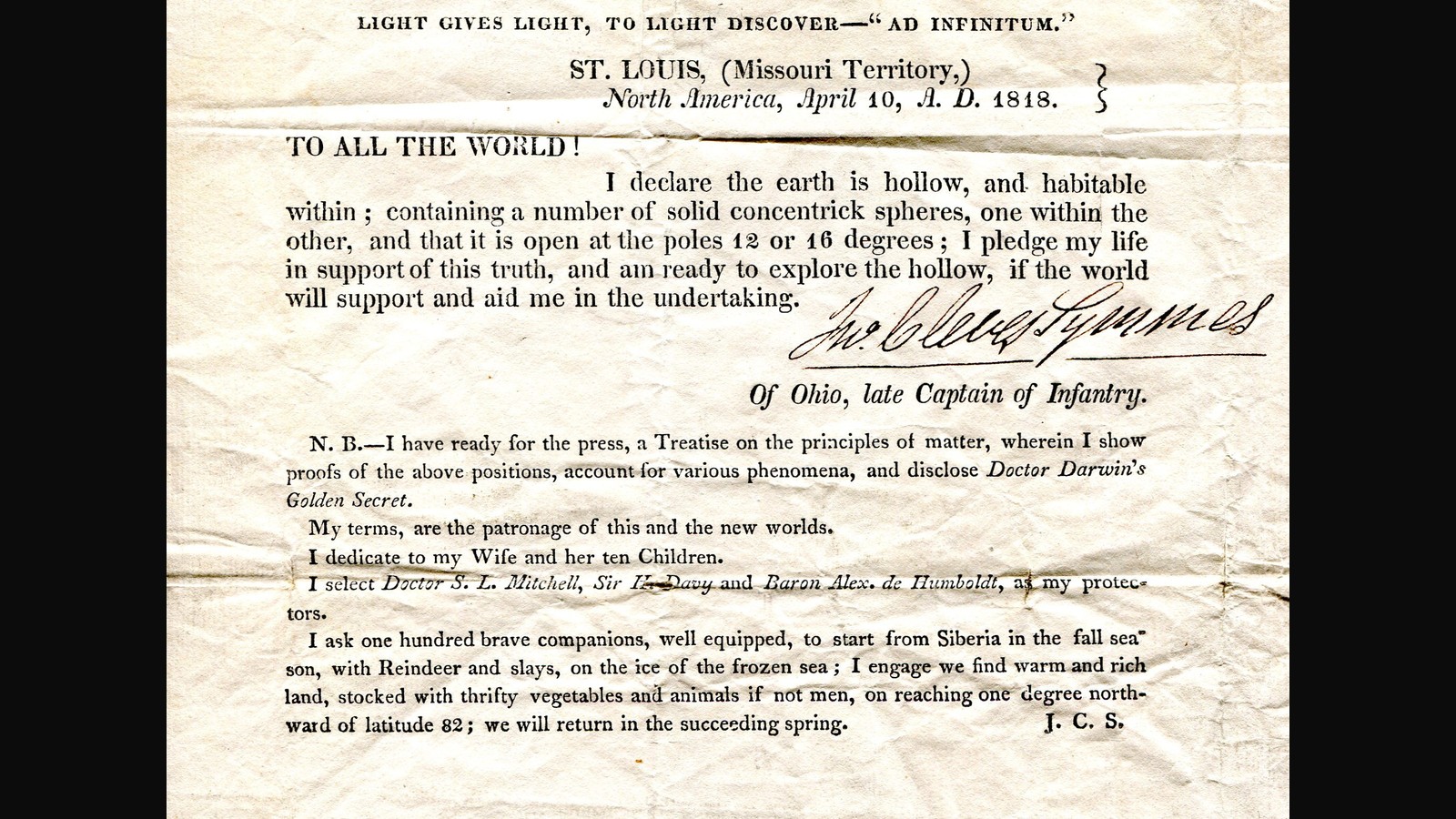
On 10 April 1818, at St. Louis in the Missouri Territory, John Cleves Symmes, "Of Ohio, late Captain of Infantry," issued a circular headed "Light Gives Light, to Light Discover. Ad Infinitum." It opens "TO ALL THE WORLD!" and states the claim in one sentence: "I declare the earth is hollow, and habitable within; containing a number of solid concentrick spheres, one within the other, and that it is open at the poles 12 or 16 degrees; I pledge my life in support of this truth, and am ready to explore the hollow, if the world will support and aid me in the undertaking."
The same sheet asks "one hundred brave companions, well equipped, to start from Siberia in the fall season, with Reindeer and slays, on the ice of the frozen sea," and says they would find "warm and rich land, stocked with thrifty vegetables and animals if not men, on reaching one degree northward of latitude 82." He named Doctor S. L. Mitchell, Sir H. Davy, and Baron Alex. de Humboldt as protectors.
Source: Symmes, Circular No. 1, 10 April 1818: https://commons.wikimedia.org/wiki/File:Symmes_Circular.jpg
Polar openings in McBride, 1826
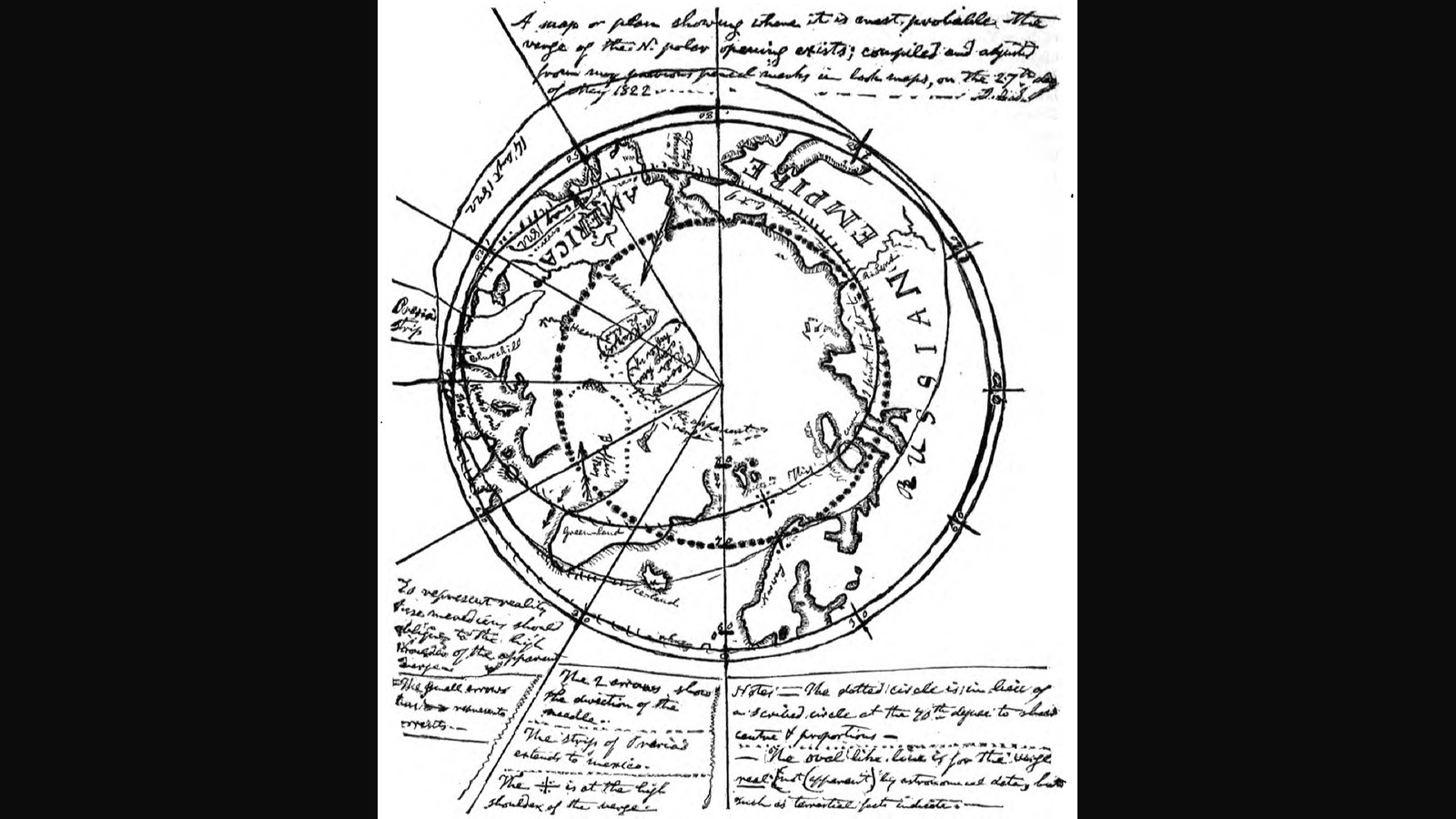
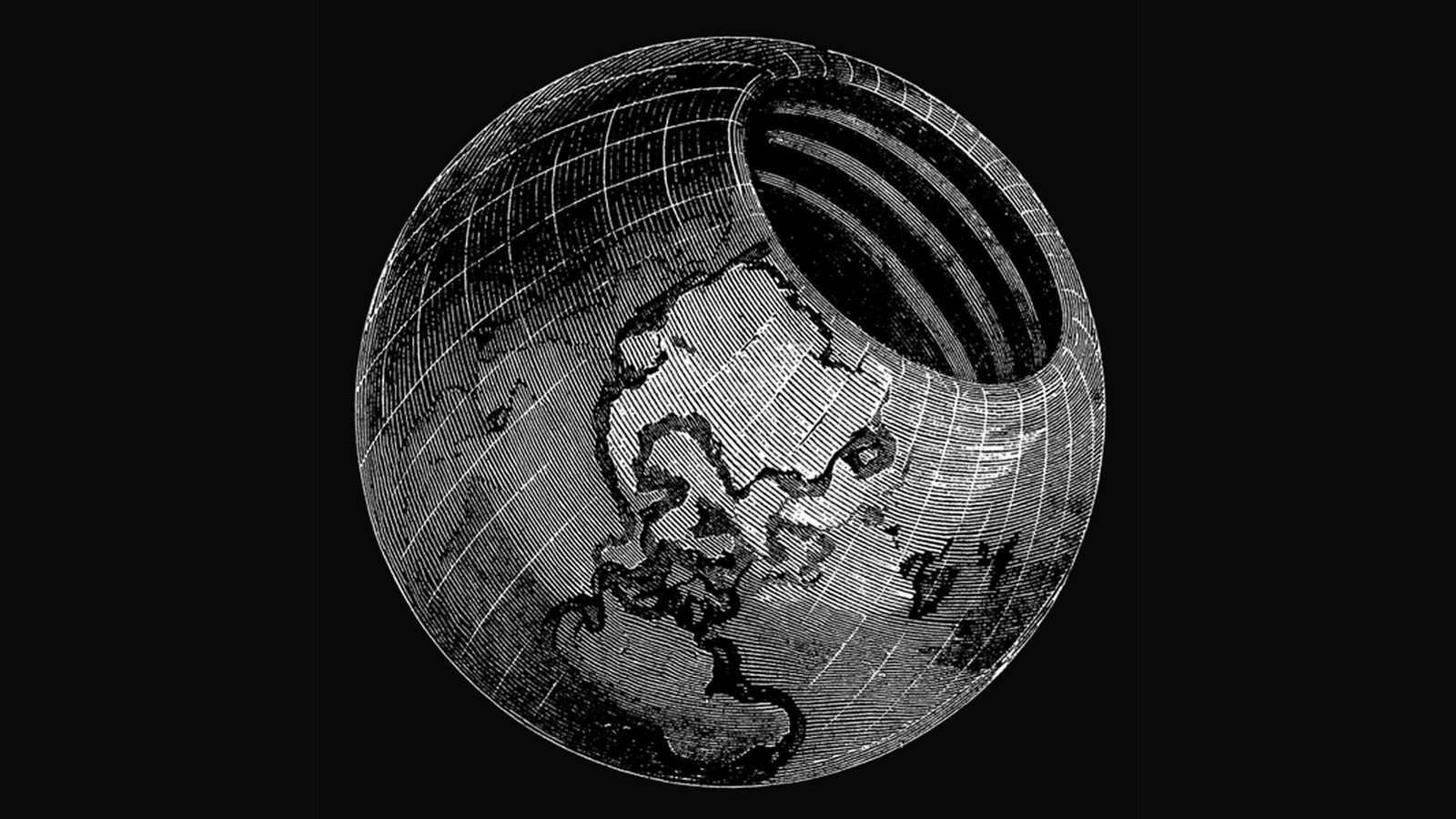
James McBride's Cincinnati book of 1826, Symmes's Theory of Concentric Spheres, takes up that polar claim and gives it measurements. McBride, writing as "one of the believers in that Theory," records Symmes's first circular of 10 April 1818, then turns to the openings. Each of the spheres, he writes, is "widely open at their poles." "The north polar opening of the sphere we inhabit, is believed to be about four thousand miles in diameter, and the southern above six thousand." The planes of these openings, he says, are inclined to the ecliptic at about twenty degrees. In the northern hemisphere he places the highest verge in about latitude sixty-eight degrees, near Lapland and a meridian through Spitsbergen, and the lowest in about latitude fifty degrees, in the Pacific near the northwest coast of America.
Source: McBride, 1826: https://archive.org/details/symmesstheoryofc00mcbr
Agarttha and Shamballah
H. P. Blavatsky's The Secret Doctrine, volume II, in the 1893 Theosophical Publishing House edition that reprints the 1888 work, identifies a "Sacred Island" as "now the 'fabled' Shamballah, in the Gobi Desert." The volume read here does not print the name Agarttha.
Saint-Yves d'Alveydre's Mission de l'Inde en Europe, issued at Paris in 1910 by Librairie Dorbon Aine, does. A notice by "Les Amis de Saint-Yves," dated 13 February 1910, presents the book as a work "still unknown" of their master, transmitted as "the only existing copy of this precious work which was not to see the light of day during our Master's lifetime." The friends say that "the constitution of Agarttha is revealed for the first time to Western readers." Under the heading "Where is Agarttha?", Saint-Yves writes that "at the surface and in the bowels of the earth, the real extent of Agarttha defies the grasp and the constraint of profanation and of violence." He describes Agarttha as "a faithful image of the Eternal Word throughout all Creation."
The two books do not merge the names. Theosophy's fabled Shamballah, in the passage read here, is a sacred island in the Gobi. Saint-Yves's Agarttha is a holy realm at the surface and in the entrails of the earth. These sources keep them in their own sentences.
Sources: Blavatsky, Secret Doctrine, vol. II: https://archive.org/details/secretdoctrinesy02blav ; Saint-Yves, Mission de l'Inde, 1910: https://archive.org/details/missiondelindeeneurope
The Byrd diary claims and the Highjump record
Adherents circulate a later book titled The Missing Diary of Admiral Richard E. Byrd, published in 1990 and again in 2013 under the editorship of Timothy Green Beckley and Tim R. Swartz. The volume presents itself as a secret account of "my Arctic flight of the nineteenth day of February in the year of Nineteen and Forty Seven." In that first-person log, the narrator describes a shimmering city of rainbow hues and is told, "you are in the domain of the Arianni, the Inner World of the Earth." A line dated 24 December 1956, printed over the name of Admiral Richard E. Byrd, United States Navy, reads, "FOR I HAVE SEEN THAT LAND BEYOND THE POLE, THAT CENTER OF THE GREAT UNKNOWN." The publishers and later advocates attribute this text to Byrd. The claim is disputed.
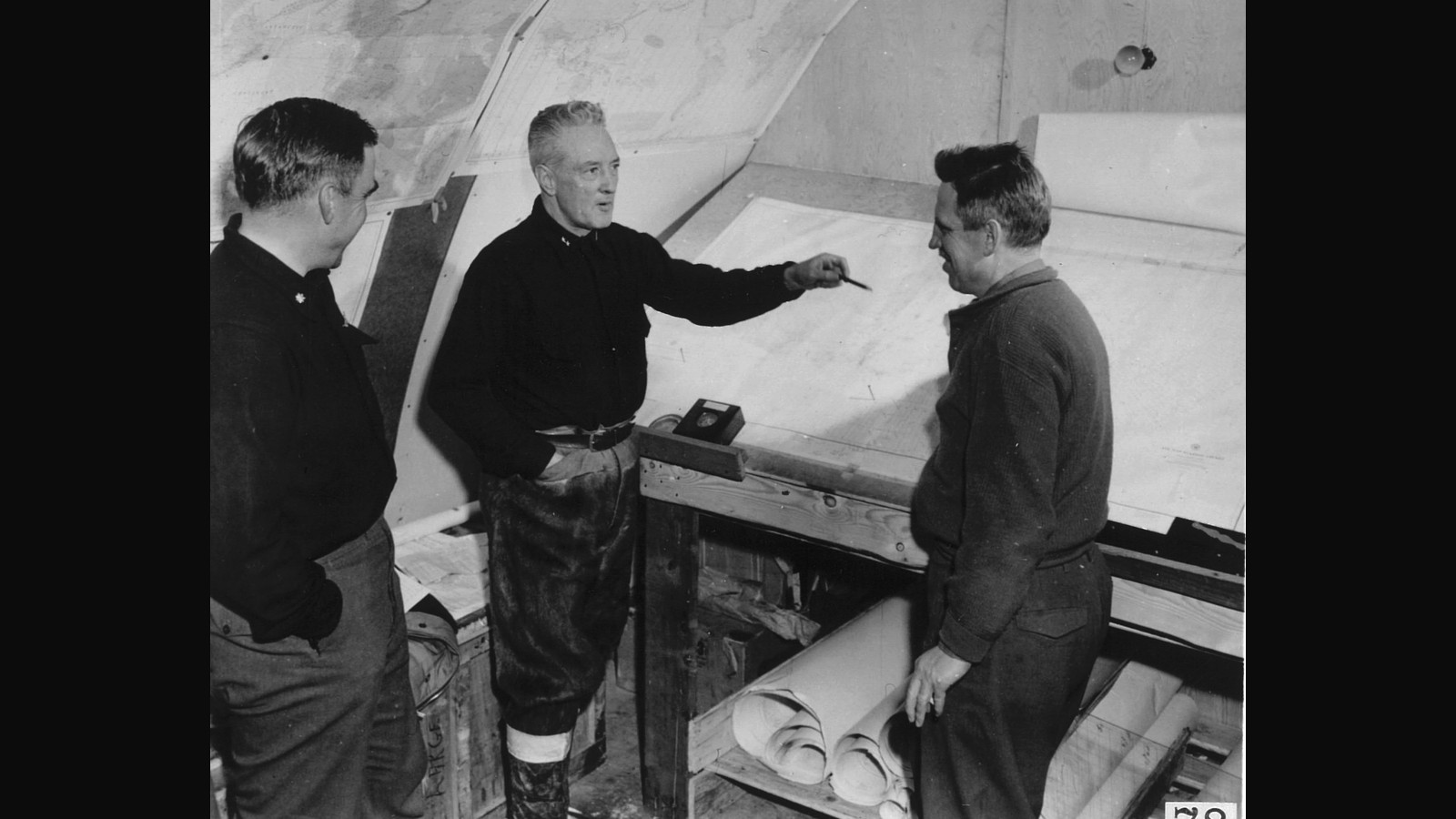
The official Navy record of the same season, as presented by the National Archives in a 27 September 2017 Unwritten Record essay, is the United States Navy Antarctic Developments Program, 1946-1947, organized by Rear Admiral Richard E. Byrd, Jr., USN (Ret), and led by Rear Admiral Richard H. Cruzen. "The primary goal of the mission was to establish an Antarctic research base, Little America IV." That official account does not print the later diary, an inner-world city, or a February 1947 Arctic flight.
Source: National Archives, Operation Hi-jump, 27 September 2017: https://unwritten-record.blogs.archives.gov/2017/09/27/operation-hi-jump-exploring-antarctica-with-the-u-s-navy/
The mainstream position: Earth's interior in seismology
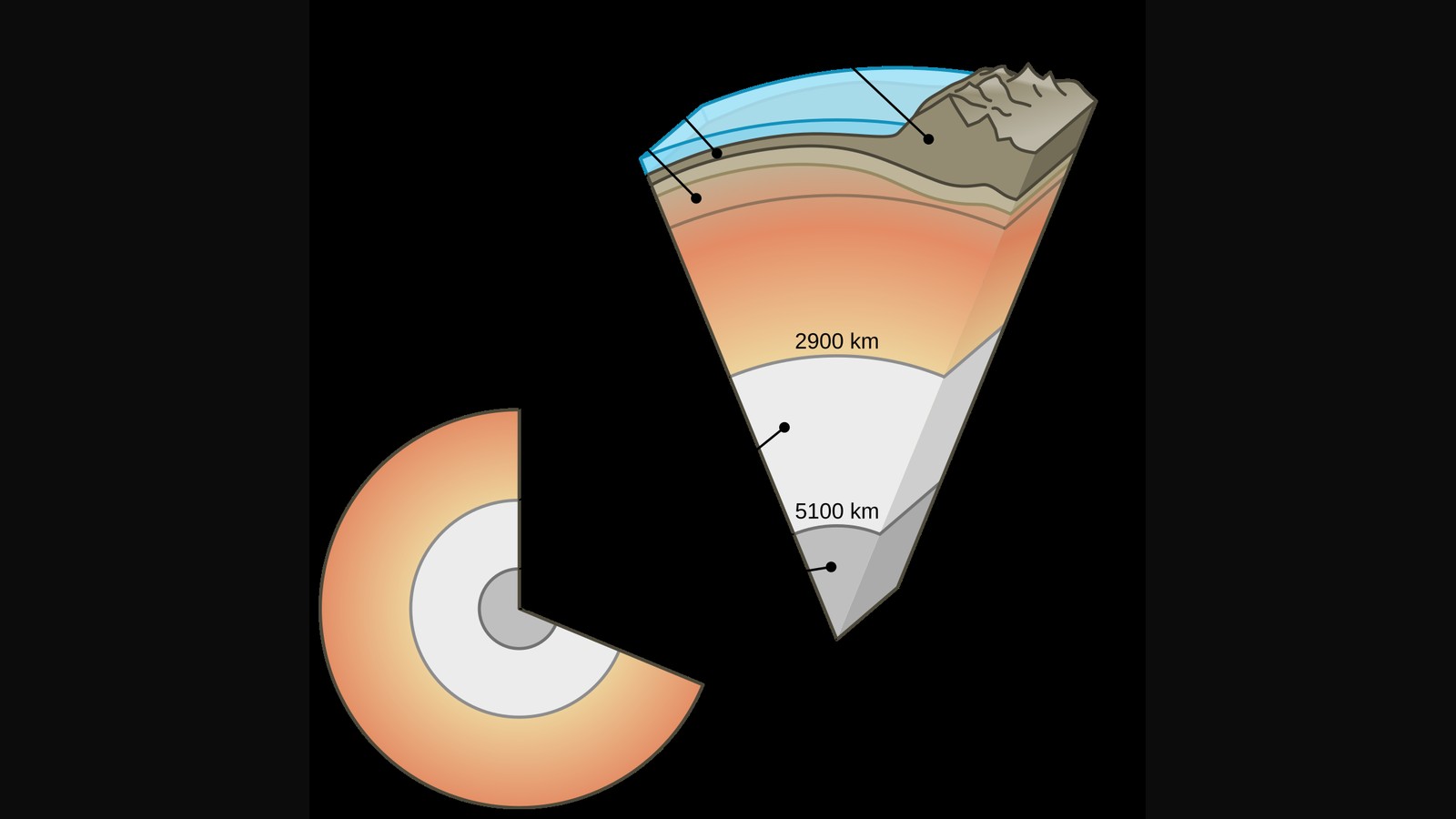
The U.S. Geological Survey general-interest publication The Interior of the Earth states the mainstream position on the planet's structure. "The planet Earth is made up of three main shells: the very thin, brittle crust, the mantle, and the core; the mantle and core are each divided into two parts." On the core, the booklet says: "The core was the first internal structural element to be identified. It was discovered in 1906 by R.D. Oldham, from his study of earthquake records." "The outer core is presumed to be liquid because it does not transmit shear (S) waves and because the velocity of compressional (P) waves that pass through it is sharply reduced. The inner core is considered to be solid because of the behavior of P and S waves passing through it." This is the Survey's published description of the interior, entered here as that position.
Source: U.S. Geological Survey, The Interior of the Earth: https://pubs.usgs.gov/gip/interior/