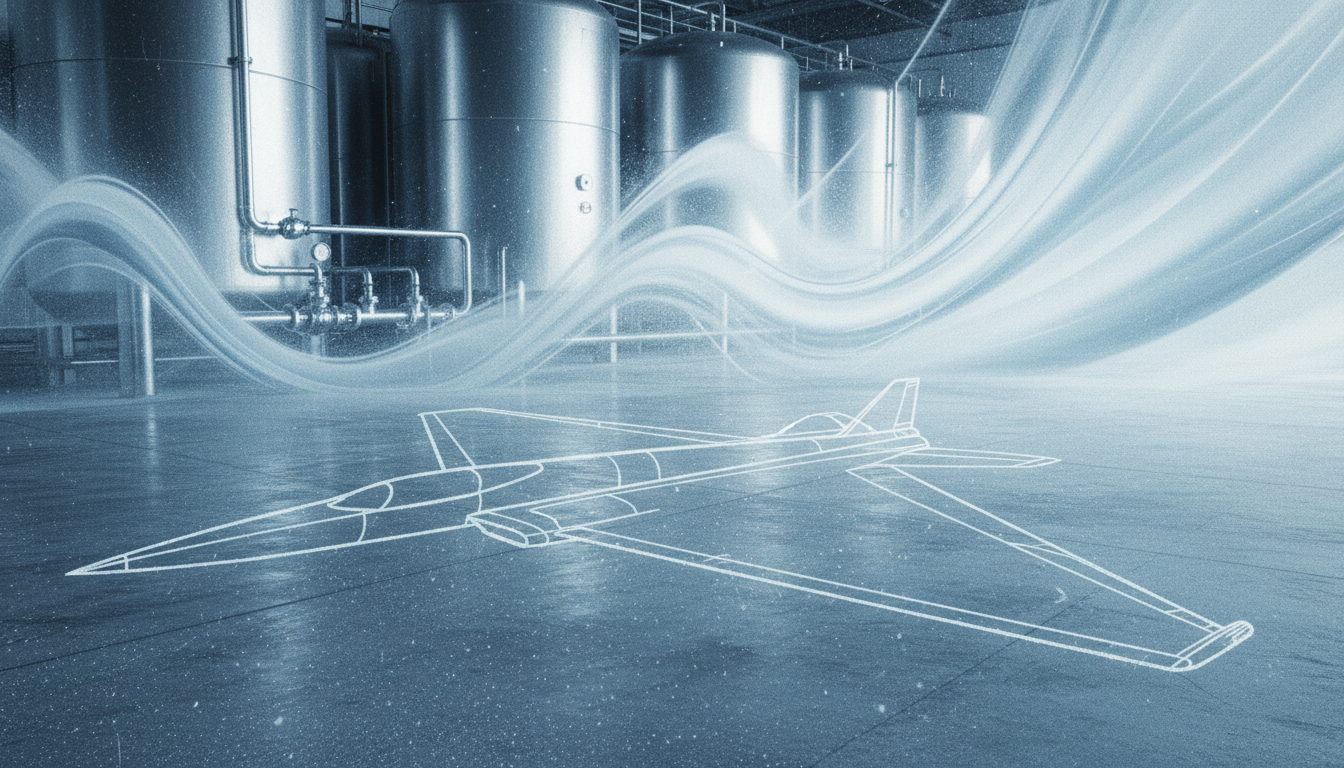
Lockheed CL-400 Suntan: Liquid-Hydrogen Spyplane That Wasn't
Official line after partial declass: the Air Force wanted a Mach-hot, extreme-altitude liquid-hydrogen reconnaissance aircraft beyond the U-2. The NASA and CIA paper trail is colder. Suntan / CL-400 spent serious money on cryogenic engines and basing logistics, then died on range and hydrogen infrastructure—and the public story waited until Skunk Works voices could talk about it in open technical forums in the early 1970s. Cancellation is documented. Exact dollar and performance edges stay carefully sourced. That is why this page keeps a contested verdict while still refusing “CL-400 flew” folklore.
The Ask
Mid-1950s USAF desire for a U-2 successor that added sustained high Mach to extreme altitude pushed Lockheed’s CL-400 under special-access “Suntan” management. Air Force led. This was not a CIA airframe like U-2 or Oxcart, even though secondary blogs often blur the contracting lines. Caption-ready concept: large liquid-hydrogen tanks, cryogenic plant basing, Pratt & Whitney and Lockheed engine and airframe work sized for fuel so light it forced volume and logistics that ordinary JP-fueled recon never faced. The performance dream was altitude plus Mach. The kill lived in basing maps and boil-off, not in a missing physics breakthrough.
NASA SP-4404 — Liquid Hydrogen as a Propulsion Fuel, 1945–1959 (NTRS PDF): https://ntrs.nasa.gov/api/citations/19790008823/downloads/19790008823.pdf
NASA NTRS — Suntan citation door: https://ntrs.nasa.gov/citations/19790008830
Official Posture: Compartmented, Then Conference Talk
Compartmentation ran tighter than ordinary Top Secret. Public silence held until the 1970s technical forums. John L. Sloop’s NASA History monograph SP-4404 is the cleanest official long-form after partial declass—Suntan / CL-400 as the large aircraft LH2 case inside a broader liquid-hydrogen propulsion history. Prefer that shelf and the history.nasa.gov chapter navigation over GlobalSecurity mirrors. When Ben Rich’s generation could discuss LH2 aircraft concepts at Langley-era forums, design details entered open technical literature without turning a cancelled paper airplane into a flown black fleet. The 1973 hydrogen-fueled aircraft technical packet is that declass-via-engineering-conference path—engineers talking range and tankage, not pilots logging secret LH2 hours.
NASA History — SP-4404 contents: https://history.nasa.gov/SP-4404/contents.htm
NASA NTRS — 1973 LH2 aircraft context: https://ntrs.nasa.gov/api/citations/19730016050/downloads/19730016050.pdf
What the Paperwork Shows
Liquid-hydrogen tanks sized for low-density fuel. Engine and cryogenic plant work that was real. Unrefueled radius that could not meet the reconnaissance basing map without impractical LH2 logistics worldwide. Kelly Johnson’s own recommendation, in the primary wording SP-4404 carries, was to kill the “dog.” USAF concurrence fell roughly 1958–59. A large fraction of obligated funds was reportedly returned—prefer monograph language over viral “quarter-billion secret bomber” memes. Contested edges are the exact dollars and performance slogans secondary retellings inflate, not whether the program existed and died on paper. Soft flag: secondary blogs blur USAF Suntan with CIA Oxcart contracting. Prefer SP-4404 plus Oxcart PDFs for ownership lines.
What Flew Instead
The high-Mach reconnaissance niche did not stay empty. CIA’s hydrocarbon A-12 Oxcart path occupied the speed/altitude solution space Suntan competed in. Oxcart institutional histories and the CSI Archangel monograph frame that sibling without making Suntan a CIA project. Pedlow & Welzenbach’s overhead reconnaissance history supplies decade politics around balloons, U-2, and Oxcart—context for why a LH2 successor looked urgent, not a transfer of Suntan ownership to Langley. U-2 remained the altitude-only predecessor; SR-71 later carried the public Mach legend that Oxcart earned in the black. Cross-link those pages. Do not clone their evidence lists here.
CIA Reading Room — History of the Oxcart Program: https://www.cia.gov/readingroom/docs/DOC_0001459069.pdf
CIA CSI — Archangel: https://www.cia.gov/resources/csi/static/Archangel-CIAs-Supersonic-A-12-Reconnaissance-Aircraft.pdf
Why the Story Stayed Managed
An LH2 spyplane sat beside still-black U-2 and Oxcart politics. Revealing cryogenic recon basing would have advertised the collection gap Suntan was meant to close. Date discipline: design/study peak roughly 1956–58; cancellation roughly 1958–59; public technical discussion from the 1973 Langley LH2 symposium era. The Archive’s tension is logistics kill versus performance dream—not a science dismissal of hydrogen propulsion, and not an Archivist claim that cancelled equals never serious. SP-4404 shows the seriousness. The cancellation shows the map.
The contested verdict is a label for dollar and performance edges that secondary retellings inflate, and for ownership myths that assign Suntan to CIA against the USAF-led special-access record SP-4404 describes. It is not a soft way to say the program was imaginary. Cryogenic plant work, tank sizing, and Johnson’s kill recommendation are on the NASA shelf. What stays contested is the viral arithmetic and the “it secretly flew” sequel. Keep Huntington Library Ben Rich papers as an optional archive-visit note if manuscript depth is needed later—not as a live URL evidence row substituting for SP-4404.
Design peak roughly 1956–58 means the concept matured while U-2 flights were still young and Oxcart was not yet the answer on the ramp. Cancellation roughly 1958–59 means the Air Force walked away before LH2 basing could become a permanent overseas footprint. Public technical discussion from 1973 means a fifteen-year gap between kill and conference talk—long enough for folklore to invent flights the SP-4404 shelf does not support. Keep the Archive on that calendar. The hydrogen spyplane that wasn’t is interesting because the paperwork shows seriousness and a logistics kill in the same file, not because a secret fleet needs inventing to make the story worth reading.
What the Paper Trail Settles
Settled on the documents: CL-400 / Suntan as a late-1950s USAF liquid-hydrogen reconnaissance concept managed under special access; serious cryogenic and airframe work recorded in NASA SP-4404; cancellation on logistics and range grounds with Johnson recommending the kill; Oxcart/A-12 as the hydrocarbon answer that flew. Overclaim to refuse: “CL-400 flew,” “CIA owned Suntan,” and inflated dollar or Mach slogans without SP-4404 citation.
The tension that remains is the one the packets leave open. Officials eventually let engineers describe a cancelled hydrogen spyplane. For years the same concept sat black beside programs that did fly. Suntan is that logistics kill—read beside Oxcart and U-2, with SP-4404 open, not beside secret-fleet folklore.