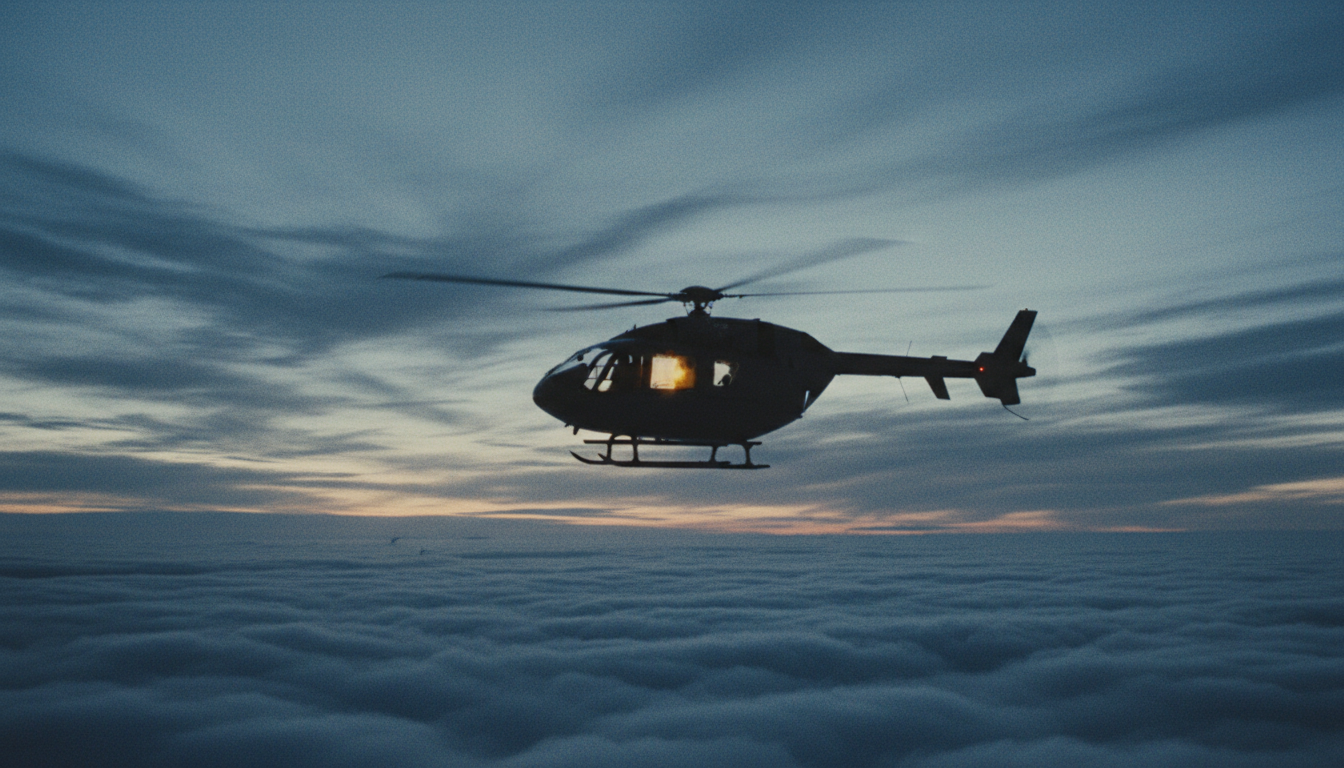
From 3 February 1961 until 24 July 1990, Strategic Air Command kept an airborne command post continuously aloft so that U.S. nuclear forces could still be directed if underground command centers were destroyed or cut off. The mission took the nickname Looking Glass because the aircraft mirrored the command-and-control functions of SAC’s ground post at Offutt Air Force Base, Nebraska. Official posture: survivable continuity for the President and CINCSAC—assurance that strategic forces would act only as national authority directed. The Archive tension is not whether the planes flew. It is how long continuous airborne alert stayed routine doctrine, what Airborne Launch Control added to Minuteman, and how the mission passed from Air Force EC-135s to Navy E-6Bs without the public story keeping up.
The Continuous Sortie
SAC began operational testing of converted KC-135 airborne command posts in 1960 under the Looking Glass name, with a general officer aboard. On 3 February 1961 continuous airborne operations started, with backup aircraft on short ground alert. For more than twenty-nine years a Looking Glass sortie was airborne around the clock. Crews later tallied hundreds of thousands of accident-free flying hours in open Air Force and Federation of American Scientists summaries. On 24 July 1990 continuous airborne alert ended; the mission then held ground or airborne alert around the clock until the platform change of the late 1990s. That chronology is institutional history, not folklore.
FAS nuclear-forces guide — EC-135 Looking Glass: https://nuke.fas.org/guide/usa/c3i/ec-135.htm
Official Posture: Mirror the Underground Post
Looking Glass carried a battle staff and communications suites designed to assume SAC command-and-control if the underground Global Operations Center (and alternate ground posts) were lost. The code name itself is the doctrine: mirror, not freelancing. Open USAF/USSTRATCOM and museum language stresses that the airborne post guaranteed use of strategic forces during national emergencies while keeping launch authority tied to national command procedures. After SAC inactivated on 1 June 1992 and U.S. Strategic Command activated, Looking Glass continued as a joint mission under STRATCOM with the same continuity job.
USSTRATCOM feature — Looking Glass airborne command post: https://www.stratcom.mil/Media/News/News-Article-View/Article/984308/looking-glass-usstratcoms-airborne-command-post/
SAC Aerospace Museum — EC-135 Looking Glass exhibit (S/N 63-8049 accepted 24 October 1964; continuous alert dates): https://www.sacmuseum.org/visit/exhibit/ec-135-looking-glass/
What the Paperwork and Institutional Guides Show
Federation of American Scientists’ EC-135 page reprints and summarizes official Looking Glass descriptive text: continuous alert from 3 February 1961; cessation of continuous airborne alert on 24 July 1990; retirement of the Air Force Looking Glass role on 1 October 1998 when Navy E-6Bs assumed the mission; Airborne Launch Control System (ALCS) capability to transmit launch commands to ICBMs if ground launch control centers were inoperable. FAS also hosts contemporary coverage of the 1998 handoff (“Looking Glass passes torch”): https://nuke.fas.org/guide/usa/c3i/n19980922_981443.html
National Park Service / Minuteman Missile National Historic Site materials on the Airborne Launch Control Center place Looking Glass inside the Post Attack Command and Control System (PACCS) architecture and explain ALCS as the airborne path to Minuteman: https://www.nps.gov/articles/000/the-airborne-command-post-system.htm and https://www.minutemanmissile.com/airbornelcc.html
Museum specifications for the preserved EC-135 document airframe family (C-135/KC-135 conversions), battle-staff mission, and the continuous-alert window—useful as an institutional label beside FAS and STRATCOM prose. Prefer those doors to unsourced “doomsday plane” memes that erase ALCS safeguards language.
Why Continuous Alert Ended—and the Mission Did Not
Ending continuous airborne orbits in 1990 tracked the changing strategic environment and cost of keeping a nuclear command post permanently in the air. The mission requirement—survivable alternate command and ICBM launch connectivity—did not vanish. Navy E-6B Mercury aircraft, already flying TACAMO communications for ballistic-missile submarines, took the Looking Glass/ABNCP role in October 1998, carrying USSTRATCOM battle staff and ALCS-capable suites on a modified Boeing 707 airframe rather than the military-only KC-135 family. Platform change is not mission abolition. Secondary writing sometimes treats “Looking Glass retired” as if nuclear airborne command ended; institutional sources say the torch passed.
Chrome Dome Siblings Without Merge
Looking Glass is command-and-control continuity. Chrome Dome and related bomber airborne-alert programs kept weapons themselves aloft—Broken Arrow risk of a different kind (Goldsboro, Palomares, Thule). Neighbor those pages for Cold War alert culture; do not merge bomber weapon carriage with EC-135 battle-staff command posts. PACCS, Looking Glass, ALCC/ALCS, and later E-6B ABNCP form one C3 family. Sealed-pit bombs on Chrome Dome orbits form another.
Ground Alert After 1990
After continuous orbits stopped, Looking Glass did not become a museum piece overnight. Aircraft and crews remained postured for ground or airborne alert so the mirror function could still launch on warning. That interim posture is why open summaries carefully separate the 24 July 1990 end of continuous airborne alert from the 1 October 1998 platform transfer to the Navy. Collapsing those dates into a single “retired in 1990” caption erases eight years of still-active Air Force Looking Glass responsibility under SAC and then USSTRATCOM.
Myth Discipline
Frame as documented USAF/SAC/USSTRATCOM airborne nuclear command-post history. Refuse overclaims that Looking Glass could “start a war on its own” outside national command procedures; refuse invented continuous-alert end dates that contradict the 3 February 1961–24 July 1990 window; refuse collapsing E-4 National Airborne Operations Center VIP continuity into the SAC Looking Glass EC-135 story without labeling the distinct mission. Yield and target folklore belong elsewhere. The scare—if any—is doctrinal: the United States practiced for the day ground nuclear command died, every day, for decades.
What the Paper Trail Settles
Settled on the documents and institutional guides: continuous Looking Glass airborne alert 3 February 1961 to 24 July 1990; EC-135 airborne command post mirroring Offutt; ALCS path to ICBMs; SAC-to-USSTRATCOM transition; Navy E-6B assumption of the mission on 1 October 1998. Overclaim to refuse: “secret rogue launch plane” captions and erasure of the E-6B handoff.
Officials said the Glass kept the arsenal controllable if the ground went dark. The flight logs and handoff dates say the United States flew that insurance for a generation. Looking Glass is that continuity mission—read with the FAS EC-135 guide and the STRATCOM feature open.