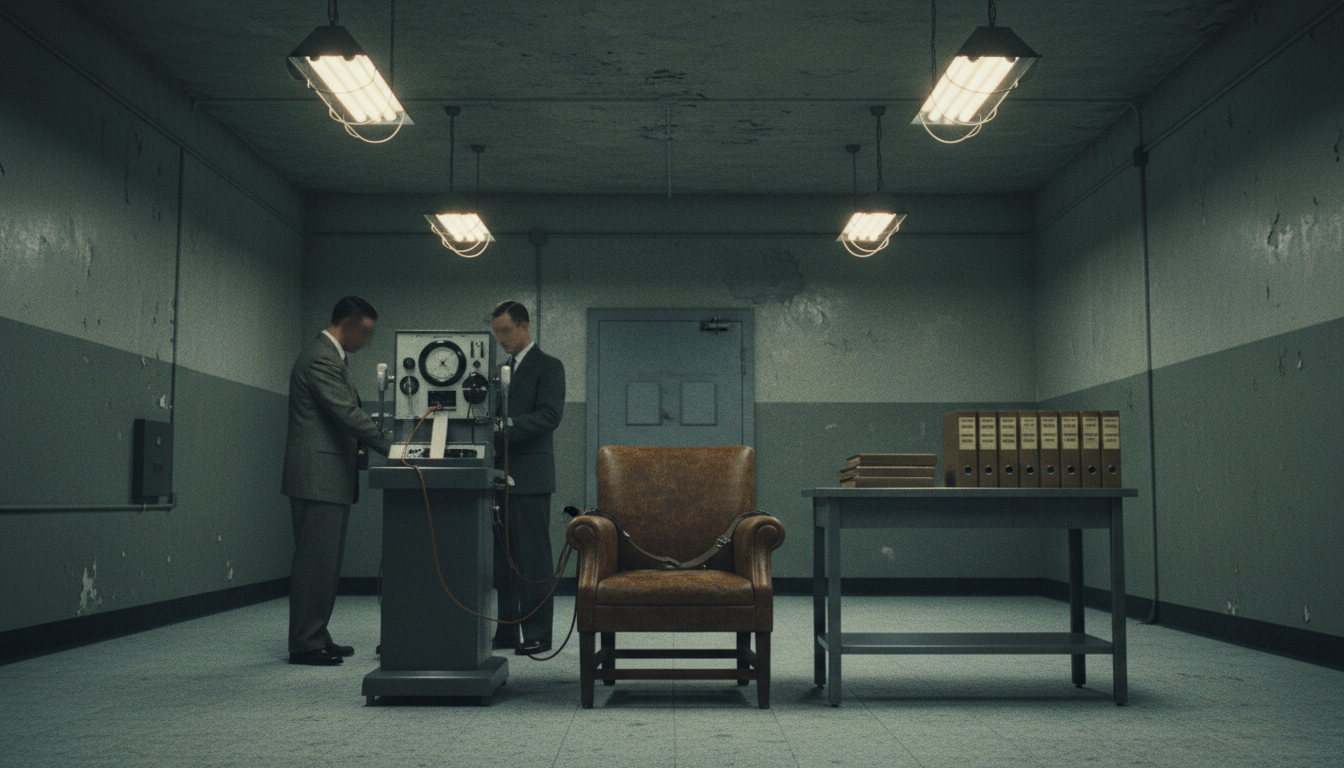
Project ARTICHOKE
Open a CIA Reading Room folder labeled ARTICHOKE and the Cold War arrives as committee prose. Early 1950s memos argue about hypnosis depth, drug combinations, and whether an interrogation subject can be steered into acts they would normally refuse. The tone is bureaucratic. The subject is not.
BLUEBIRD to ARTICHOKE
ARTICHOKE did not appear from nowhere. It followed Project BLUEBIRD, an earlier Agency effort aimed at interrogation aids and defensive awareness of Soviet "brainwashing" reports from Korea and elsewhere. By 1951–1952, ARTICHOKE formalized a Special Interrogations focus: polygraphs, hypnosis, narco-hypnosis, and related techniques evaluated for operational use.
The committee paper trail shows doctors, security officers, and clandestine-service interests colliding over methods and overseas trials. Some documents discuss safehouses and foreign operational environments. Others read like literature reviews of psychiatric and pharmacological possibilities.
Special Interrogations on Paper
Declassified ARTICHOKE material is fragmented and often redacted. Still, recurring questions appear. Can drugs plus hypnosis produce reliable compliance? Can memory be altered or induced? What are the risks of psychosis, suggestion bleed, or operational blowback? The Agency was not writing thriller treatments. It was shopping for tools.
When MKUltra launched in 1953 under Allen Dulles, much of this behavioral and chemical work was absorbed into a larger umbrella run through Technical Services channels associated with Sidney Gottlieb. ARTICHOKE is therefore best read as a predecessor node—not a rival myth, and not identical to every later MKUltra subproject.
Manchurian Shadows
Popular culture flattened ARTICHOKE into the Manchurian Candidate fantasy: a fully programmable assassin delivered on cue. Surviving memos chase related ambitions—forced acts, amnesia, interrogation breakthroughs—but they do not deliver cinematic proof of a stable, fielded assassin program. Historians of intelligence behavioral research (and Senate hearing records on MKUltra) treat ARTICHOKE as real, ethically radioactive research with incomplete files.
Paperclip-era importation of German scientific talent and broader Cold War panic about Communist mind-control both sit in the same climate. Causation is not a single memo. Context is.
Reading the Gaps
ARTICHOKE's Archive value is chronological. It shows that MKUltra was an escalation, not an origin story. It also shows how much of the behavioral-control ledger was already being burned, redacted, or never filed cleanly before Congress arrived in the 1970s. What the record establishes is intent and experimentation. What it does not establish is every later claim stamped with the artichoke name for atmosphere.
Overseas Trials and Ethical Evaporation
ARTICHOKE memos drift into foreign safehouses and liaison environments where U.S. law's already-thin constraints thinned further. Redactions hide names and places; the surviving verbs still show intent to test techniques on real bodies. Medical experiment tagging belongs here because pharmacology and psychiatry were instruments, not metaphors.
When MKUltra later industrializes the portfolio, ARTICHOKE looks like a pilot plant. Gateway Process materials in the Archive are a different lineage—altered-states research with its own FOIA fame—and should not be merged casually. Paperclip's imported expertise sits in the climate of postwar scientific acquisition, not as a single signed ARTICHOKE subcontract unless a file says so.
Readers should expect unfinished sentences in the primary record. The unfinished quality is evidence of secrecy culture, not proof of every maximal rumor stamped on the cryptonym.