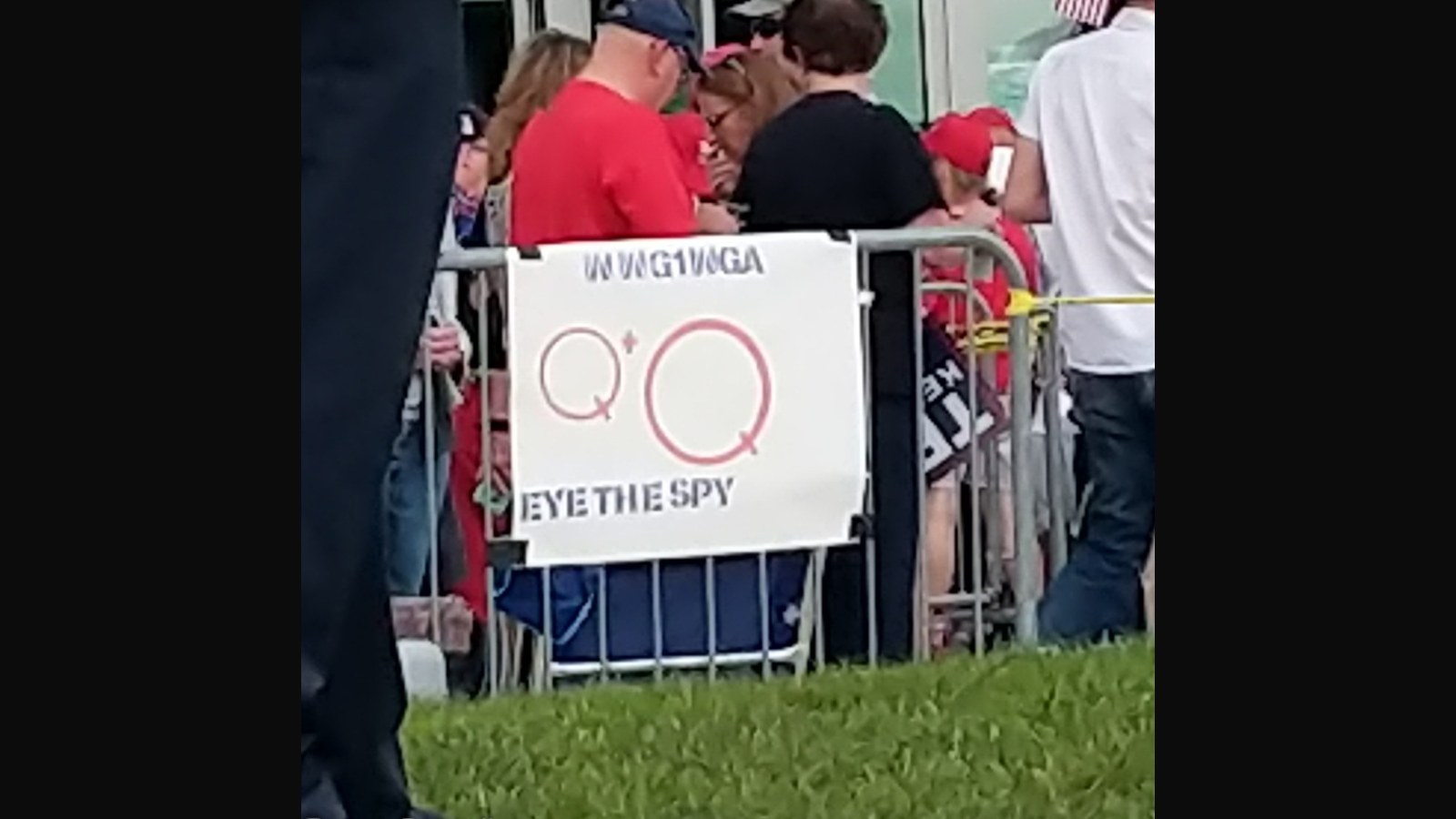
Posts called Q drops, and a coming disclosure, are a claim; court, platform, and House records have not made them fact. The claim, as publications describe it, is that an anonymous writer posted secret information and that a disclosure was coming. A House resolution rejects that complex of theories. A platform's own posts say they removed related accounts. A federal opinion recites an agreed description of about 5,000 "Q drops" and does not find that a disclosure occurred.
What adherents' literature says the posts are
The Anti-Defamation League backgrounder, published 4 May 2020 and updated 28 October 2022, describes followers' terms. People who analyze the posts, it says, call them "breadcrumbs" or "Q drops," and call themselves bakers of those crumbs. It says the posts began on 28 October 2017 on 4chan's /pol/ board, and that the moniker "Q Clearance Patriot" appeared on 1 November 2017, with posts signed "Q" from 2 November. It describes a belief, which it attributes to followers, that a coming day called "the Storm" would bring arrests and tribunals, and that followers call the wider telling of that plan "the Great Awakening." It says there is no evidence, in the backgrounder's account, that the poster is a government employee or holds classified information. Those sentences are the backgrounder's description of a claim-set. They are not a finding that any drop was a real leak, or that the day it describes arrived.
Anti-Defamation League backgrounder, QAnon: https://www.adl.org/resources/backgrounder/qanon
A July 2020 article in CTC Sentinel, by Amarnath Amarasingam and Marc-André Argentino, at the Combating Terrorism Center at West Point, dates the same beginning: Saturday 28 October 2017, on 4chan's /pol/, in a thread titled "Calm Before the Storm." The authors write that an anonymous user signing as Q stated that Hillary Clinton would be arrested between 7:45 a.m. and 8:30 a.m. Eastern time on Monday 30 October 2017. The article does not report that arrest. A note in the article describes meetings in which one hour is given to analysis of "Qdrops." The thread title and the arrest window are claims the authors attribute to that post. The post's prediction is not converted, in the article, into an event that happened.
CTC Sentinel, July 2020: https://ctc.westpoint.edu/the-qanon-conspiracy-theory-a-security-threat-in-the-making/
The House resolution
H. Res. 1154, engrossed in the House on 2 October 2020, condemns QAnon and rejects the conspiracy theories it promotes. The text calls QAnon a movement promoting a collection of unfounded conspiracy theories that have spread widely on the internet since 2017. It says QAnon initially alleged that prominent Americans are engaged in a secret plot to control the world, while using their power to exploit children, and that the movement has expanded to embrace many other theories. The resolution quotes an FBI assessment, which it says was made with high confidence, that fringe political conspiracy theories, including QAnon, very likely motivate some domestic extremists to criminal or violent activity. The resolution urges Americans to seek information from authoritative sources. It is a congressional rejection. It does not authenticate any post as a government leak, and it does not announce that a promised disclosure took place.
H. Res. 1154, text engrossed in the House, 2 October 2020: https://www.congress.gov/116/bills/hres1154/BILLS-116hres1154eh.pdf
What the platforms posted
On 19 August 2020 Meta, then writing as Facebook, said it was expanding a Dangerous Individuals and Organizations policy and would remove Facebook pages, groups, and Instagram accounts tied to QAnon when they discussed potential violence, and would limit recommendations and ranking for others. An update dated 6 October 2020 on the same post says that, starting that day, the company would remove any Facebook pages, groups, and Instagram accounts representing QAnon, even if they contain no violent content. Those are the company's enforcement figures. They are not a census of believers, and they do not test whether a given post contained classified information.
Meta, policy post of 19 August 2020, with the 6 October 2020 update: https://about.fb.com/news/2020/08/addressing-movements-and-organizations-tied-to-violence/
On 15 October 2020 YouTube's blog said the service was expanding hate and harassment rules to prohibit content that targets an individual or group with conspiracy theories that have been used to justify real-world violence. It named QAnon as an example. It said news coverage, or discussion that does not target individuals or protected groups, may stay up. It said tens of thousands of QAnon videos had been removed and hundreds of channels terminated under policies already in place, particularly threats of violence or denial of major violent events. That is a platform rule and a platform statistic. It leaves ordinary discussion standing, by the blog's own line, and it does not declare the underlying posts true or false one by one.
YouTube blog, 15 October 2020: https://blog.youtube/news-and-events/harmful-conspiracy-theories-youtube/
A court recitation, not a disclosed secret
On 24 April 2024 Judge Arun Subramanian, in the Southern District of New York, filed an opinion in John P. Flynn and Leslie Flynn v. Cable News Network, Inc., 21-cv-2587. The plaintiffs had sued under Rhode Island's false-light statute over a broadcast they said painted them as "QAnon followers." The opinion states that the parties agree QAnon is "an American conspiracy movement that began in 2017," that the account centers on "Q," supposedly "a high-ranking government official" who "leak[s] top secret information" about the "Deep State," and that there have been about 5,000 of these leaks, or "Q drops." The court is reciting the parties' agreed description, with citations to the record. It then holds that, even assuming the report could imply the plaintiffs were followers, that statement is not actionable. The defendant's motion for summary judgment is granted. Judgment is entered for the defendant, and the case is closed. The opinion does not find that any drop was a genuine leak. It does not find that a disclosure of the kind the claim describes had occurred or would occur. The plaintiffs and the defendant appear here as parties to that order.
Opinion and order, 24 April 2024, S.D.N.Y. 21-cv-2587: https://storage.courtlistener.com/recap/gov.uscourts.nysd.556958/gov.uscourts.nysd.556958.226.0.pdf
Beside the claim
The backgrounder and the West Point article describe posts, a thread title about a storm, an arrest prediction for a named date, and a coming day followers call the Storm. The House text rejects the theories and quotes an FBI assessment about violence risk, not about the truth of a leak. Meta and YouTube published removal rules and removal counts. The New York opinion repeats an agreed figure of about 5,000 drops and decides a false-light case. None of those records establishes a drop as fact, and none of them records the arrival of the disclosure the claim expects.