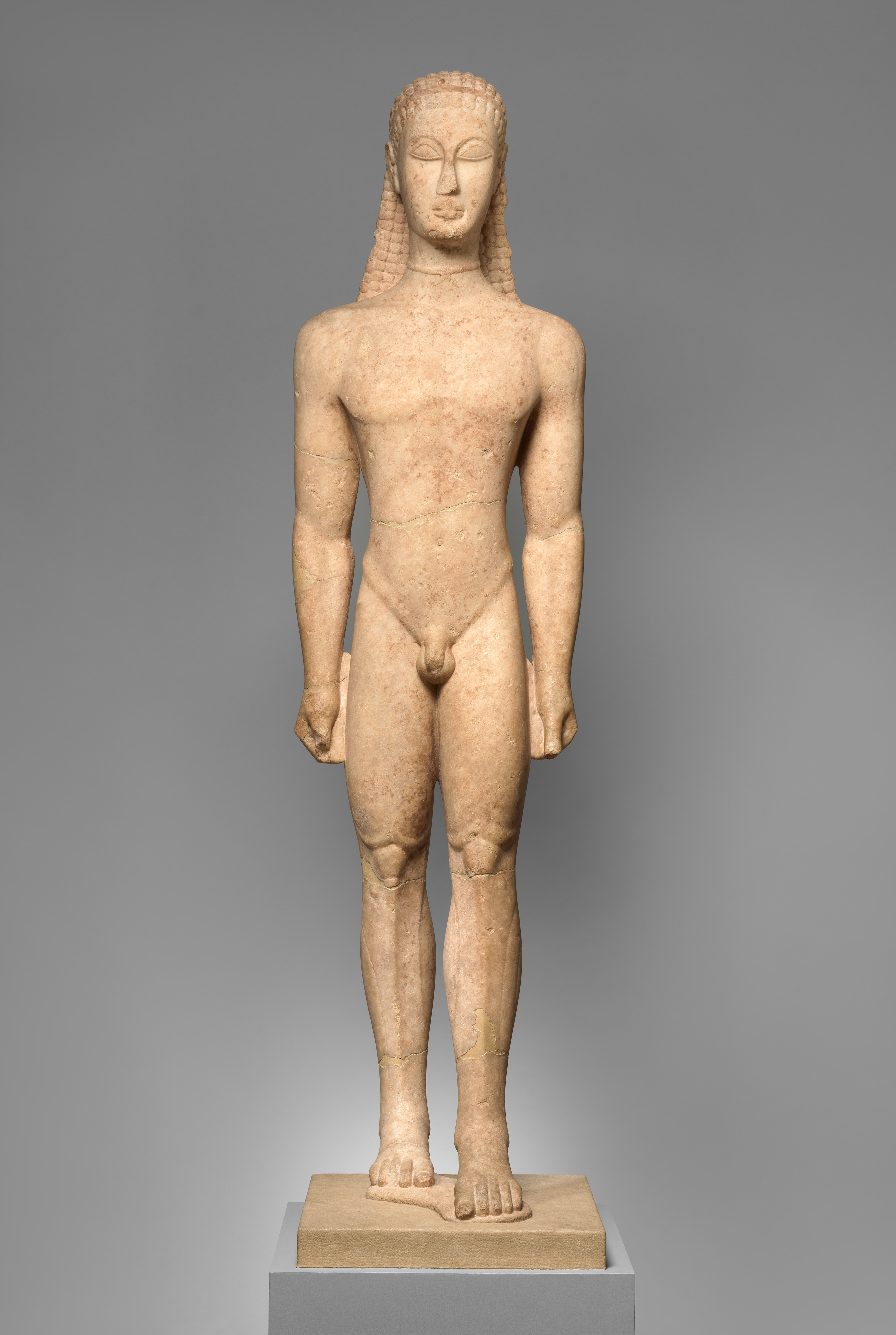
In 1985 the J. Paul Getty Museum acquired a monumental marble kouros—an Archaic Greek youth statue type—that should have been a once-in-a-generation purchase. Provenance papers pointing to an old Swiss collection later collapsed as problematic. Scientists and stylists fought over whether the surface weathering was ancient or laboratory-fakeable. The museum’s famous dual label said the quiet part aloud: “Greek, about 530 B.C., or modern forgery.” By 2018 the statue was off public view as scholarly consensus leaned fake—still without a courtroom stamp naming a forger. That limbo is the Archive file: prestige hungrier than proof.
The Purchase and the Paper
Kouroi are scarce on the open market when genuine. A complete, high-quality example triggers acquisition adrenaline. Trafficking Culture’s case study reconstructs how the Getty kouros arrived with documentation that did not survive scrutiny. Forged or unreliable provenance is not a side note here; it is the first fracture. Museums that preach due diligence look different when the due diligence fails after the check clears.
Getty object page: https://www.getty.edu/art/collection/object/103VNP.
Trafficking Culture Getty Kouros: https://traffickingculture.org/encyclopedia/case-studies/getty-kouros/.
Symposium Shock, Dual Label
The 1992 Athens kouros symposium—covered contemporaneously by the Los Angeles Times—put international specialists in one room and publicly split confidence in the statue. Style arguments and scientific patina debates (including work showing artificial de-dolomitization could mimic aging) turned the kouros into a teaching object about uncertainty. The dual label was museum speech for unresolved authenticity: display continued while doubt stayed printed beside the stone.
LA Times 1992 symposium: https://www.latimes.com/archives/la-xpm-1992-05-14-ca-3139-story.html.
Official posture became managed ambiguity. That is rarer and more interesting than a clean “fake” press release. It admits the institution cannot yet close the file while visitors still walk past marble.
Removal Without a Verdict Stamp
In 2018, reporting on the Getty Villa’s antiquities reinstallation noted the kouros had been taken off public view, with director Timothy Potts’s comments in the Los Angeles Times reflecting scholarly lean toward modern forgery. Removal is not the same as a criminal conviction of a named forger. The Archive should not invent a courtroom ending the packets do not provide. Documented are acquisition, contested label, scientific dispute, and withdrawal from display.
LA Times 2018 Villa reinstall: https://www.latimes.com/entertainment/arts/la-et-cm-getty-villa-reinstalled-20180419-htmlstory.html.
Prestige Reform Next Door
The same Getty institutional world spent the 2000s negotiating antiquities returns with Italy and Greece. The July 2006 Getty Trust–Hellenic Republic joint statement is a provenance-reform neighbor: different objects, same museum ecology learning that wishful paperwork is a liability. UNESCO’s Acropolis listing sits as cultural prestige context for why an Archaic youth statue mattered enough to risk tens of millions and decades of embarrassment.
Getty–Hellenic joint statement: https://www.getty.edu/news/hellenic-republic-and-getty-trust-joint-statement-july-2006/.
UNESCO Acropolis List 404: https://whc.unesco.org/en/list/404/.
Archive Siblings
Fujimura is planting fraud caught on camera. Euphronios/Met is looted genuine art with a repatriation accord. Piltdown is paleontological fabrication. The kouros is the museum-science middle: maybe fake, long displayed, never simply “solved” in public law. Keep the page on that limbo.
Myth Discipline
Reject tabloid certainty that a single named master forger has been proven in court if the museum packets do not say so. Reject the reverse comfort that dual labels mean the statue is safely ancient. Stick to acquisition year, provenance collapse, symposium fracture, dual label language, and 2018 removal reporting.
Laboratory Aging and Wishful Eyes
One reason the kouros fought so long is that science did not hand museums a single red/green light. Experiments showing artificial weathering could mimic ancient surfaces undermined “the stone looks old, therefore it is old.” Style experts split. Acquisition teams who had wanted a masterpiece faced a credibility tax either way: keep displaying and look stubborn, or remove and look burned. The 2018 withdrawal from view is the institutional shrug made visible. Documented controversy does not require inventing a secret forger confession the packets omit. It requires watching prestige negotiate with doubt in public labels and press.
What “Documented” Means Here
Documented does not mean “proven fake in open court.” It means the acquisition, the provenance collapse, the dual label, the symposium fracture, and the removal from view are all on the public record. Absolute forger identity may remain unsettled in museum statements. That gap is not a failure of the Archive page; it is the subject. Prestige institutions sometimes live for decades inside unresolved authenticity, and the kouros is the marble proof.
Acquisition Hunger as System Risk
Mega-museums compete for masterpieces under donor and board pressure. A kouros-shaped hole in the collection becomes a vulnerability. Trafficking Culture’s case study and the dual-label era show how that vulnerability looks after the fact: problematic papers, symposium humiliation, scientific indeterminacy, then quiet removal. Getty’s later Hellenic joint statement on other returns shows an institution adjusting provenance practice while the kouros authenticity limbo continued in parallel. Two reform stories, one campus.
What the Paper Trail Settles
Settled: 1985 Getty acquisition of the kouros; problematic provenance documentation; prolonged authenticity controversy including the dual label; major public expert doubt from the early 1990s; removal from public display by the 2018 Villa reinstall period. Overclaim to refuse: inventing a closed criminal identification of the forger and claiming the museum “always knew” in a way the public record does not show.
The tension that remains is institutional desire. Officials wanted an Archaic masterpiece. The stone became a question mark that outlived the press cycle. The Getty kouros is that question mark—read with the object page and Trafficking Culture doors open.