



The case
The Simpsons episode $pringfield (Or, How I Learned to Stop Worrying and Love Legalized Gambling) belongs to the show's fifth season. As Mental Floss described it in 2014, "Homer and Ned Flanders travel to Las Vegas where they meet Gunter and Ernst, a Siegfried and Roy parody. Near the end of the episode, one of the duo's white tigers attacks the performers."
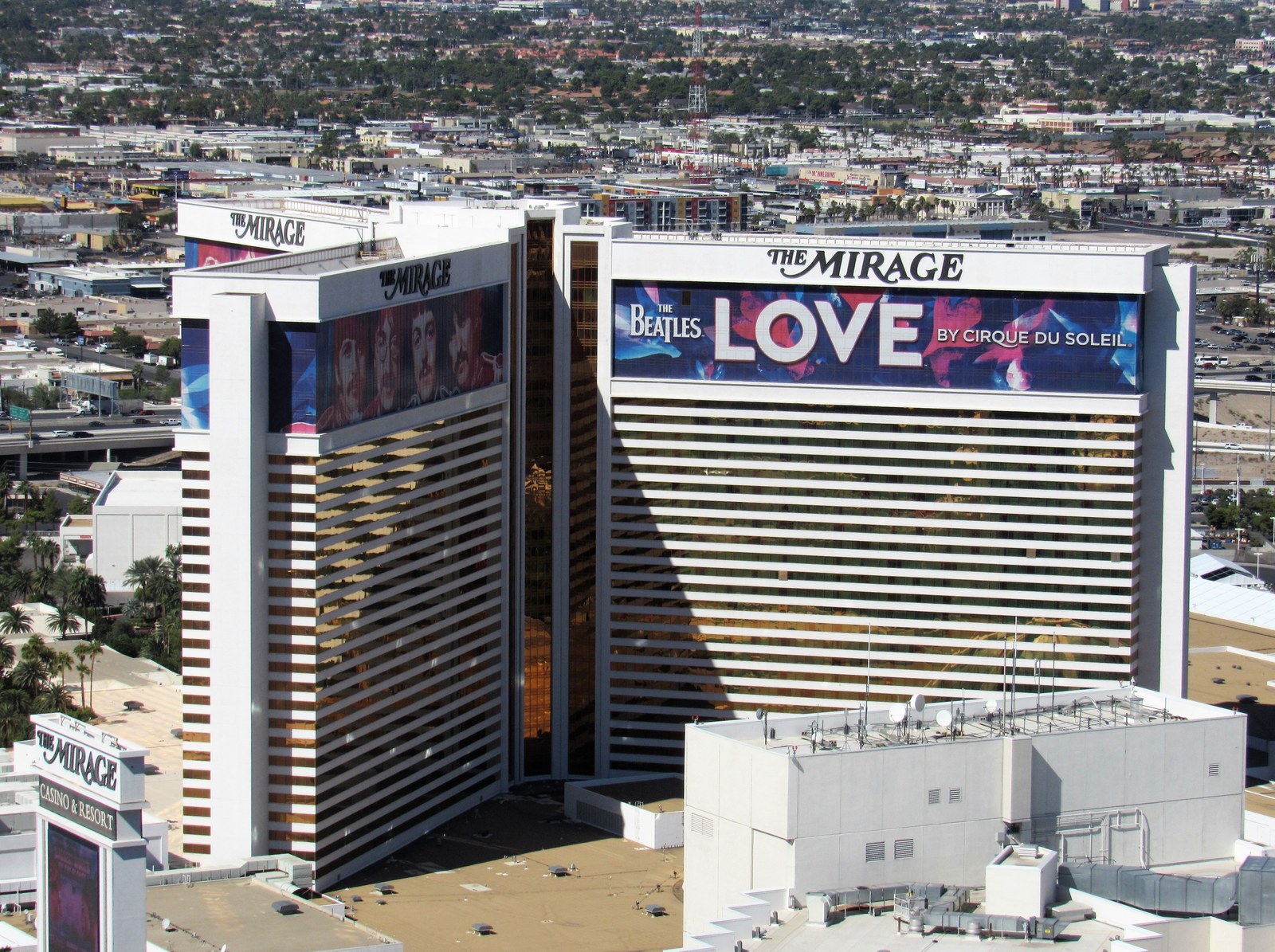
Siegfried & Roy were real headliners. According to an obituary published by The Scotsman in 2020, they began performing at the Mirage in 1990, and their show "included about 20 white tigers and lions." Then, "halfway during a performance 3 October 2003, when Horn was alone on stage with the tiger," it "suddenly lunged at him." Horn was "critically injured," the obituary says. He "had never been injured during a show previously," and the attack "ended the long-running Las Vegas Strip production."
The adherents' reading
For adherents, this is one of the show's most striking hits. On an episode of The Conspiracy Podcast in 2024, the hosts list it first among the show's claimed predictions: an episode that "originally aired December 16th 1993," in which "magicians resembling Siegfried and Roy are attacked by a white tiger on stage," and then, "in 2003, 10 years later," the real attack. The episode page describes one host, Jorge, as finding the run of hits uncanny, and the transcript sets out the case: the show has "an uncanny ability to predict the future," and "the accuracy and range of its predictions are nothing short of remarkable."
The site Esoteric.Love, in an essay titled "The Simpsons: Predictive Programming?", makes the general argument that "the pattern demands an answer." It accepts that much of the show was satire, but adds: "Satirical intent and prophetic outcome are not mutually exclusive." Its summary is short: "Coincidence has a weight limit."
The mainstream reading
The show's makers see no mystery. Mental Floss reports that "on the commentary for the season five DVD, the production team dismissed this incident as evidence of their greenseeing abilities, saying that it was 'bound to happen' sooner or later."
The performers gave their own account of the real event. The Scotsman's obituary records that the pair's manager at the time thought the tiger "had been distracted by something in the audience," and that "Horn himself said later that he fainted and the tiger was trying to help him by dragging him offstage; animal experts disputed that possibility."
Speaking more broadly in a 2025 interview with Amelia Tait of MIT Technology Review, Al Jean, the show's longest serving showrunner, said of the claimed predictions: "It's cherry-picking." Of the theory that the writers knew events in advance, he said "it's preposterous stuff that people say."
The researchers' view
Researchers point to volume. Writing for Mic in 2018, Alexis Kleinman reported the estimate of assistant math professor Matt Zaremsky that the show had made about 1,224 "explicit predictions about the future." Of those, "people seem to think between 10 and 20" came true. "So let's say 20 out of the 1,224. That is roughly a 1.6% success rate," Zaremsky said. "Statistics says The Simpsons just had so many jokes and so many predictions that essentially they got lucky."
Gary Simon, a retired professor of statistics at New York University's Stern School of Business, told Mic that the format helps: "A cartoon show can do more predicting about the future than some staged TV drama." On this view, a comedy set in the present that parodies real performers will sometimes land close to what later happens to them.
The adherents' answer
Adherents reply that this was no loose match. The episode did not show a vague disaster; it showed a recognizable Las Vegas act, its signature white tigers, and an attack on stage. Ten years later that act, with that kind of animal, on that kind of stage, met that event. Adherents accept that the episode was a parody. Their point is that a parody aimed at one act, followed by that exact event, is a narrow target, and that the more specific a hit is, the less a count of jokes explains it. For them, coincidence has a weight limit.