The case
Back to the Future Part II was released in 1989. Early in the film, Marty McFly and Doc Brown travel from 1985 to 21 October 2015. Two things Marty sees there name the Chicago Cubs as champions. A USA Today front page carries the headline "Cubs Sweep Series in 5," as TODAY's Philip Caulfield and Robin Kawakami recalled in October 2015. And, as the fact checking site Snopes describes it, Marty watches "a holographic sports news broadcast announcing that the Chicago Cubs have swept an unnamed Miami team (represented by a gator, not a marlin) to win the World Series." The broadcast is what gives Marty the idea to buy a sports almanac and bet on results he already knows.
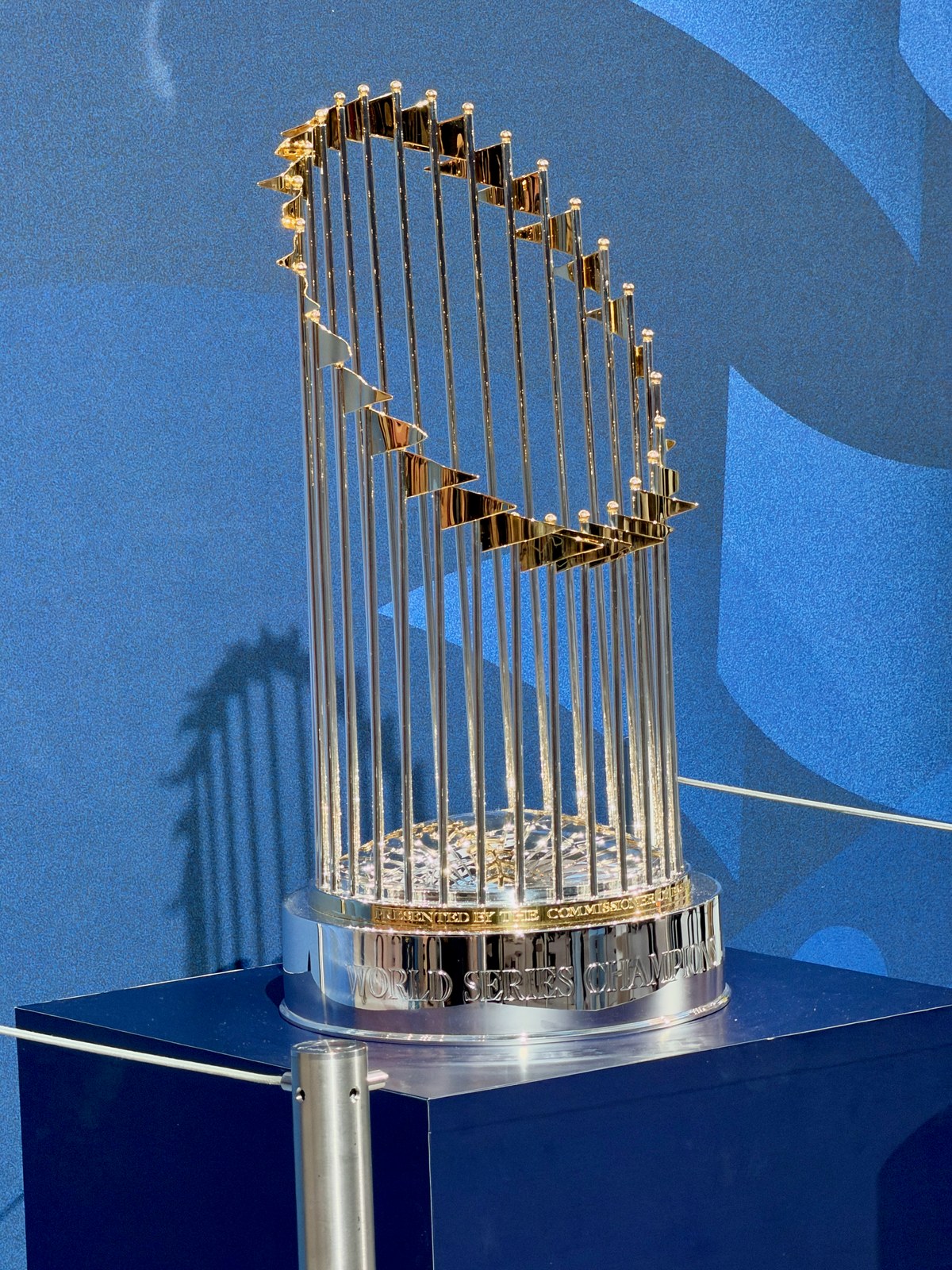
When the film was made, the joke had a clear target. Snopes notes that the Cubs "hadn't played in a World Series since 1945 (or won a World Series since 1908)," and that Miami had no major league team in 1989; it was awarded one two years later. On the real 21 October 2015, TODAY reported, the Cubs were in the news for a sweep, but on the losing side, beaten four games to none by the New York Mets in the National League Championship Series.
The adherents' reading
For adherents, the scene belongs on the list of fiction that showed events before they happened. A 2016 Prezi presentation titled Predictive Programming lists "Cubs win world series (2016)" beside "Back to the Future Part II (1989)" among its examples, and states its aim plainly: "I am here to prove that fictional media will plant hints of the future in order to prepare us for what's to come." It closes by inviting viewers to "judge for yourself if these 'coincidences' are more than they appear."
In this reading, the details matter. Of every team in baseball, the film named the one with the longest wait for a title. It placed the win in the mid 2010s, decades ahead, and the Cubs reached the league championship series in that very October. The title followed a year later, which adherents count as close enough.
The mainstream reading
The film's co-writer says the pick was a joke. In October 2015, Bob Gale told Doug Miller of MLB.com that the film jumped ahead from October 1985 to October 2015, "and there's no bigger sports event in October than the World Series, and there was no more insane, outrageous, unbelievable thing to have happen than to have the Cubs win it." He added: "If the Cubs win it all, it came true. If they lose, our joke is still a joke, and it's funny."
After the Cubs won their first title since 1908, Gale explained the choice again to Ryan Parker of The Hollywood Reporter in November 2016: "So, we tried to think of the most ridiculous and unbelievable sports event that we could think of, and that was the Cubs winning the World Series." In the film, a character calls the Cubs a 100 to 1 shot. Gale called being one year off "pretty astounding," with "mixed emotions," because a win meant "we made an almost accurate prediction" and also spoiled a good gag.
The researchers' view
Researchers note that the claim has been told wrongly before. Snopes, in a check by David Mikkelson, traces a claim that began in October 1997, after the Florida Marlins won the World Series, claiming the film had predicted that result. The film made no such prediction; Snopes says it was "either started as a joke or spread by someone who inaccurately remembered the news broadcast scene," and that it surfaced again in 2003. Gale told MLB.com the same thing: "All that proved was that some people had a hazy memory."
Researchers also look at how many guesses a film like this makes. Writing in The New York Times in February 2018 about claims that The Simpsons predicted events, Maya Salam pointed to "the law of truly large numbers," set out by the Harvard mathematicians Frederick Mosteller and Persi Diaconis: "With a large enough sample, any outrageous thing is apt to happen." On that view, a film that fills its 2015 with guesses about the future, the hoverboard among them, will sooner or later see one of them land.
The adherents' answer
Adherents accept that the line was written as a joke. That, they say, is how such hints would arrive: as something easy to laugh off. Of all the long shots a writer could have chosen, the film picked a team that had not won in eight decades, and that team won within a year of the film's date, after reaching the league championship series in that very October. A miss of one year, adherents argue, is not a miss at all when the wait had lasted more than a century.