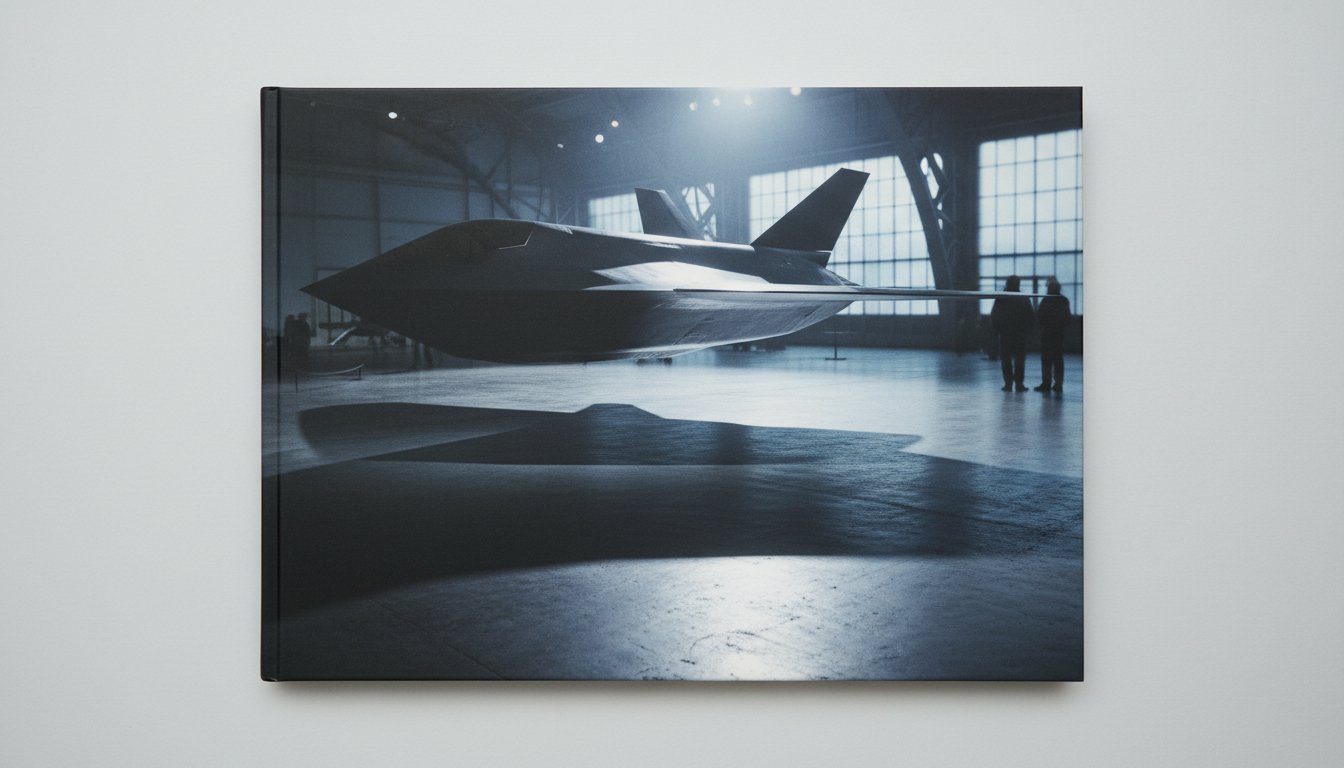
Boeing Bird of Prey: The 1990s Stealth Demonstrator
Official line: a one-off Phantom Works demonstrator tested low-observable shaping and new manufacturing tricks, then went to the Air Force Museum. The museum and USAF trail is tighter. The project stayed secret from 1992 to 1999—first flight in fall 1996, about thirty-eight flights—and was revealed in 2002 only after its design practices had already become industry standard. Secrecy was timed to the technology, not to a combat wing. That timing is the rabbit hole: a black airframe that left the dark when the tricks stopped being unique.
The Demonstrator
Boeing Phantom Works built a single-seat low-observable testbed. Project window 1992–1999. First flight fall 1996. Named for a Klingon Star Trek silhouette the museum itself notes as color, not as proof of a pop-culture cover-story cabal. Caption-ready features: gapless control surfaces and a forward-shielded inlet. Off-the-shelf JT15D turbofan, manual controls, and Beech King Air / Queen Air landing gear adapted to cut cost and time. Large single-piece composites, virtual-reality design and assembly, disposable tooling—manufacturing methods as much as shaping. Museum performance notes put the airframe around 300 mph and a 20,000-foot ceiling. Prefer those fact-sheet numbers over secondary “superfighter” inflation.
National Museum of the U.S. Air Force — Boeing Bird of Prey: https://www.nationalmuseum.af.mil/Visit/Museum-Exhibits/Fact-Sheets/Display/Article/196041/boeing-bird-of-prey/
Official Posture: Classified Until the Tricks Diffused
Highly classified until the 2002 reveal. Museum donation the same year. USAF and museum language stresses techniques becoming “standard practice,” not a hidden squadron. The official photo record notes the 1992–1999 classified project, the October unveil path, and induction into the Air Force Museum. That is declass theater with a date stamp: once LO and digital design practices had diffused into later demonstrators, continued classification of the airframe itself lost value.
U.S. Air Force — Bird of Prey photo record: https://www.af.mil/News/Photos/igphoto/2000598382/
National Museum USAF — Bird of Prey exhibit photo (LaRock): https://www.nationalmuseum.af.mil/Upcoming/Photos/igphoto/2003552590/
What the Paperwork Shows
Thirty-eight flights testing visual and radar observability and manufacturing methods. Manned demonstrator, not an operational stealth fighter rumor. Phantom Works applied Bird of Prey research when completing the first X-45A unmanned combat air vehicle—museum fact sheets and USAF induction articles both say so in official prose. Keep Bird of Prey as the manned demo parent and X-45A as the documented research child. Do not promote the YF-118G into a deployed wing, and do not merge it with Aurora or TR-3B folklore that borrows black-triangle silhouettes.
National Museum USAF — Boeing X-45A J-UCAS: https://www.nationalmuseum.af.mil/Visit/Museum-Exhibits/Fact-Sheets/Display/Article/196732/boeing-x-45a-j-ucas/
U.S. Air Force — X-45A on display: https://www.af.mil/News/Article-Display/Article/129069/boeing-x-45a-unmanned-combat-vehicle-on-display/
Why Secrecy Ended
Once LO shaping habits and digital design practices had leaked into X-32 JSF demonstrator culture and into X-45A, locking the Bird of Prey airframe in a hangar no longer protected a unique industrial edge. Museum display is the acknowledgment that the technology had moved on. Living Phantom Works engineers appear in secondary interviews; prefer museum technical notes for performance claims. Contested overclaims to refuse: operational service, alien reverse-engineering, and Aurora conflation. Documented verdict stays with the museum airframe.
Sibling Discipline
Have Blue, F-117, Tacit Blue, and B-2 are earlier LO family nodes. Tacit Blue shares the secrecy-pattern of a classified demonstrator that later became a museum exhibit—different contractor, same “techniques before unveil” logic. Constant Peg shares Tonopah-region mythology geography only if a reader needs a map; do not conflate aggressor MiGs with Phantom Works composites. Cross-link. Do not clone evidence lists.
National Museum USAF — Northrop Tacit Blue (LO family hop): https://www.nationalmuseum.af.mil/Visit/Museum-Exhibits/Fact-Sheets/Display/Article/195769/northrop-tacit-blue/
Manufacturing as Mission
The museum fact sheet’s emphasis on large single-piece composites, VR design and assembly, and disposable tooling is not filler. Those methods were part of what classification protected. Shaping without gaps and shielding the inlet mattered for observability; building the airframe faster and cheaper with new digital and composite habits mattered for whether industry could repeat the tricks on later programs. When X-45A induction articles credit Bird of Prey research, they are pointing at that transfer—manned demo habits into unmanned combat vehicle design—not at a combat deployment of the Bird itself. Date discipline stays firm: project 1992–1999; first flight fall 1996; public reveal and donation 2002. Secondary aviation magazines can color the Star Trek naming; they do not outrank the museum on flight count or program window.
Readers hunting operational black triangles will find a single-seat demonstrator with King Air gear and a business-jet turbofan. That mismatch is the point. A program designed to test techniques on a cheap, short-life airframe is exactly the kind of thing that stays secret while the techniques are fresh and becomes a museum piece when they are not. Have Blue and Tacit Blue taught earlier versions of the same lesson with different contractors and decades. This page stays on the Phantom Works airframe and its X-45A child. Aurora slogans and alien reverse-engineering claims get refused at the door.
What the Paper Trail Settles
Settled on the documents: 1992–1999 Phantom Works project; fall 1996 first flight; roughly thirty-eight test flights; 2002 public reveal and museum donation; gapless controls and shielded inlet as museum-stated LO features; X-45A as documented research descendant. Overclaim to refuse: operational deployment, alien reverse-engineering, and black-triangle mergers that erase the museum airframe.
The tension that remains is the one the packets leave open. Officials displayed a demonstrator once its tricks were no longer unique. For seven classified years the same airframe flew without a public name. Bird of Prey is that timed secrecy—read beside X-45A and the earlier LO family, with the museum fact sheet open.