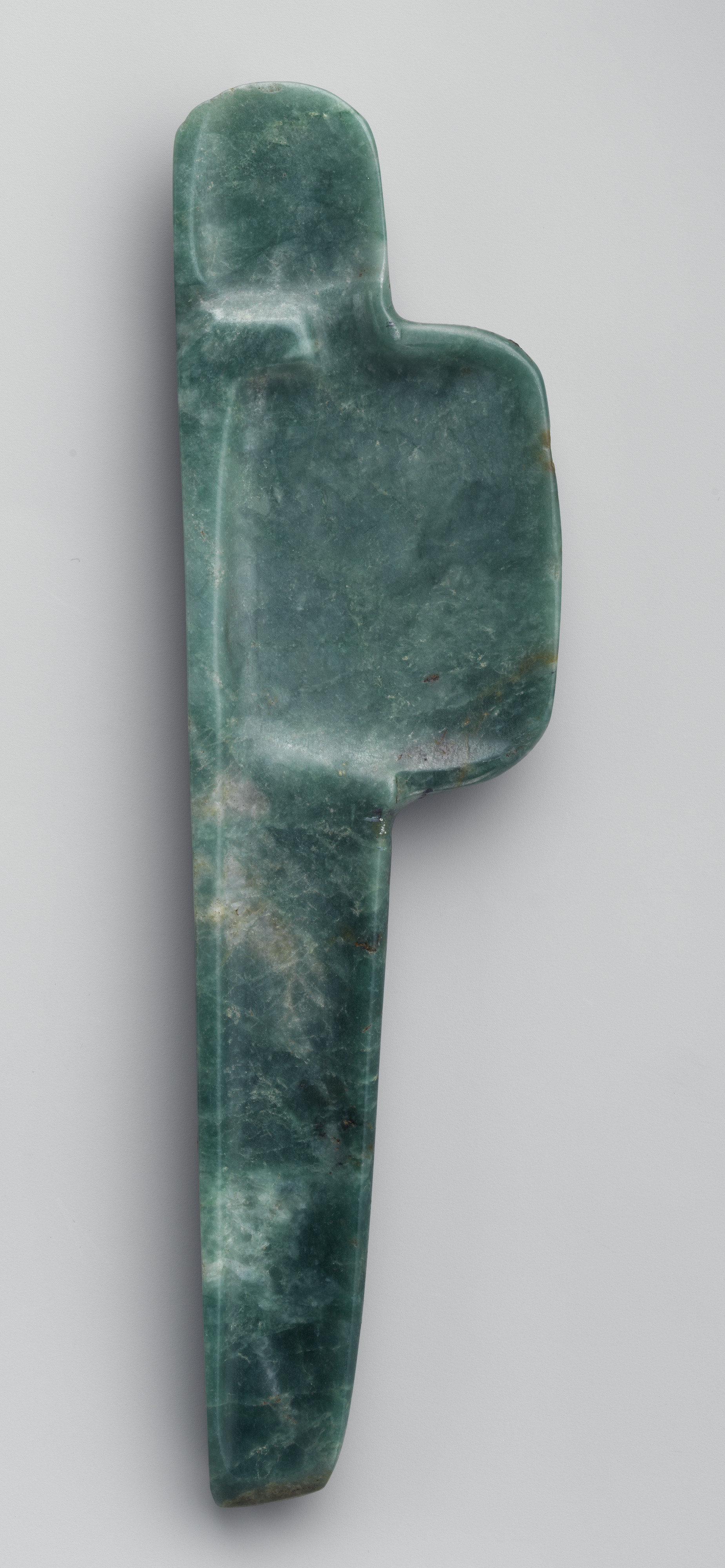
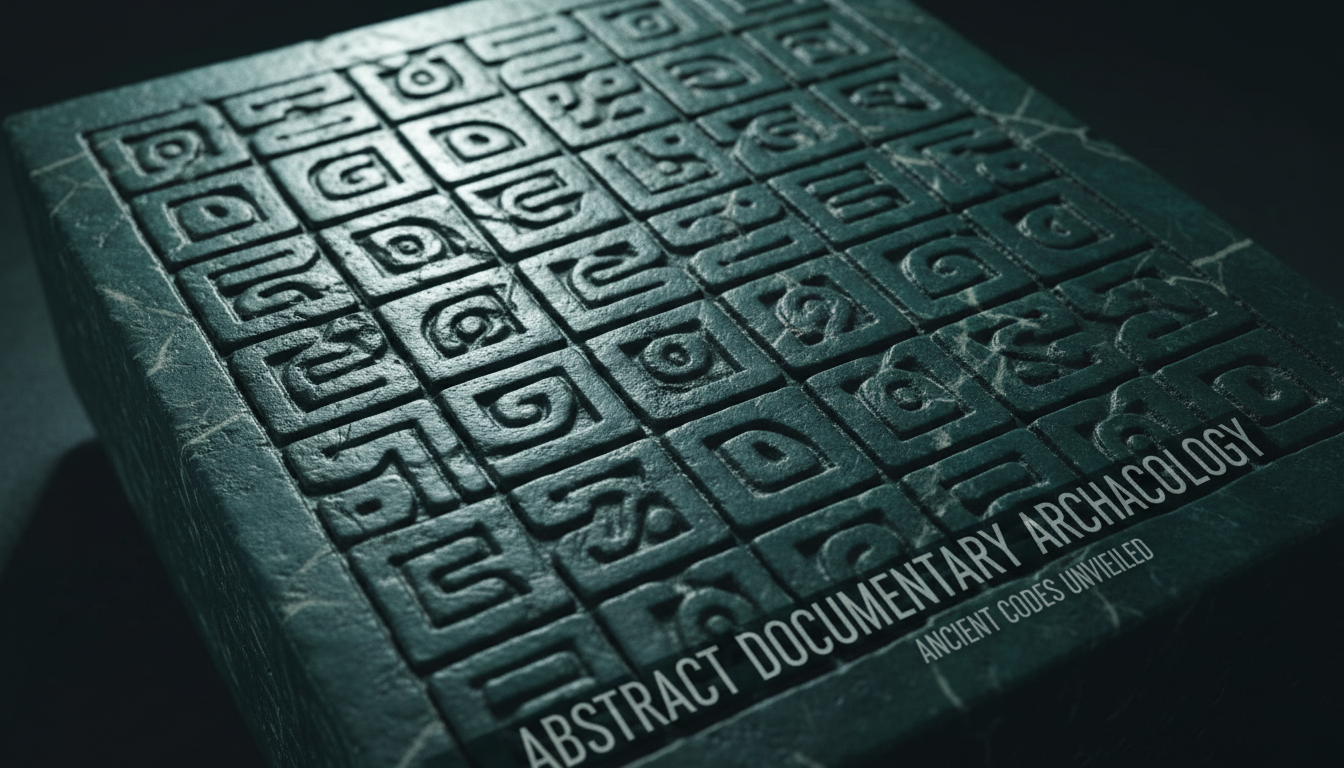
Near San Lorenzo in the Olmec heartland of Veracruz, road builders in the late 1990s pulled a serpentine slab from debris at Cascajal, in the Lomas de Tacamichapa area of Jáltipan municipality. Mexican archaeologists María del Carmen Rodríguez Martínez and Ponciano Ortíz Ceballos recognized the piece, registered it with the Instituto Nacional de Antropología e Historia, and later joined U.S. colleagues—including Michael Coe, Richard Diehl, Stephen Houston, Karl Taube, and Alfredo Delgado Calderón—in a 15 September 2006 Science article titled “Oldest Writing in the New World.” The block carries sixty-two incised signs arranged in roughly horizontal groupings. This file holds that publication and the peer skepticism that followed. It is not the Olmec colossal-heads page, and it refuses Atlantis or African-diffusion baptisms as explanations of the signs.
Object, Context, Claim
The slab measures on the order of thirty-six by twenty-one by thirteen centimeters and weighs roughly twelve kilograms. Signs include motifs that the 2006 authors link to maize, animals, and objects familiar from Olmec iconography, alongside more abstract shapes. They argue that repetition, sequencing, and linear arrangement meet criteria for true writing rather than isolated emblems. Ceramic and figurine debris associated with the findspot, plus internal stylistic clues, led them to place the block near the end of the San Lorenzo phase, around 900 BCE—centuries before the Zapotec and later Maya script horizons usually cited as Mesoamerica’s earliest writing. Brown University’s contemporaneous release stressed Houston’s role and the claim that Olmec civilization must now be linked to literacy.
Science 2006 article: https://www.science.org/doi/10.1126/science.1131492.
Brown news 06-021: https://archive2.news.brown.edu/1987-2007/2006-07/06-021.html.
Mesoweb Cascajal PDF: https://www.mesoweb.com/reports/Cascajal.pdf.
INAH’s Arqueología journal carries a Spanish-language article by the discoverers on the carved block from El Cascajal—national-institute custody and publication beside the Anglophone Science splash. A same-week Science news feature captured both excitement and the caveats already circulating: accidental discovery, lack of a controlled excavation matrix, and the uniqueness of the object.
INAH Arqueología Cascajal: https://revistas.inah.gob.mx/index.php/arqueologia/article/view/3665.
Science news feature: https://www.science.org/doi/10.1126/science.313.5793.1551.
Find context remains the soft joint in the claim. Gravel-quarry recovery is not a sealed floor under a mapped San Lorenzo structure. Supporters treat associated sherds and regional typology as enough; critics treat the missing stratigraphic coffin as disqualifying for a “first writing” headline. Documenting both postures is the point of a debate page.
Mesoweb’s field-community PDF walks sign by sign through maize clefts, fish, beads, and abstract boxes, stressing that Cascajal’s horizontal organization differs from the vertical columns typical of later Mesoamerican scripts. That difference cuts both ways: innovators see an early experiment; skeptics see a mismatch with every secure tradition. Neither reading is settled by a single press cycle. What is settled is that INAH inspectors, not treasure hunters alone, moved the object onto the official register, and that the 2006 author list mixed Mexican discoverers with senior Olmec and Maya epigraphers willing to stake reputations on a gravel-pile tablet.
Skepticism on the Record
In 2007, Karen Bruhns and Nancy Kelker published a Science technical comment asking whether the Olmec “knew how to write,” challenging authenticity and interpretation. Their cluster of doubts—unprovenanced recovery, one-of-a-kind status, sign bunching unlike later Mesoamerican columns, and the risk of a modern fabrication entering scholarly circuits—forced a formal reply space inside the same journal. Whatever one concludes about the block, the comment is a primary door for documented skepticism, not a blog aside. Peer process here looks like article, news feature, technical comment, and author response—ordinary science theater, not a conspiracy to hide African sailors or Atlantis priests.
Science Bruhns & Kelker comment: https://www.science.org/doi/10.1126/science.315.5817.1365b.
Even sympathetic readers note that Cascajal signs do not simply equal later Isthmian or Maya glyphs. If the block is authentic writing, it may represent a script tradition that left few other survivors; if it is iconographic play or a later oddity, the “oldest New World writing” headline overreaches. Either way, the corrective is more controlled finds and more epigraphic comparison—not a press cycle that declares the matter closed because Science once printed a cover line.
Hard Split from Colossal Heads
Seventeen basalt portrait heads at San Lorenzo, La Venta, Tres Zapotes, and La Cobata are a different Archive file: monumentality, quarry logistics, and the mother-culture versus interaction fight. Cascajal is a writing-debate object the size of a thick tablet. Conflating the two lets diffusion folklore hitch a ride—“African faces on heads, therefore African alphabet on the block”—without doing epigraphic work. Obsidian, jade, and iron-ore mirrors already show Formative long-distance exchange inside the Americas. Exchange is not transoceanic authorship of sixty-two signs. Atlantis captions add even less a quarry flake would recognize.
Wonder at a possible early script in the Olmec heartland is allowed. Wonder that needs Egypt, West Africa, or a drowned continent to invent the signary is not. Living authors of the 2006 paper and of the 2007 comment deserve named citation without mob epithets; the quarrel is about context and definition of writing, not about personal heresy trials.
What Documented Settles
Settled for documentary purposes: the Cascajal block was announced in Science in 2006 as a candidate for the earliest New World writing; INAH-linked discoverers registered and published the piece; Mesoweb and Brown doors circulate the claim; Bruhns and Kelker placed skepticism on the Science record in 2007. Still open as normal debate: secure stratigraphy; whether all specialists accept the signs as true writing; how the signary relates to later Mesoamerican scripts. Those open questions do not authorize Atlantis or African-diffusion baptism, and they do not merge this page with the colossal-heads file. Cascajal is documented publication-plus-dispute archaeology—read with Science, INAH, Mesoweb, and Brown doors open, and with diffusion folklore left outside the gravel pile.