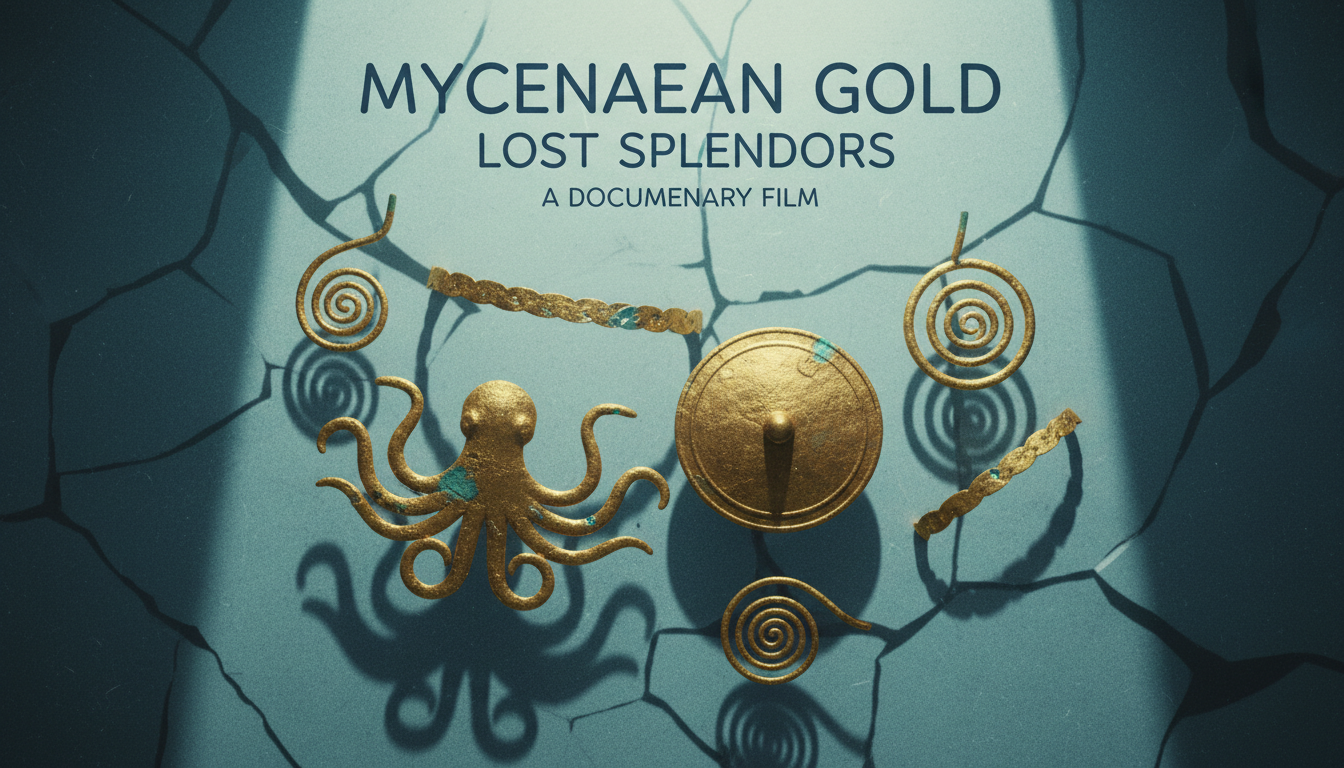
In 1993, New York’s Michael Ward Gallery offered a group of roughly fifty Mycenaean gold ornaments, jewelry pieces, and sealstones. Greece sued, arguing the objects matched loot from chamber tombs at Aidonia near Nemea. The case did not end in a dramatic criminal trial transcript. It ended in a settlement: Ward donated the collection to the Society for the Preservation of the Greek Heritage; the charity returned it to Greece in 1996 for display in the Nemea museum world. That pipeline—market appearance, state claim, charity bridge, repatriation—is why Aidonia belongs on an Archive shelf beside Euphronios and the Lydian Hoard.
Gold Without a Clean Findspot Story
Mycenaean elite tombs around Nemea and the wider Argolid have long attracted looters. When a coherent gold group surfaces in a Manhattan gallery, source countries read pattern recognition: style, findspot rumors, and the absence of a documented excavation. Greece’s Aidonia claim treated the Ward material as tomb loot. Dealers’ old-collection stories are the usual counter-layer in such fights. The documentary value is the clash itself—comparanda versus provenance narrative—not a filmed robbery the Archive can invent.
Trafficking Culture’s case study and the University of Geneva Art-Law Centre file map that clash in institutional language.
Trafficking Culture Aidonia: https://traffickingculture.org/encyclopedia/case-studies/aidonia-treasure/.
Geneva Art-Law Centre: https://plone.unige.ch/art-adr/cases-affaires/aidonia-treasure-2013-greece-and-ward-gallery/.
Official Posture: Sue, Settle, Return
Greece’s cultural authorities sued. Rather than a decade of title warfare, the parties settled. The Society for the Preservation of the Greek Heritage (SPGH) became the bridge entity that took title by donation and repatriated the group. Archaeology Magazine’s May/June 1996 news brief recorded the return for the field public. SPGH’s own project page still frames Aidonia as a preservation win.
Archaeology Magazine brief: https://archive.archaeology.org/9605/newsbriefs/aidonia.html.
SPGH project page: https://www.spghworld.org/project-2.
Official posture is recovered patrimony via civil settlement. Tax-deduction and donation mechanics in the secondary literature are part of the soft power—how a gallery exit can be structured without a forfeiture trial. Stick to case-study language; do not invent internal IRS files.
Why This Is Not Parthenon Theater
The Parthenon sculptures fight is diplomatic and long. Aidonia is a 1990s market-to-museum sprint: objects appear, claim lands, settlement closes, gold goes home. That speed is the Archive voltage. It shows source nations already using New York courts and negotiated charity pathways before the later Met–Italy wave made repatriation a brand story. Mycenae and Tiryns’s UNESCO listing and Bassae’s WH status supply Peloponnesian heritage stakes without turning Aidonia into a tourist dig brief.
UNESCO Mycenae and Tiryns: https://whc.unesco.org/en/list/941/.
UNESCO Bassae: https://whc.unesco.org/en/list/392/.
Archive Siblings
Euphronios krater / Met–Italy and Morgantina silver show museum-accord repatriations. Lydian Hoard shows Met–Turkey title fights. Sipán shows the opposite path—science racing looters before market launch. Keep Aidonia on Ward Gallery, Greek suit, SPGH bridge, 1996 return.
Myth Discipline
Reject claims that the settlement “proves” every unprovenanced Mycenaean bead is Aidonia loot. Reject the reverse: that gallery appearance equals clean title. Exact tomb-by-tomb maps remain partly reconstruction from comparanda. The legal and return record is what the packets settle.
Settlement Mechanics as Soft Power
Civil settlement via a heritage charity is quieter than a forfeiture spectacle, and that quiet is strategic. SPGH’s bridge role let title move without a decade of discovery battles over every bead. Trafficking Culture and Geneva’s Art-Law Centre treat those mechanics as part of the case’s teaching value: how source nations and market actors close a file when both want an exit. Mycenaean gold still carries tourist glamour; the paperwork carries the Archive voltage. Readers comparing Aidonia to Sipán should notice the sequence difference—market first versus excavation first—and keep both on the looting-pipeline shelf.
Nemea Display as Endpoint
Return is not the end of politics; display is. Once Aidonia gold sits in the Nemea museum circuit, it becomes teaching patrimony and tourism asset. That endpoint legitimizes the settlement pathway and advertises Greece’s recovery capacity to future market actors. UNESCO Mycenaean neighbors (Mycenae/Tiryns) supply the civilizational brand. The Ward Gallery episode supplies the pipeline memory. Keep both in view.
Comparanda Versus Clean Title
Greece’s claim leaned on stylistic and contextual comparanda tying the Ward group to Aidonia’s looted cemetery. Clean excavation paperwork was exactly what the market story lacked. That evidentiary style—pattern recognition plus absence of licit export history—recurs across 1990s–2000s repatriation fights. It is imperfect and still powerful enough to force settlement. Readers should neither sacralize nor sneer at comparanda; they should see it as the tool source nations had when dealers controlled the first photograph.
Gallery Light as Laundering Theater
A Manhattan gallery vitrine can do more reputational work than a Swiss freeport crate. Public offer implies vetting. Greece’s suit punctured that implication before the Aidonia group could harden into “known to scholars since…” folklore. Settlement via SPGH then converted a liability into a philanthropy story. Soft power runs through those optics. Trafficking Culture’s encyclopedia entry exists so researchers can still see the pipeline under the press release.
What the Paper Trail Settles
Settled: 1993 Ward Gallery offer of a Mycenaean gold group; Greek claim tying it to Aidonia; settlement donation to SPGH; 1996 return to Greece; case documentation in Art-Law and Trafficking Culture files. Overclaim to refuse: filmed tomb-by-tomb certainty and conspiracy theories that erase the public settlement paperwork.
The tension that remains is market physics. Officials present a repatriation success. The same file begins with gold already in New York. Aidonia is that gap—read with the Geneva and Trafficking Culture doors open.