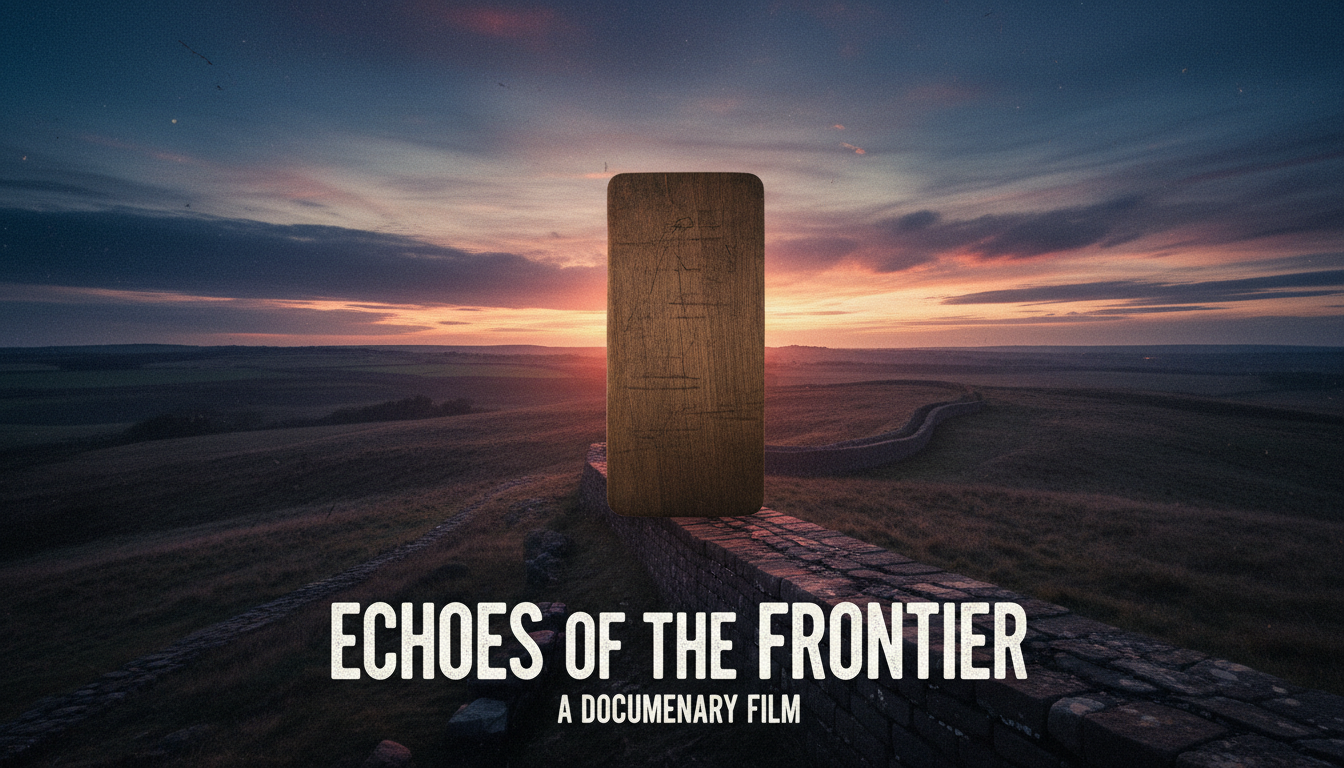
At Vindolanda, a fort just south of Hadrian’s Wall, excavators pulled thin wooden leaf-tablets from waterlogged ground. Ink still spelled strength reports, accounts, shopping lists, and a birthday invitation from Claudia Severa to Sulpicia Lepidina. The British Museum holds the celebrity tablet. Oxford’s Centre for the Study of Ancient Documents built an online corpus now pointed into Roman Inscriptions of Britain. The Archive tension is not a lost legion under the turf. It is that Rome’s private paperwork survived on the frontier while public memory preferred walls, eagle standards, and romance.
Anaerobic Luck, Administrative Habit
Vindolanda’s anaerobic deposits preserved organic writing that stone inscriptions never capture. Early second-century CE tablets—edited in the Bowman and Thomas tradition—show a fort community ordering shoes, reporting unit strength, gossiping, inviting. Tab. Vindol. 291, the Severa invitation, is famous partly because it preserves a woman’s own closing hand. That is literacy politics, not a cute museum caption alone.
British Museum object page: https://www.britishmuseum.org/collection/object/H_1986-1001-64.
RIB Tab. Vindol. 291: https://romaninscriptionsofbritain.org/inscriptions/TabVindol291.
Official Posture: Edition, Museum, Frontier WH
CSAD’s Vindolanda Tablets Online project, Mellon-supported under the Script, Image and Culture of Writing programme, put images and editions on the open web. The project’s welcome page now directs scholarly citation to romaninscriptionsofbritain.org while leaving exhibition and reference sections available. The British Museum remains the public custody face for key pieces. UNESCO’s Frontiers of the Roman Empire listing (Hadrian’s Wall among them) and English Heritage’s Wall hub supply the landscape institutional door.
CSAD Vindolanda Tablets Online: http://vindolanda.csad.ox.ac.uk/.
CSAD about page: http://vindolanda.csad.ox.ac.uk/about.shtml.
UNESCO Frontiers List 430: https://whc.unesco.org/en/list/430/.
English Heritage Hadrian’s Wall: https://www.english-heritage.org.uk/visit/places/hadrians-wall/.
Official posture is documentary archaeology: publish the everyday empire, display the wood, manage the Wall as heritage. The conspiracy-shelf reason to care is how rarely ancient states leave their shopping lists where tourists can read them—and how often “Roman Britain” folklore prefers mystery over accounts.
What the Paperwork Shows
The tablets collapse several myths at once. The frontier was not mute. Officers’ households wrote Latin letters. Women wrote. Supply chains were bureaucratic. Military administration generated disposable documents that only soil chemistry saved. That survival is accidental relative to intention; the writing habit was not. Prefer RIB and BM language over viral “first love letter” slogans that erase the administrative stack around the invitation.
Why It Belongs Beside Conspiracy Files
Conspiracy shelves often chase suppressed dossiers. Vindolanda is the inverse lesson: the empire’s ordinary files were never meant for us, yet they undercut grand frontier legends more efficiently than any whistleblower memo. Readers who arrive hunting secret legions find birthday parties and sock requests. That bathos is the point. Monumental Hadrian’s Wall WH branding and intimate tablet text are the same system at different scales.
Archive Siblings
Oxyrhynchus papyri are the Egyptian documentary twin—tax receipts and literary scraps from rubbish mounds. Herculaneum’s carbonized library is the luxury literary twin. Sutton Hoo is early medieval Britain’s rich-burial neighbor, different medium and century. Keep Vindolanda on ink, wood, and edition custody.
Myth Discipline
There is little paleocontact voltage here; the risk is tourist myth and overclaim. Do not invent suppressed Christian gospels in the Vindolanda corpus. Do not treat one invitation as the whole archive. Stick to published tablets, BM custody, CSAD/RIB editions, and frontier WH context.
What Everyday Literacy Does to Frontier Myth
Hadrian’s Wall tourism sells stone and solitude. The tablets sell socks, birthday parties, and unit counts. That contrast is the Archive’s useful cruelty. It does not deny military violence or imperial extraction. It denies the romance that the frontier was only mute masonry. When CSAD moved editions online and RIB absorbed the citable texts, the private empire became searchable. Prefer those editions over viral “oldest love letter” slogans that flatten a bureaucratic archive into a single sentimental caption. The conspiracy-adjacent lesson is institutional: spectacular walls get World Heritage; leaf-tablets get the story that actually runs the fort.
Custody Chain
From trench to British Museum case to RIB URL, the Severa tablet’s custody chain is unusually clear for organic writing. That clarity is why Vindolanda undercuts both treasure-myth and suppressed-dossier fantasy. There is no missing Vatican crate required—only wood, ink, and editors. English Heritage’s Wall framing and UNESCO’s frontiers listing keep the landscape public while the tablets keep the administration human. Everyday empire is the scandal if you came for dragons.
Strength Reports as Anti-Romance
Military strength reports and accounts are the least glamorous tablets—and the most corrosive to frontier myth. They show bureaucracy tracking bodies and goods at the edge of empire. Birthday invitations get the museum spotlight; strength reports do the historical work. Prefer RIB citations and BM object language when retelling either. The WH wall outside and the leaf-tablet inside are one administrative world.
From Mellon Project to RIB Citation
The Mellon-funded CSAD online edition democratized access; RIB succession stabilized citation. That handoff is quiet infrastructure, not drama—and infrastructure is how everyday writing stays usable. Readers chasing conspiracy should notice how little secrecy surrounds the corpus. The tablets were always going to undercut myth once published. Publication was the radical act.
What the Paper Trail Settles
Settled: Vindolanda as a source of ink-written wooden leaf-tablets; publication through Bowman/Thomas and RIB digital editions; British Museum custody of key pieces including the Severa invitation; CSAD online project history; Hadrian’s Wall / Frontiers of the Roman Empire heritage framing. Overclaim to refuse: lost-legion romance and unsourced “hidden Vatican tablet” slogans.
The tension that remains is scale. Officials celebrate a World Heritage wall. The tablets show the paperwork that made the wall run. Vindolanda is that paperwork—read with the BM and RIB doors open.