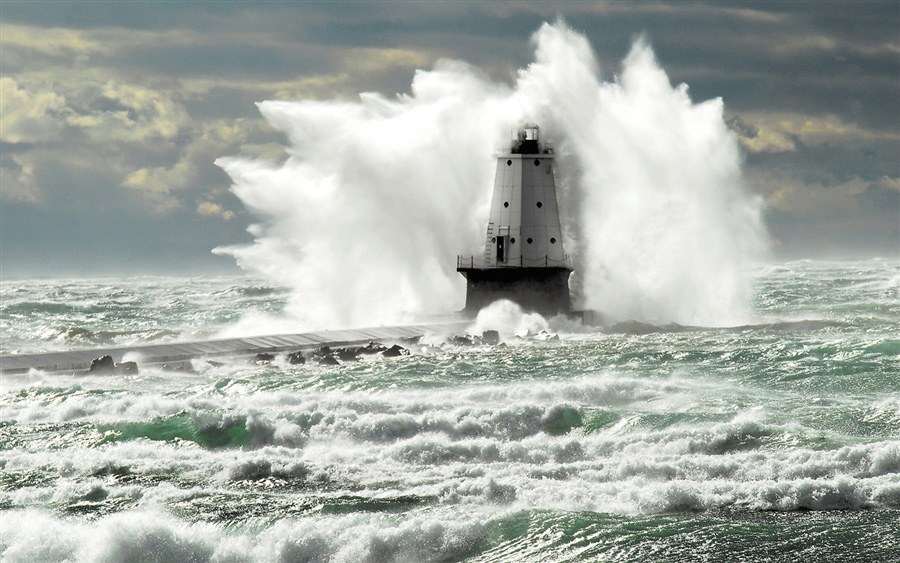
Some believe a triangle drawn on Lake Michigan, from Manitowoc, Wisconsin, east to Ludington, Michigan, and south to Benton Harbor, is a place where ships, aircraft and people vanish without explanation. Adherents point to an airliner with 58 aboard whose wreck has never been found, a schooner found capsized with every soul gone, a captain who disappeared from a locked cabin, and lights in the sky over the water.
The captain in the locked cabin
Milwaukee Magazine's feature on the legend sets out the triangle's corners and its case list, and it tells the story most often given as the legend's starting point. In 1937, as later accounts tell it, Captain George R. Donner was bringing the freighter O.M. McFarland through the icy upper Great Lakes. He was 58 and exhausted, and he went to his cabin to rest and shut the door. A few hours later, nearing Port Washington, crew members went to wake him. Their knocks went unanswered. The door was locked from the inside.
In the telling, they broke it down and found the cabin empty. They searched the whole ship and found no sign of him. No explanation was ever offered. The story comes down through magazine and book accounts rather than an official record, and it is still told the same way: a man inside a locked room, then not.
https://www.milwaukeemag.com/legend-lake-michigan-triangle/
Flight 2501
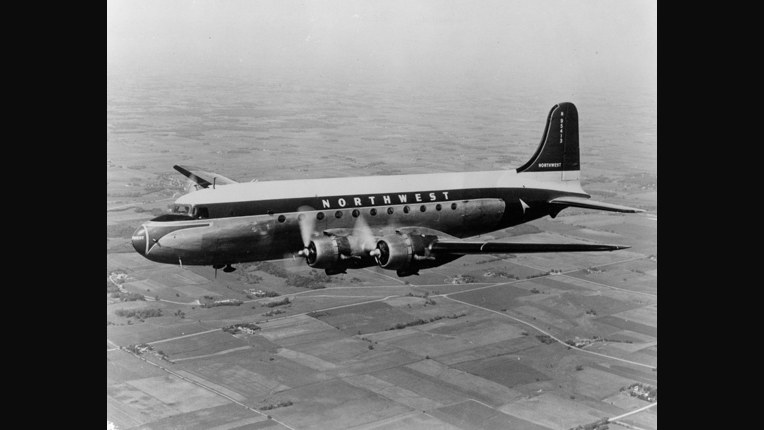
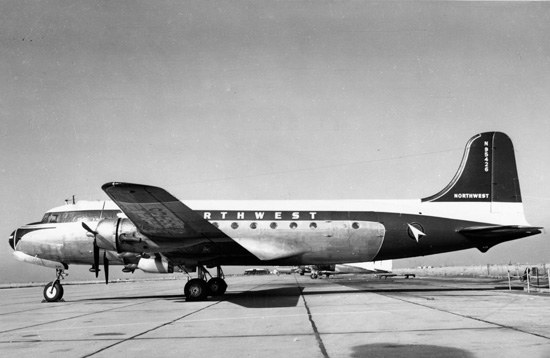
At about 11:25 p.m. on June 23, 1950, Northwest Airlines Flight 2501, a Douglas DC-4 registered N-95425, went into Lake Michigan. It had left LaGuardia bound for Seattle by way of Minneapolis, with 55 passengers and three crew under Captain Lind and First Officer Wolfe. None survived. The Civil Aeronautics Board's investigation placed the crash about 18 miles north-northwest of Benton Harbor, in an area of severe turbulence and a squall line.
Two details stand out for believers. Shortly before it vanished, the flight asked to descend to 2,500 feet; air traffic control could not approve it because of other traffic, and no reason for the request was given. Afterward, the Coast Guard cutter Woodbine found an oil slick, debris and the aircraft's log book, but the main wreck was never located. The Board weighed two possible sequences of events and chose neither. It concluded that "there is not sufficient evidence from which the probable cause of this accident can be determined."
https://doi.org/10.21949/1500521
Twenty years of searching
Valerie van Heest of the Michigan Shipwreck Research Association has spent years on Flight 2501. Research the group did in 2003 placed the crash in the same general area as several lost ships they hoped to find, and in 2004 author and explorer Clive Cussler proposed a joint expedition to look for the airliner. Van Heest dates the crash to June 24, 1950, just past local midnight, and calls it the worst U.S. aviation accident at the time.
Between 2004 and 2013 the joint team covered some 450 square miles of lakebed. They found ten significant shipwrecks. They did not find the plane. Van Heest also set out to trace the families of everyone aboard, so that if the wreck was ever found they would hear before the press did. She located 52 of the 58. The search went on for roughly two decades, and the airliner has not been found.
https://valerievanheest.com/northwest-airlines-flight-2501/
Upside down, 42 miles out
The Wisconsin Historical Society's shipwreck database holds the official record for the Rosa Belle. She was a two-masted schooner owned by the House of David, a religious colony in Benton Harbor, and she had left High Island with a load of lumber bound for home. On October 30, 1921, the record says, she apparently capsized in a gale. She was found 42 miles east of Milwaukee, bottom side up, with no survivors and no bodies. Her yawl was missing. A thorough search of the ship turned up no sign of the crew.
Some thought she had been in a collision. The Coast Guard determined she had not. The Cumberland towed her into Racine harbor. Sources disagree on how many people were lost with her, with figures ranging from nine to fourteen.
https://www.wisconsinshipwrecks.org/Vessel/Details/538?region=UpprLakeMichigan
Fifty-eight years on the lake
The Wisconsin Marine Historical Society tells the schooner's whole life. She was launched in Milwaukee on April 12, 1863, built by L. H. Boole, and sailed for 58 years. Her bow signboard read ROSABELLE and her stern read ROSA BELLE, which is why both spellings survive. She had her share of trouble, including going ashore near Grand Haven in 1875, and was rebuilt and sent back out.
Her sailing days ended on October 30, 1921, and the society's account says she is presumed to have capsized in a storm. After she was found, she drifted south to about 20 miles off Kenosha before the tow. No sign of her crew of 11 was ever found. She was later beached north of Racine so her lumber could be taken off, and her centerboard box was still on that beach in 1927.
https://wmhs.org/on-this-day-the-sailing-days-of-the-schooner-rosa-belle-ended/
"Simply gone"
Berrien County's local history of the House of David adds what the searchers saw. When the overturned hull was towed in and searched, no bodies were found inside, though the forecastle had been blocked by shifting cargo. Captain, crew and passengers were simply gone. That history counts a crew of 12 plus two passengers, all but the captain members of the colony. Contemporary hope that a larger ship had rammed her and picked up survivors came to nothing. Wreckage and life vests from the schooner kept washing ashore for years afterward.
The same history notes that the Michigan Triangle is a modern idea, one that sailors in 1921 would not have recognized. It also records the lights: the "UFO" lights seen over the lake in 1994, later featured on Unsolved Mysteries. An airliner that left an oil slick and a log book, a schooner that came back empty, a captain who left a locked room. Is Lake Michigan simply a dangerous lake, or does this corner of it keep what it takes?