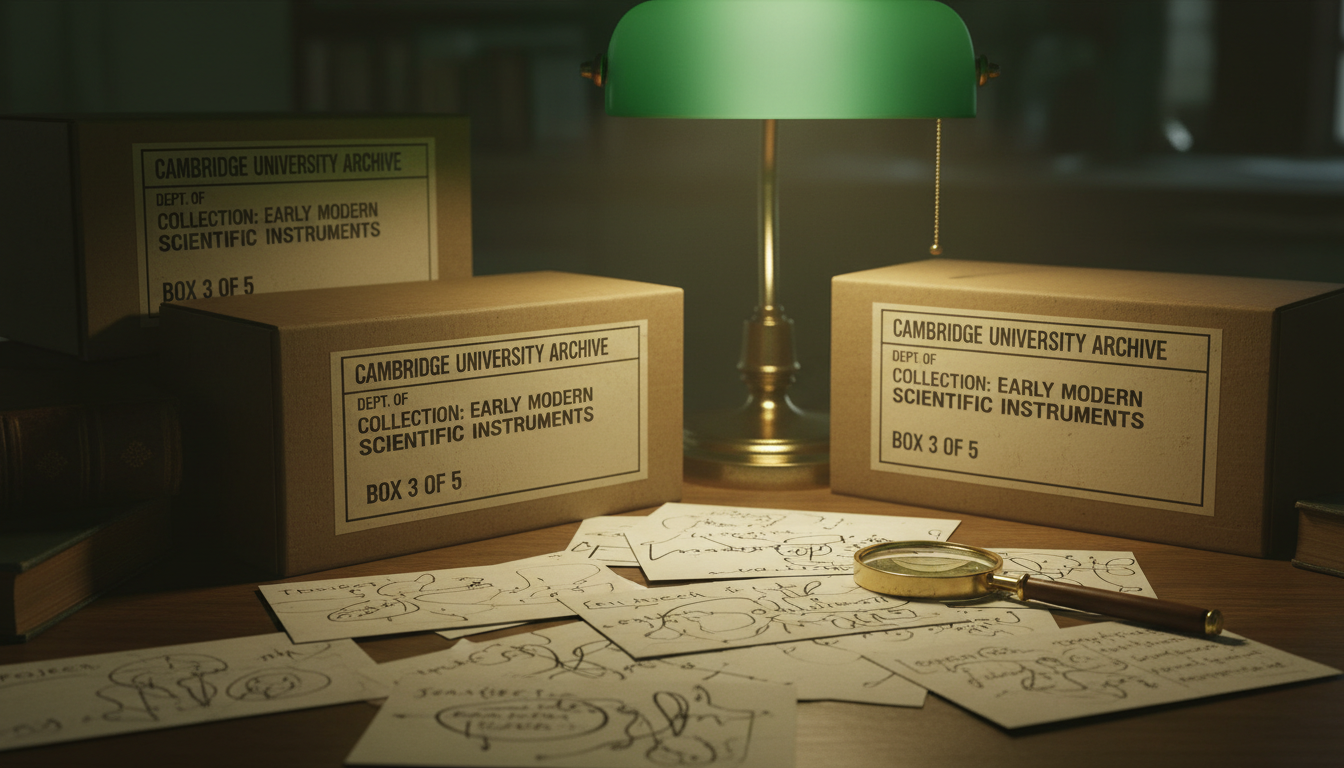
The Mitrokhin Archive
Vasiliy Mitrokhin supervised transfers of KGB First Chief Directorate foreign-intelligence files and secretly compiled manuscript notes of documents that passed through his hands. Official UK archival publicity repeats FBI-era phrasing that the haul was among the most extensive intelligence ever received from any source. What researchers can actually open at Churchill Archives Centre is a narrower door: redacted and edited Russian typescripts deposited by the Mitrokhin family. Original handwritten notebooks remain closed under deposit terms. The Intelligence and Security Committee’s Mitrokhin Inquiry Report (Cm 4764) scrutinized how UK agencies handled the material and its publication. That is documented archive provenance and official UK handling—not a blank check that every secondary claim in the Andrew–Mitrokhin volumes is independently proven guilt.
The Archivist and the Notes
Vasiliy (Vasili) Mitrokhin (1922–2004) worked inside the KGB’s foreign-intelligence archives. From about 1972 he supervised the Lubyanka-to-Yasenevo file transfer and compiled manuscript notes of materials moving through his custody. After retirement he typed geographic and operational studies that became the smuggled archive’s core. The public story of SIS exfiltration of Mitrokhin, his family, and the materials to the United Kingdom centers on 1992 in Cambridge and Churchill narratives. Caption-ready frames: deposit at Churchill College beside Churchill and Thatcher papers; open consultation by appointment; closed notebooks under review.
Prefer Cambridge custody language over viral “every name is a conviction” slogans. Prefer ISC process language over treating Penguin chapters as if they were released KGB originals.
Official Posture: Open Typescripts, Closed Notebooks
Churchill Archives Centre’s repository page for the Papers of Vasiliy Mitrokhin is the primary UK archival door: deposit narrative, open typescript consultation by appointment, researcher contact. Cambridge ArchiveSearch describes the fonds (GBR/0014/MITN) as redacted/edited Russian typescripts of Mitrokhin’s notes—not a wholesale release of original KGB files—with arrangement into MITN 1 geographic volumes and MITN 2 “K-file” renumbered series. GDPR and data-protection closures still apply inside otherwise open boxes.
Churchill Archives Centre — Mitrokhin: https://archives.chu.cam.ac.uk/collections/mitrokhin/.
Cambridge ArchiveSearch — GBR/0014/MITN: https://archivesearch.lib.cam.ac.uk/repositories/9/resources/1716.
The University of Cambridge’s research announcement on opening the archive states the split plainly: edited typescripts opened to the public; original manuscript notes remain closed under the deposit agreement. That open/closed provenance gap is the Archive tension. It is not denialism that the deposit exists. It is not license to treat every published footnote as courtroom fact.
Cambridge announcement: https://www.cam.ac.uk/research/news/mitrokhins-kgb-archive-opens-to-public.
What the Paperwork Shows
ISC Cm 4764 (June 2000) examined how UK agencies handled Mitrokhin-derived intelligence and the politics of publication, including Law Officers consultation failures in high-profile UK cases such as Melita Norwood. It is an oversight paper trail about process—achievements and failures—not a page-by-page authentication of every book claim. Hansard’s 22 June 2000 Security and Intelligence Agencies debate is the Commons companion to that report and the government response narrative.
ISC Mitrokhin Inquiry Report (Cm 4764): https://isc.independent.gov.uk/wp-content/uploads/2021/01/200006_ISC_Mitrokhin_Report.pdf.
Hansard debate (22 June 2000): https://hansard.parliament.uk/commons/2000-06-22/debates/d7766f17-3702-456a-823b-a01f2261c847/SecurityAndIntelligenceAgencies.
ArchiveSearch’s MITN 1/7 Britain/Ireland/Australia/New Zealand volume object shows volume extent, Russian language, and partial closure on data-protection grounds inside an otherwise open file. “Open archive” still means redactions.
MITN 1/7 example object: https://archivesearch.lib.cam.ac.uk/repositories/9/archival_objects/461432.
Why the Story Stayed Managed
Cold War secrecy around the defection, selective allied sharing, and publication via Christopher Andrew’s collaboration (The Mitrokhin Archive volumes) made the books the public face while primary typescripts opened only years later. Closed notebooks preserve a permanent gap between what Mitrokhin wrote by hand and what researchers may read. Andrew is the authorised co-author and guide user of the archive—not a substitute primary source for every operational claim. Do not invent prosecutions the ISC says were never put to Law Officers. Living persons named in secondary Mitrokhin-derived press get careful treatment: prefer ISC/Hansard language for UK process failures.
Publication Politics Beside the Catalogue
The Andrew–Mitrokhin volumes (1999 and 2005) remain the public reading path most people meet first. Researchers who then open MITN find footnotes pointing back into geographic volumes and K-file series—with redactions and closures still in place. That sequence matters. Books popularized agent networks and active-measures stories. The catalogue and ISC report decide what the Archive will call documented custody versus what still needs third-country corroboration. Date discipline stays in view: notes mainly 1970s–early 1980s; UK exfiltration 1992; Vol. 1 in 1999; ISC Cm 4764 in June 2000; Mitrokhin’s death in January 2004; typescript opening in the Cambridge announcement era around 2014.
Provenance Discipline, Not Book Worship
Venona and other defector dumps are provenance cousins with different media. Ames and Hanssen sit as late-Cold-War mole-hunt neighbors with a shared KGB/SVR adversary frame and distinct source types. This page’s spine stays custody, selective openness, and publication politics.
Reject “every name in the books is proven guilt” inflation. Reject “the archive is fake / never existed” denialism that ignores the Cambridge deposit and ISC inquiry. Equating “appears in Mitrokhin notes / published volumes” with “proven in open court” is overclaim. Equating FBI publicity phrasing with U.S. declassification of underlying KGB originals is also overclaim—it does not.
What the Paper Trail Settles
Settled on the documents: Mitrokhin’s notes and typed studies; UK exfiltration/custody narrative; Churchill deposit of edited Russian typescripts open by appointment; original manuscripts closed under deposit terms; ISC Cm 4764 and Hansard debate on agency handling and publication process; catalogue structure with remaining GDPR closures. Contested and labeled as such: individual agent revelations treated as settled criminal fact without independent corroboration. Overclaim to refuse: blank-check guilt from book chapters; fake-archive denialism.
The tension that remains is the one the packets leave open. Officials call the haul historic. Researchers read redacted typescripts while notebooks stay shut, and ISC paperwork criticizes how publication politics were handled. The Mitrokhin Archive is that gap—read with the Churchill and ISC doors open.