VENONA
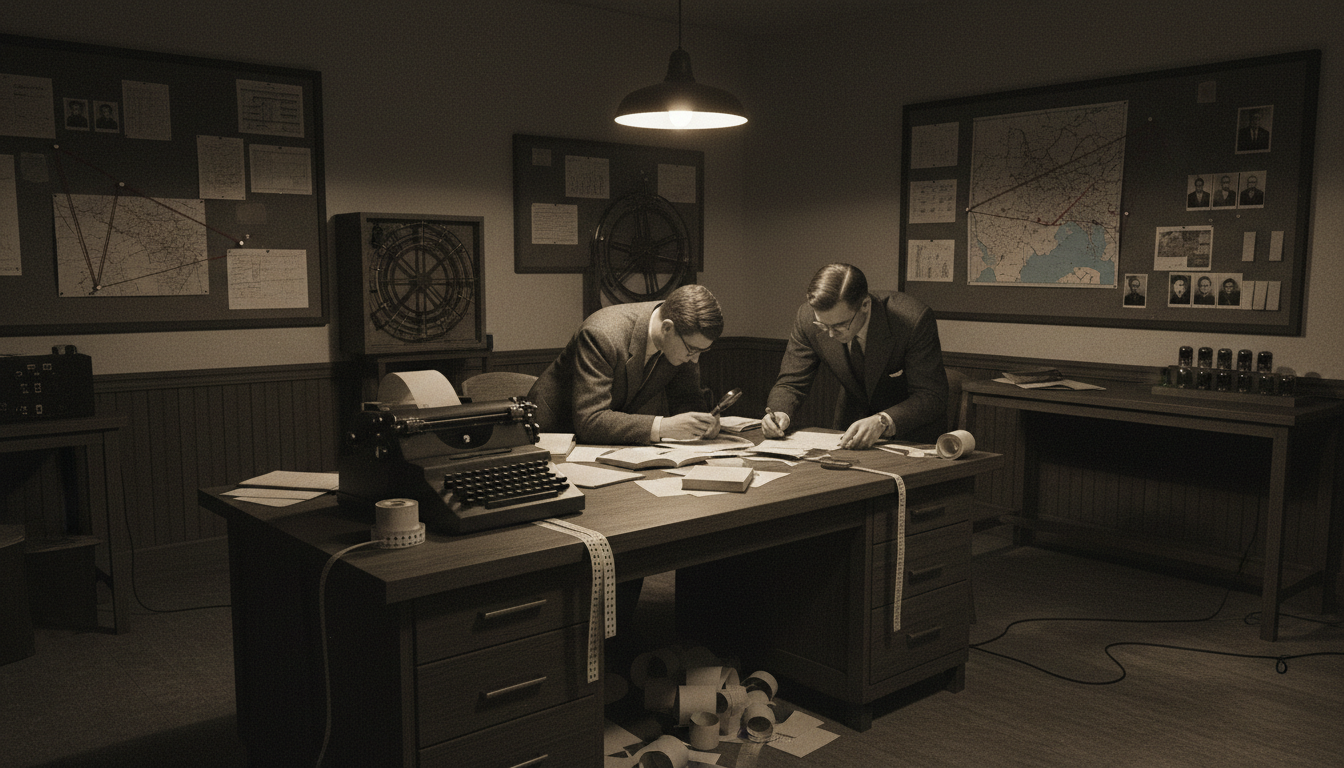
In a locked room culture that lasted decades after the war, American cryptanalysts worked fragments of Soviet cable traffic into English. Cover names surfaced. Some matched spies already hunted; others ignited new hunts. The program's public name, released long after the work, is VENONA.
Cables, Not Crystal Balls
VENONA was signals intelligence against Soviet diplomatic and intelligence communications of the 1940s. Success was partial. Many messages never broke. Those that did produced translations thick with cryptonyms—"Liberal," "Antenna," and dozens more—that analysts tried to map onto real people. NSA's historical publications and National Archives holdings now let civilians read much of that paper.
The work helped confirm Soviet penetration of atomic and diplomatic targets. It also fed a mid-century counterintelligence atmosphere where ambiguous cover names could be over-read. Good history holds both truths: real espionage identified; political entrepreneurs sometimes stretched VENONA like taffy.
Secrecy After the Traffic Died
Even after the usable intercept window closed, VENONA stayed buried. Compartmentation protected sources and methods—and protected institutions from explaining how much they had known, and when, during the early Cold War loyalty fights. When releases finally arrived in the 1990s, they rewired public debate about cases that had been argued from partial evidence for fifty years.
Adjacent Archive Shelves
Acoustic cyber-espionage entries track later technical collection. PRISM is a post-9/11 legal-technical architecture. Paperclip is personnel acquisition from a defeated Germany. None of these are VENONA. Cross-links mark the long American habit of secret reading and secret importing in the same Cold War house.
Cover Names and Courtrooms
VENONA translations did not automatically equal courtroom proof. Prosecutors still needed witnesses, documents, and admissible chains. Some cases leaned hard on the decrypts behind closed doors. That secrecy itself became a historiographical wound: the public argued without the cables for decades.