Project CORONA: America's First Spy Satellites
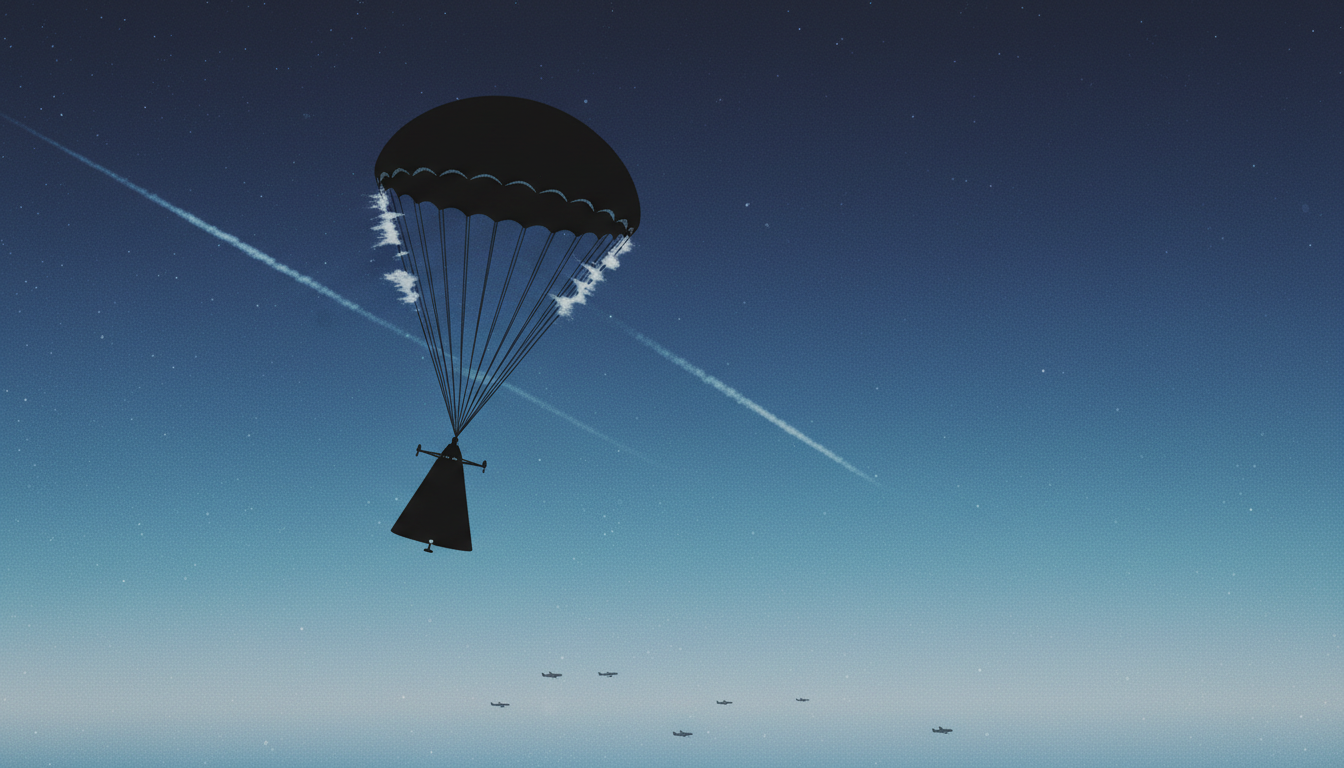
Before digital downlinks, American spy satellites shot film and threw it home. CORONA—publicly masked as Discoverer—flew from the turn of the 1960s into 1972. Mid-air crews snagged descending buckets. Missile-gap arguments met overhead pictures. In 1995, EO 12951 shoved hundreds of thousands of frames toward the public.
NRO and CIA Histories
NRO's CORONA history page and CIA's "CORONA: Declassified" story remain the clean on-ramps: https://www.nro.gov/About-NRO/history/history-corona/. Richard Bissell's program world, KH-1 through KH-4 camera generations, and the bucket-catch choreography are craft history, not UFO retrieval lore. CIA CSI's monograph hub still frames CORONA as America's first satellite reconnaissance program.
EO 12951 and the Public Archive Dump
President Clinton's 24 February 1995 executive order declassified CORONA, ARGON, and LANYARD imagery in one of the largest intelligence declassification projects on record. NARA/USGS transfers turned black-program film into research inventory. Mapping that dump onto crashed-saucer myths is unsupported.
Film Buckets Before Digital IMINT
Bucket recovery sounds steampunk until you remember those frames settled strategic arguments in the White House. Unmanned systems later outpaced crewed MOL dreams partly because CORONA's descendants worked.
Film Buckets Before Digital IMINT
Bucket recovery sounds steampunk until you remember those frames settled strategic arguments in the White House. Unmanned systems later outpaced crewed MOL dreams partly because CORONA's descendants worked. EO 12951 turned that craft into a public research pile.
Settled Program Versus UFO Overlay
Settled: CORONA's existence, Discoverer cover, film-return method, EO 12951 declass. Unsupported: equating CORONA with alien craft recovery. Keep the cameras and the catchers.
Source Discipline for This Page
The strongest claims on Project CORONA: America's First Spy Satellites are tethered to dated primary URLs in the sources list—NRO/CIA/NASA/DOE histories, museum fact sheets, or peer-reviewed surveys. Secondary aviation magazines can open the door; they should not outrun the paperwork. Fringe fleet myths stay labeled and downstream.
Comparative Archive reading stays useful only when black-program titles stay distinct: link neighbors for method or chronology, not because every cancelled aerospace project is secretly still flying.
Comparative Archive reading helps only when neighboring titles stay distinct: link for method, chronology, or institutional pattern, not because every cancelled program or scandal is secretly the same story. Local facts for Project CORONA still have to carry this page.