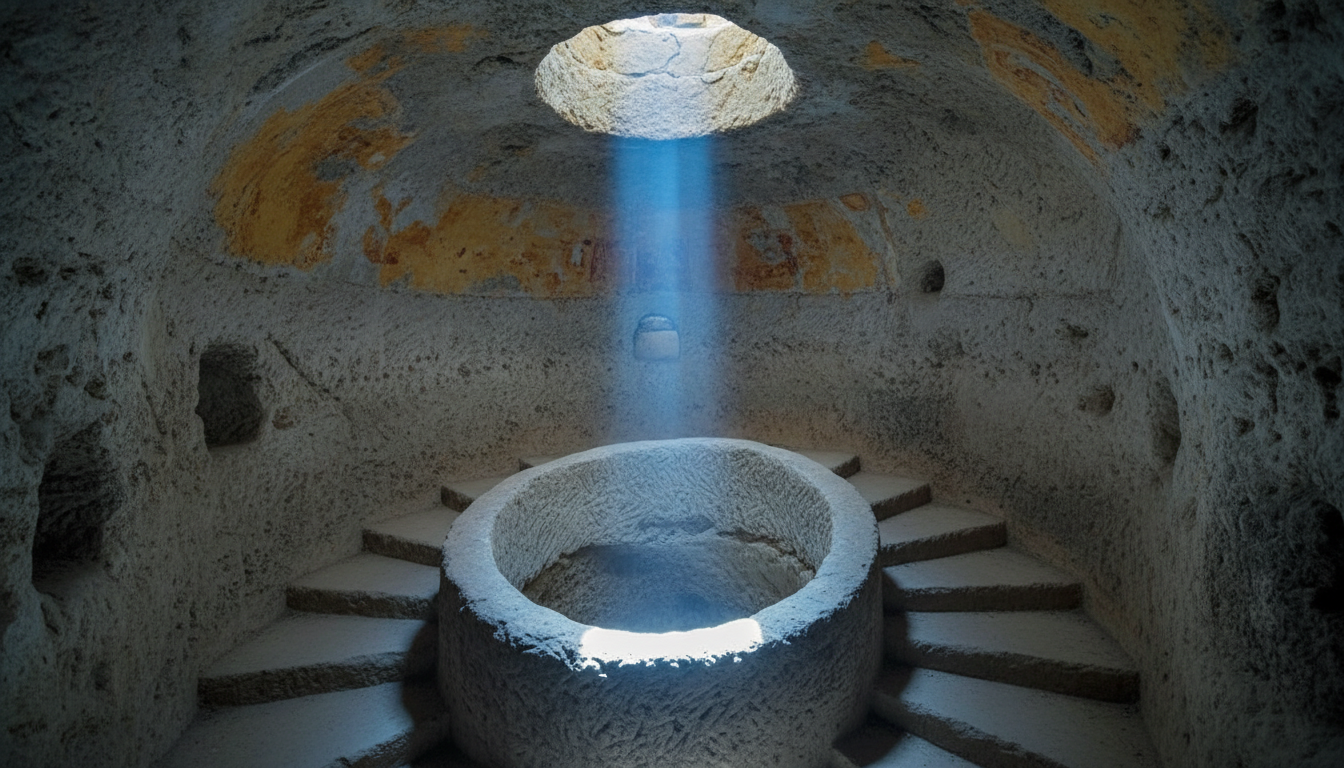
The Ħal Saflieni Hypogeum
In 1902, builders cutting cisterns in Paola, Malta, broke into something older: a limestone hypogeum cut like a temple turned inside the earth. Ħal Saflieni's chambers held Neolithic dead across use phases often placed roughly 4000–2500 BCE. UNESCO listed it. Breathing tourists now threaten the paint.
UNESCO Listing and Measured Acoustics
Heritage Malta and the World Heritage entry keep the conservation stakes public: https://whc.unesco.org/en/list/130/. An Antiquity archaeoacoustics study measured resonance behaviors that folklore had already nicknamed an "oracle room." Measured acoustics are science. Frequency-magic healing claims beyond those papers are fringe add-ons.
Conservation as the Modern Crisis
The hypogeum's enemy is not a lost priesthood. It is humidity and breath. Visitor caps exist because CO₂ and moisture eat prehistoric paint. That bureaucratic fight is more documentary than stargate tour scripts.
Temple Forms Underground
Ħal Saflieni copies temple architecture into carved bedrock: trilithon suggestions, red-ochre washes, stacked chambers. The hypogeum is less a stargate than a funerary building turned inside the hill, which is strange enough.
Settled Hypogeum Versus Occult Overclaim
Settled: Neolithic subterranean complex; UNESCO status; conservation limits; acoustics papers. Fringe: healing-frequency mysticism beyond measured resonance. Keep the chisels and the visitor-cap memos.
Archival reading tip for this file: prioritize the dated primary URLs in sources[] and the named commissions, courts, or excavators above secondary retellings that flatten the story into a slogan.
Source Discipline for This Page
The strongest claims on The Ħal Saflieni Hypogeum are the ones tethered to dated primary URLs in the sources list—agency PDFs, court or committee releases, peer-reviewed surveys, or official histories. Secondary documentaries and magazine profiles can open the door; they should not outrun the paperwork. Where fringe readings appear in public culture, this page keeps them labeled and downstream of the documentary spine. Evidence bullets above are the checklist for a skeptical reader who already knows the headline.
Comparative Archive reading stays useful only when titles stay distinct: link neighbors for method, chronology, or institutional pattern, not because every scandal is secretly the same scandal. For The Ħal Saflieni Hypogeum, the local facts still have to carry the page.
Comparative Archive reading helps only when neighboring titles stay distinct: link for method, chronology, or institutional pattern, not because every cancelled program or scandal is secretly the same story. Local facts for The Ħal Saflieni Hypogeum still have to carry this page.