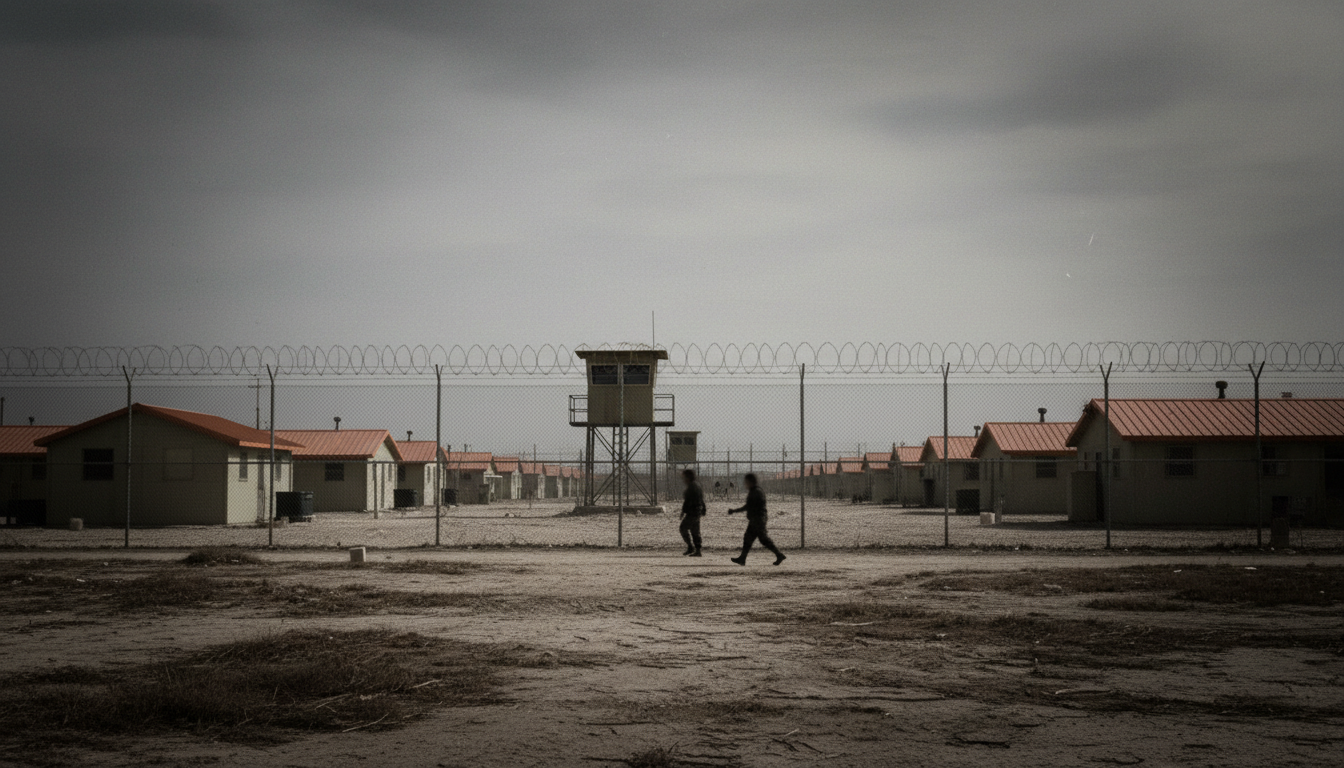
Camp Delta at Guantanamo Bay ran on Standard Operating Procedures—thick manuals covering detention security, accountability, medical handling, visitation, and intelligence support. For years the Department of Defense withheld those SOPs in full from FOIA requesters. In 2007–2008, WikiLeaks published the 2003 and 2004 Camp Delta SOP manuals; U.S. Southern Command later told Wikinews the 2004 document appeared valid. Separately, WikiLeaks’ Guantanamo Files released hundreds of JTF-GTMO Detainee Assessment Briefs. The so-what is chain of custody: what DoD refused to release through official channels, what leaked, and how readers should weigh authenticated procedure against rumor captions about the camps.
The Product: Procedure as the Real Log
“Camp Delta logs” in Archive usage means the institutional paperwork that governed daily detention—not a single night-watch notebook. The 28 March 2003 Camp Delta SOP, issued by order of Major General Geoffrey D. Miller as JTF-GTMO commander, consolidates detention and security operations for the Global War on Terrorism mission. The 2004 revision continues that shelf. These manuals include forms, identity procedures, accountability rules, and guidance that advocacy groups later read as evidence of systematic friction with International Committee of the Red Cross access and of psychological pressure methods. The Archive’s job is to keep the primary PDF in view, not to settle every interpretive dispute in one caption. Miller’s later association with Iraq detention advice is a sibling story; it does not rewrite the SOP text itself.
Accountability chapters, cell-block movement rules, and visitation controls are where “logs” become operational: they prescribe what must be recorded, who may enter, and how deviations are reported. Readers hunting a single scandal sentence should instead read those chapters as the camp’s own definition of normal.
WikiLeaks — Camp Delta Standard Operating Procedure (2003): https://wikileaks.org/wiki/Camp_Delta_Standard_Operating_Procedure_(2003)
WikiLeaks — Camp Delta Standard Operating Procedure (2004): https://wikileaks.org/wiki/Camp_Delta_Standard_Operating_Procedure_(2004)
Official Posture: FOUO, Denied in Full
The SOPs carried Unclassified // For Official Use Only markings. That label is not a classification stamp, but DoD treated mass public release as unauthorized. When the ACLU sought Guantanamo detention records, DoD Vaughn indices listed Camp Delta SOP material among documents denied in full. The Pentagon’s public reply to the leak asked that FOUO material be removed and pointed requesters to FOIA “through official channels”—the same channels that had already produced blanket denials for the SOP itself. That circular posture is the documentary tension: official process promised a door; the Vaughn practice kept the door shut; the manuals still existed and still ran the camps.
ACLU — DoD Vaughn index excerpt (documents denied in full, Section 6 interim): https://www.aclu.org/sites/default/files/pdfs/safefree/20070110/dod_vaughn_r_denied_in_full_section_6_interim.pdf
What the Paperwork Actually Shows
On the SOP side, authenticity is not a rumor problem. Southern Command’s authentication statement to Wikinews confirmed the 2004 manual as a valid Camp Delta SOP while insisting it was not intended for mass distribution. That is a rare DoD-adjacent admission that a leaked detention manual matches the real book. On the assessment side, the Guantanamo Files portal collects JTF-GTMO Detainee Assessment Briefs used to argue continued detention, intelligence value, and transfer risk. Those briefs are primary DoD products that entered public view through leak, not through a clean FOIA grant of the full set. They are evidence of what the task force wrote about detainees; they are not automatic proof of every allegation inside each brief.
WikiLeaks — The Guantanamo Files: https://wikileaks.org/gitmo/
Torture Database / ACLU FOIA ecosystem indexing related detainee investigation releases (search door for Taguba and GTMO FOIA): https://www.thetorturedatabase.org/search/apachesolr_search/taguba
Supreme Court — Boumediene v. Bush, 553 U.S. 723 (2008), opinion PDF: https://www.supremecourt.gov/opinions/07pdf/06-1195.pdf
Boumediene does not authenticate every assessment brief. It does establish that Guantanamo detainees could seek habeas review in Article III courts—turning contested dossiers into litigation records rather than sealed camp lore. Subsequent habeas practice repeatedly tested government reliance on intelligence summaries of the kind the Files contain.
Why Chain of Custody Matters
Conspiracy culture often treats any Guantanamo document as either forged propaganda or total revelation. The documentary middle is harder and more useful. FOIA denial plus later leak plus official authentication of the SOP creates a custody path: the United States wrote the manual, refused to release it, watched it appear anyway, and then confirmed the 2004 text’s validity while still objecting to distribution. Assessment briefs require a different caution: they are government work product, but courts and rights organizations have repeatedly attacked their reliability where they rest on coerced statements or thin sourcing. Prefer the PDF and the docket over anonymous “interrogator said” captions. Prefer Vaughn indices over slogans that no paperwork ever existed.
Chain-of-custody discipline also means dating editions. The 2003 and 2004 SOPs are not identical; Wikinews and WikiLeaks difference lists exist precisely because procedure changed while FOIA still produced denials. Cite the edition you mean.
Siblings and Myth Discipline
Camp Delta paperwork sits beside Abu Ghraib investigation shelves (Taguba; Fay/Jones) and Senate Armed Services detainee-treatment inquiries—cross-link without collapsing GTMO procedure into a single Iraq scandal caption. Refuse the slogan that “no logs ever existed” and the slogan that every leaked page is a complete map of every interrogation. Stick to SOP text, Vaughn denial, authentication statement, assessment-brief portal, and habeas law.
What the Paper Trail Settles
Settled on the documents: Camp Delta SOPs governed JTF-GTMO detention operations; DoD denied SOP release in FOIA Vaughn practice; WikiLeaks published 2003 and 2004 manuals; Southern Command treated the 2004 SOP as valid; Detainee Assessment Briefs exist as JTF-GTMO products in the Guantanamo Files set; Boumediene opened habeas review. Overclaim to refuse: that authentication equals endorsement of every SOP practice as lawful, or that leak provenance voids the documents as historical sources. Officials said use FOIA. The paper trail says the FOIA door was shut while the manuals still ran the camps—and that the public eventually read them anyway. What remains contested is not whether the manuals are real. It is how far SOP text, assessment-brief claims, and courtroom findings should be collapsed into one moral caption—an Archive refusal.