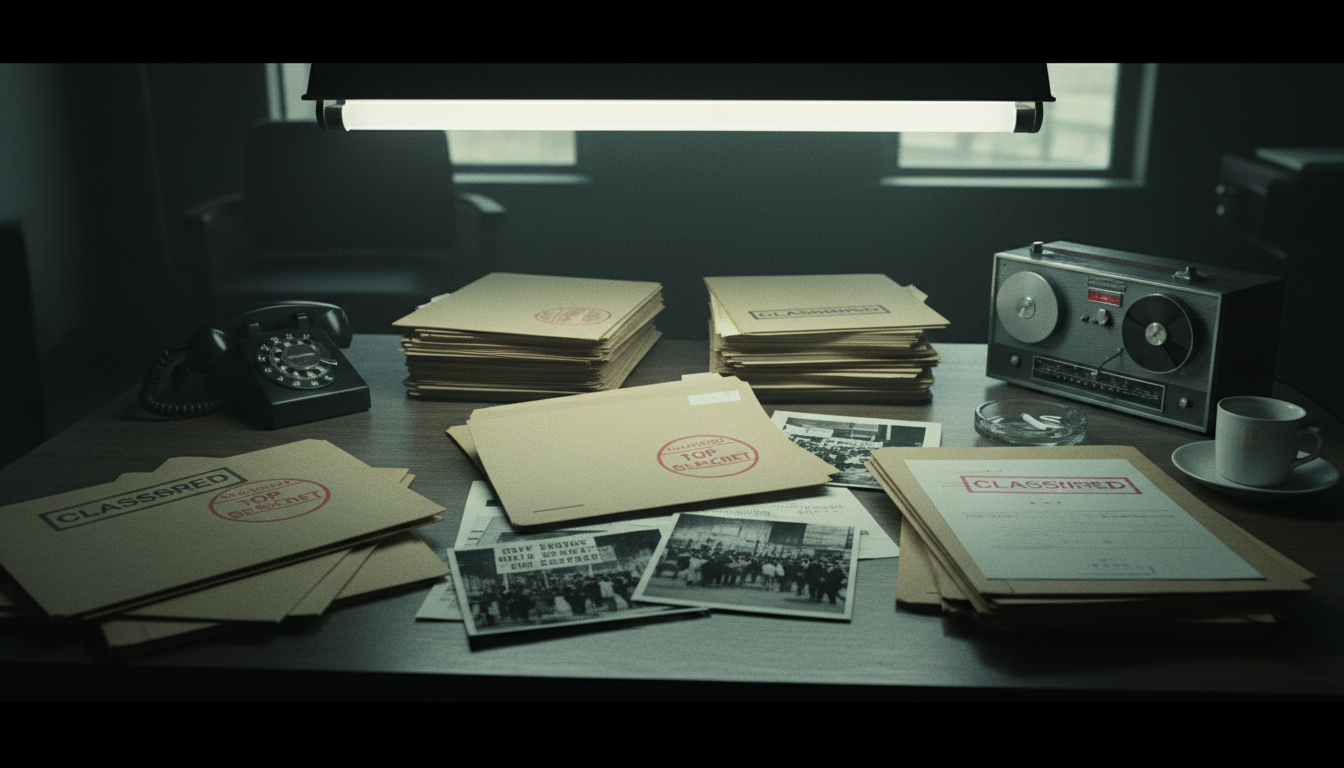
COINTELPRO
On the night of 8 March 1971, a small group calling itself the Citizens' Commission to Investigate the FBI broke into a resident agency in Media, Pennsylvania. They walked out with roughly a thousand pages of Bureau files. Within weeks, selected documents were in the hands of journalists. One recurring stamp stood out: COINTELPRO.
The Media Break-In
Before Media, COINTELPRO lived as an internal cryptonym. After Media, it became a public noun for the Bureau's covert war on domestic dissent. The stolen papers showed field offices reporting not only investigations but disruption plans—anonymous letters, planted rumors, and pressure campaigns aimed at splintering groups the Bureau labeled subversive.
J. Edgar Hoover's FBI had opened the first COINTELPRO against the Communist Party USA in 1956. Later iterations targeted the Socialist Workers Party, "Black Nationalist-Hate Groups," the New Left, and white hate organizations. The stated goal was not always indictment. It was neutralization.
What the Files Ordered
Church Committee investigators, working after Watergate-era reforms forced sunlight onto intelligence practice, reconstructed the toolkit from surviving memos. Agents sent forged letters designed to seed paranoia between activists. They leaked derogatory (and sometimes fabricated) material to friendly reporters. They encouraged local police pressure, IRS scrutiny, and informant penetration deep enough to steer meetings.
The King case remains the most cited example. Bureau files show an intense campaign against Martin Luther King Jr., including attempts to destroy his marriage and public standing. Panther chapters faced informant-driven violence and prosecutions that later collapsed or looked engineered. Native organizers and student radicals appear throughout the same paper trail.
Not every ugly rumor about COINTELPRO is in the Vault. Fringe expansions—claims of continuous national "continuity" programs under new names with no file trail—sit outside what Media and the Church reports establish. The documented program is already severe enough.
Church Committee Reckoning
Senate investigators published Book III of their final report in 1976 with a dedicated COINTELPRO section. They concluded that the Bureau had violated law and constitutional limits by acting as a secret political police. Recommendations fed the broader mid-1970s rewrite of intelligence oversight: permanent select committees, tighter domestic guidelines, and a cultural memory that "national security" did not license unbounded dirty tricks against U.S. persons.
The FBI's own Vault site now hosts COINTELPRO file releases. Researchers still argue about how completely successor informal practices stopped after the formal 1971 shutdown order. What the Archive can say from primary paper is narrower and harder: between 1956 and 1971, headquarters ran named disruption programs, Media forced them into daylight, and Congress confirmed the tactics on the record.
What the Record Settles
COINTELPRO is not folklore that later grew a FOIA tail. It is a headquarters program with memos, field reports, and a Senate autopsy. The open questions are about scope at the edges, the ethics of informant-driven violence, and whether later domestic intelligence work repeated the pattern under other labels. The closed question is whether the Bureau ran a covert disruption machine against Americans it disliked. It did.
Field Office Mechanics
COINTELPRO was not only a Hoover memo style. Field offices filed periodic progress reports describing which marriages they hoped to crack, which rivalries they hoped to inflame, and which journalists might print a Bureau-shaped tip. That paperwork habit is why Media's trash bags mattered: disruption had a reporting culture.
Later FBI guidelines after Church tried to wall off "prevention of violence" investigations from political sabotage. Historians still argue about informal continuities—informants in mosques after 9/11, fusion-center overreach, protest monitoring. Continuity claims need their own documents. COINTELPRO's named programs do not require them to remain historically solid.
The Archive's cross-links to MKUltra and Snow White are about era and secret-state method, not shared org charts. PRISM is a different legal and technical species: signals collection under statute and directive, not anonymous letters to activist spouses. Readers who flatten every abuse into one cryptonym lose the ability to see what each bureaucracy actually did.