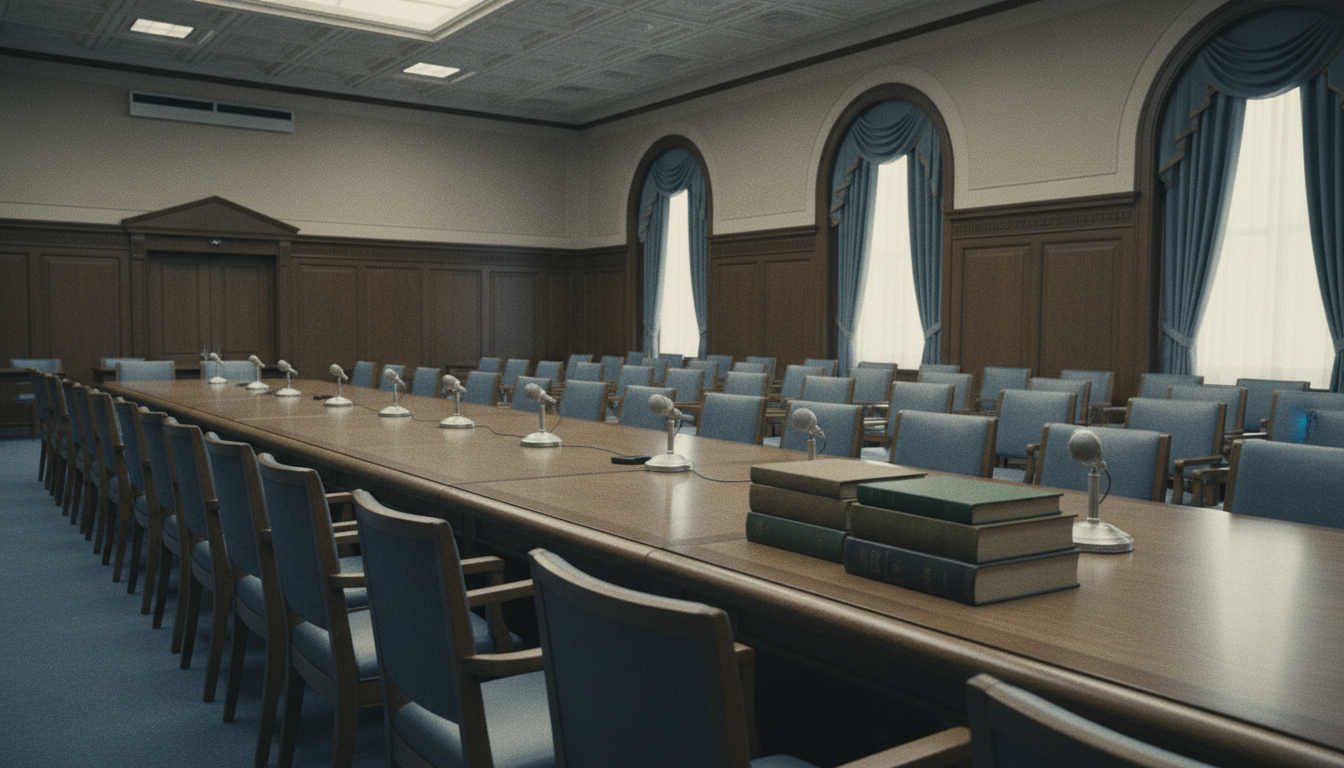
The Church Committee
In January 1975, the U.S. Senate created a select committee to investigate intelligence abuses. Frank Church of Idaho took the gavel. For roughly fifteen months, senators hauled directors, memos, and cryptonyms into hearing rooms that television cameras partially opened to the country.
The committee's final reports and hearing volumes remain the single densest public autopsy of Cold War American secret power.
Why 1975
Watergate had already broken the spell of unsupervised executive clandestine action. Seymour Hersh's New York Times reporting on domestic CIA surveillance (Operation CHAOS) added fuel. The "Family Jewels" inventory—Agency self-collection of illegal or dubious programs—gave investigators a map. Church's committee, alongside the House Pike Committee and the presidential Rockefeller Commission, turned map into narrative.
What They Put on the Record
The published books are not pamphlets. They walk through FBI COINTELPRO disruption, CIA assassination plots against foreign leaders, CHAOS and related domestic spying, NSA watchlisting and telegram programs, IRS politicization, and the behavioral-control cluster that includes MKUltra. Mail-opening programs such as HTLINGUAL appear in the same ecosystem of domestic intrusion.
Readers who know only internet summaries underestimate how much is simply printed Senate paper: findings, staff histories, and appended documents. Much of the Archive's intelligence cluster cites Church the way medical ethics cites Tuskegee—as a before/after hinge.
Oversight Machinery
The committee's political product was institutional. Permanent select committees on intelligence, tighter guidelines on domestic spying, and a cultural expectation that secret agencies answer to someone other than themselves. Those reforms were incomplete and periodically eroded. They still changed the default.
Critics then and now argue Church overcorrected and harmed capabilities. Defenders argue the record of lawbreaking made sunshine mandatory. Both arguments start from the same binders.
How the Archive Uses Church
Treat the Church volumes as primary spine for mid-century U.S. intelligence scandals—not as proof of every later program. PRISM-era surveillance, for example, has its own statutes, leaks, and court fights. Continuity claims require continuity documents. What Church permanently settled is narrower and heavier: for decades, U.S. intelligence services ran illegal or abusive programs against foreigners and Americans, lied or stonewalled about them, and required external investigation to force partial disclosure.
When an Archive entry says "documented," Church is often why.
Pike, Rockefeller, and the Cluster
Church did not work alone. The House Pike Committee pushed harder on budgets and leaks, then saw its full report suppressed in political combat. The Rockefeller Commission offered an executive-branch investigation with a narrower bite. Together they form a 1975–76 investigative weather system. Citing only Church is incomplete; citing none of them while claiming "documented intelligence abuse" is unserious.
Assassination findings, CHAOS, and NSA matters each deserve separate Archive shelves. The committee is the index. Modern surveillance fights invoke Church as precedent the way environmental lawyers invoke Love Canal—sometimes precisely, sometimes as moral atmosphere. Precision is preferred.