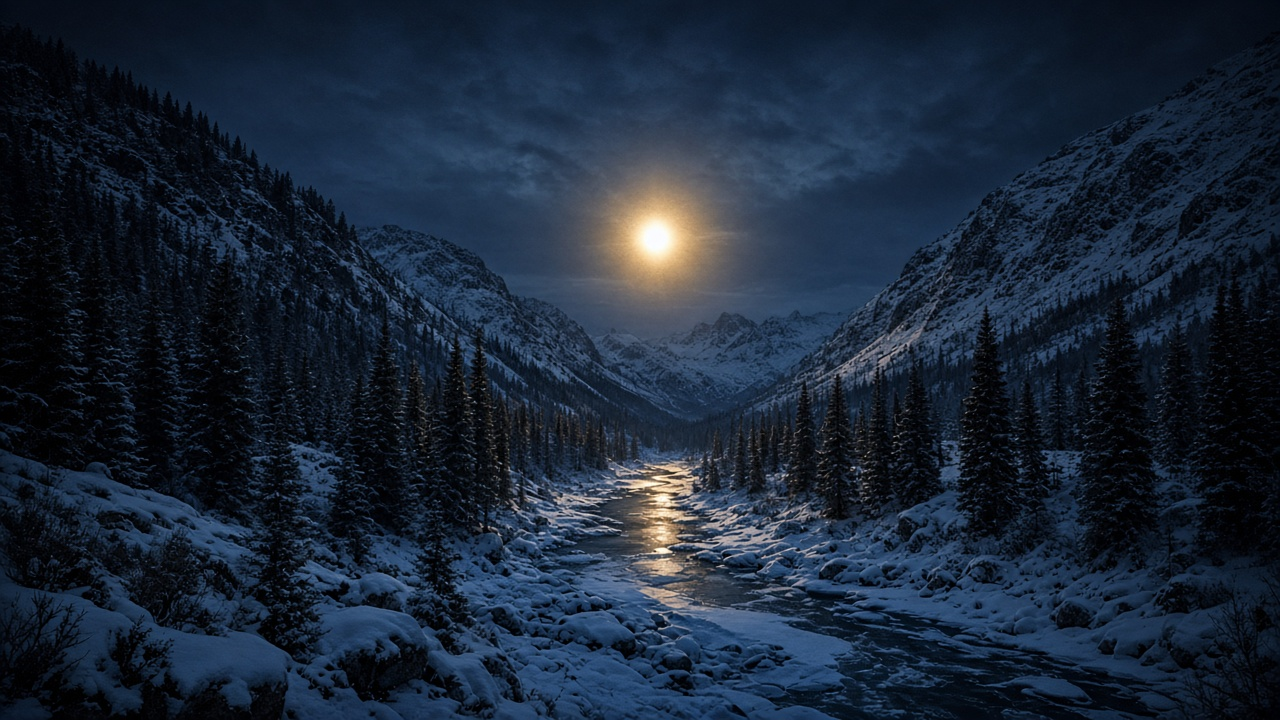
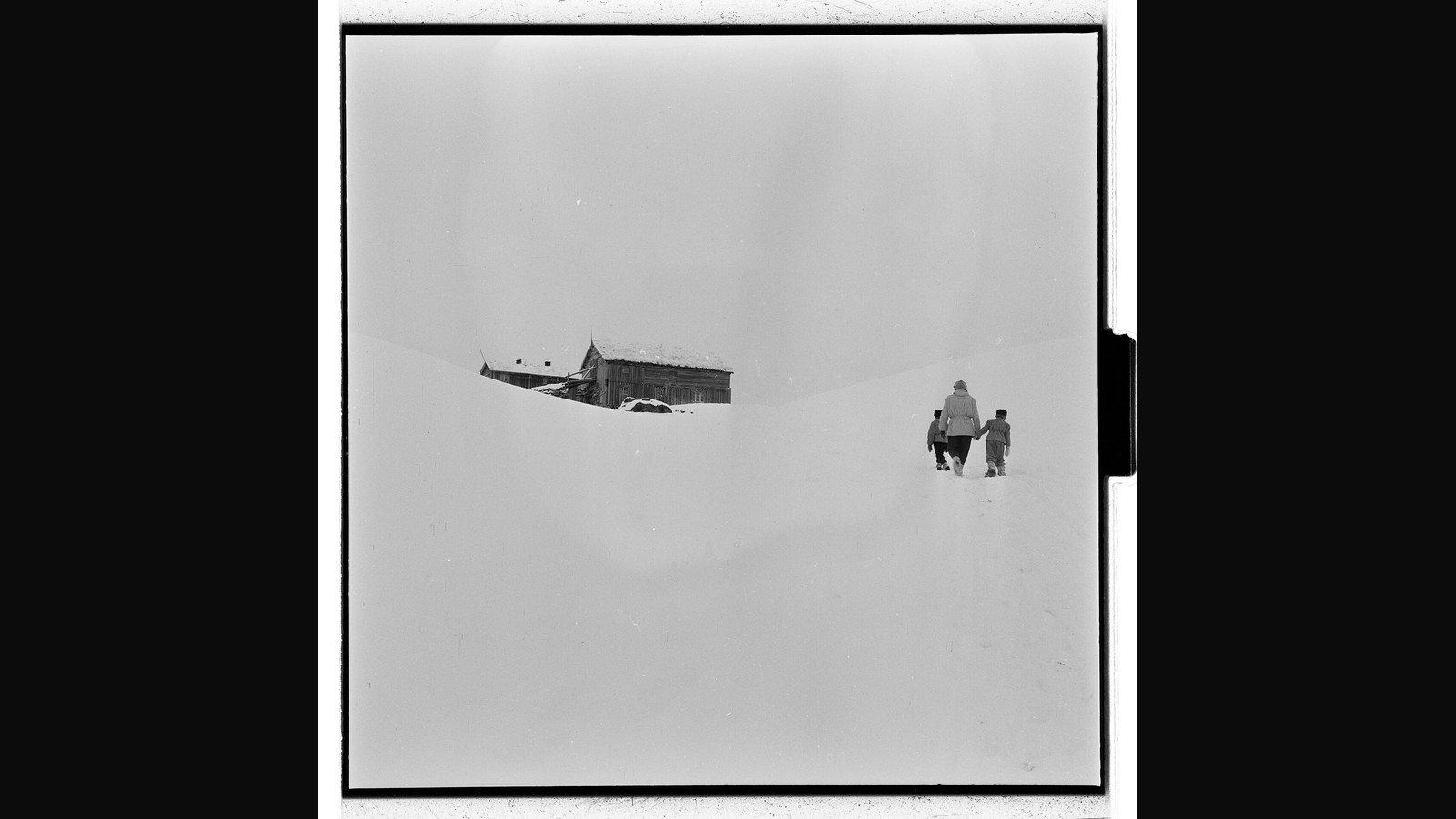
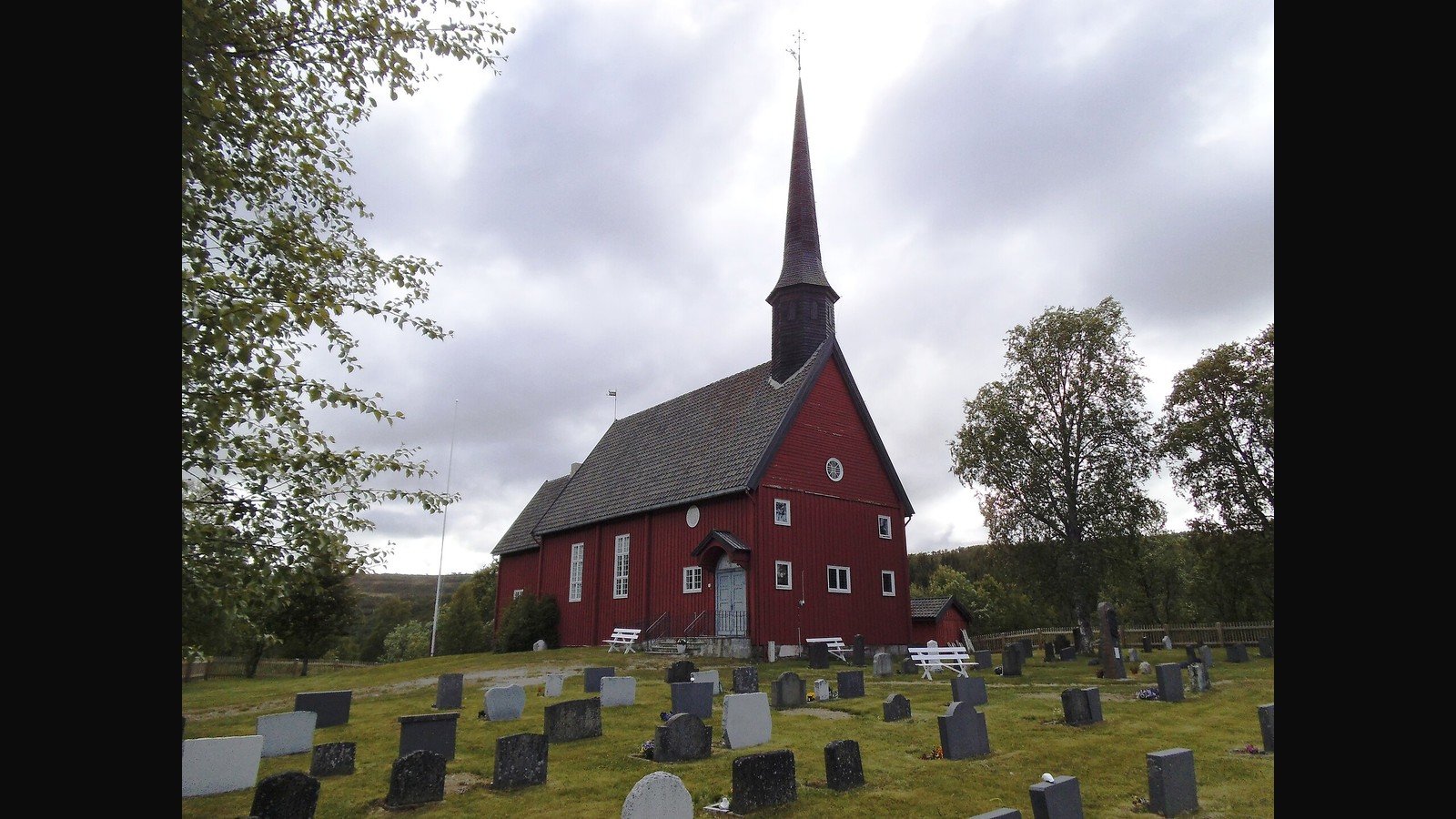
Some believe the lights of Hessdalen are a real physical phenomenon that science has measured but cannot yet explain. Since December 1981, people in this small valley in central Norway have reported lights that hover for more than an hour, drift, stop, or race away. Adherents point out that, unlike most ghost-light legends, Hessdalen's lights have been tracked on radar, photographed and analyzed in published papers. Researchers still describe their cause as unknown. Several of the key reports come from the volunteer group that has studied the valley longest, and are presented here as its own findings.
The 1984 field campaign
Project Hessdalen's own 1984 final technical report, by project leader Erling Strand, describes the valley: about 12 kilometers long, about 150 residents, roughly 30 kilometers northwest of Røros. Between January 21 and February 26, 1984, the team watched with radar, a spectrum analyzer, a magnetometer, a seismograph, a laser, Geiger counters and infrared viewers, and logged 188 light reports. The report's introduction notes that before the campaign, one light had been radar-tracked at about 8,500 meters per second.
The team made 36 radar recordings; three coincided with visible lights. One return, the report says, was "as strong as the reflections from the mountains." A defence radar expert told the team that if it was gas rather than a solid object, "the gas has to be locally and strongly ionised." Some lights reflected radar only on every second sweep while staying visible, and the report asked whether the light might "react" to radar.
Then came the result that still startles readers. When the team aimed a laser at one of the lights, they recorded a response "8 out of 9 times." Strand called it "very surprising." The Geiger counters, seismograph and infrared viewers, by contrast, recorded nothing linked to the lights.
His summing up, in the project's own report: "We have not found out what this phenomenon is... But we know that the phenomenon, whatever it is, can be measured. Beside the light measurements, it can be 'measured' by radar and laser."
https://old.hessdalen.org/reports/hpreport84.shtml
Nineteen kilowatts
In 2004 Italian astrophysicist Massimo Teodorani published a long-term survey of the phenomenon in the Journal of Scientific Exploration, reanalyzing Norwegian data and adding three Italian field expeditions. The paper is hosted on Project Hessdalen's site. He reports radiant power "reaching values up to 19 kW," clusters of light balls that behave in a "thermally self-regulated way," characteristics "consistent with a solid," the ejection of smaller light balls, an unidentified shift in very low frequency radio, and "possible deposition of metallic particles."
Teodorani found that some observations fit an electrochemical model similar to ball lightning. But he also wrote that "a self-consistent definitive theory... cannot be constructed yet."
https://old.hessdalen.org/reports/scex1802217251.pdf
The EMBLA mission
In August 2001 a joint Italian and Norwegian team ran an optical mission in the valley, called EMBLA. Its report, by Teodorani with Strand and Bjørn Gitle Hauge of Østfold College and hosted by Project Hessdalen, describes photographs, video and spectra of the lights.
The mission found that the phenomenon is a thermal plasma made of many small components vibrating around a common center, able to eject smaller light balls and constantly changing shape. On the question everyone asks, the report is plain: "the cause, and the physical mechanism with which radiation is emitted is currently unknown."
https://old.hessdalen.org/reports/Embla2001_e.pdf
Dust and radon
Researchers outside the project have offered their own physics. In 2010, G. S. Paiva and C. A. Taft proposed in the Journal of Atmospheric and Solar-Terrestrial Physics that the lights are formed by a cluster of macroscopic Coulomb crystals in a plasma, produced when alpha particles from radon decay ionize the air and dust of the valley. According to the paper's abstract, several properties seen in the lights, their oscillation, geometric structure and light spectrum, can be explained through this dusty plasma model.
It is a physical answer, but it is a proposal, not a finding. The abstract itself still calls the Hessdalen lights "unexplained light balls."
https://hero.epa.gov/reference/2622413/
A giant battery?
In 2014 the science news site sciencenorway.no reported on another idea, from Italian engineer Jader Monari. He suggests the valley works like a car battery: its two sides act as electrodes, and the river Hesja, which carries sulphuric acid from an abandoned mine, acts as the electrolyte. Gas bubbling from the river, he proposes, could become charged and glow.
Norwegian physicist Bjørn Samset was not persuaded. "I haven't seen any convincing computations of the phenomena at Hessdalen," he said. "Before launching more fantastic theories, I would start out with some thorough documentation." The same report notes that engineers Bjørn Gitle Hauge and Erling Strand of Østfold University College have documented the lights since the early 1980s, and that Monari himself has no doubt the lights exist.
https://www.sciencenorway.no/electricity-forskningno-geology/little-valley--a-giant-battery/1401223
Still an open question
Today the lights are studied at Østfold University College, whose atmosphere physics group states the problem without hedging: "Lights of unknown origin are frequently observed in the remote Hessdalen valley." The group says it is "aiming at discovering the physical mechanisms behind the generation of these lights, and the energy source that powers these phenomena," and has presented Hessdalen results at the European Geosciences Union since 2011.
No Norwegian authority has issued a finding on the lights. More than forty years after the first reports, the instruments are still running and the question is the same. What is shining in Hessdalen, and where does its power come from?
https://www.hiof.no/iio/english/research/groups/atmosphere-physics/