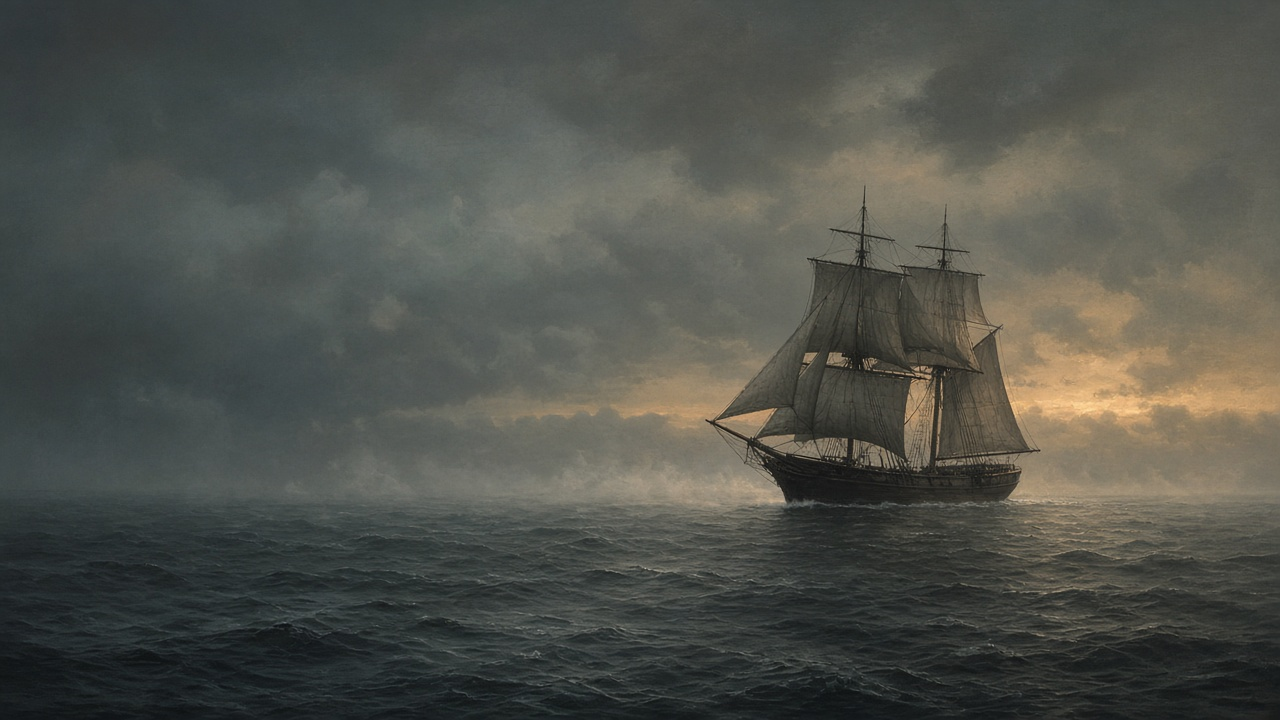
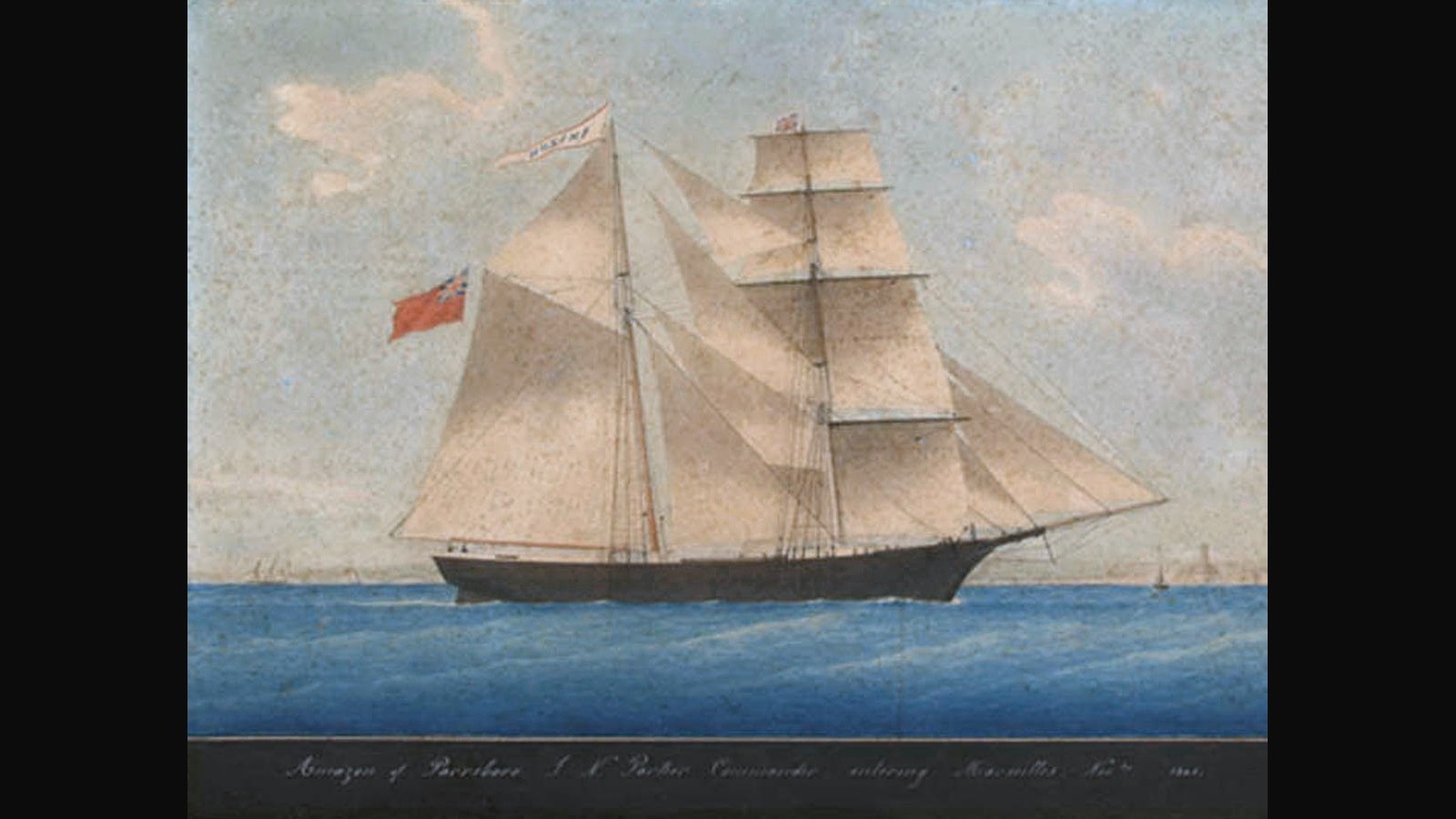
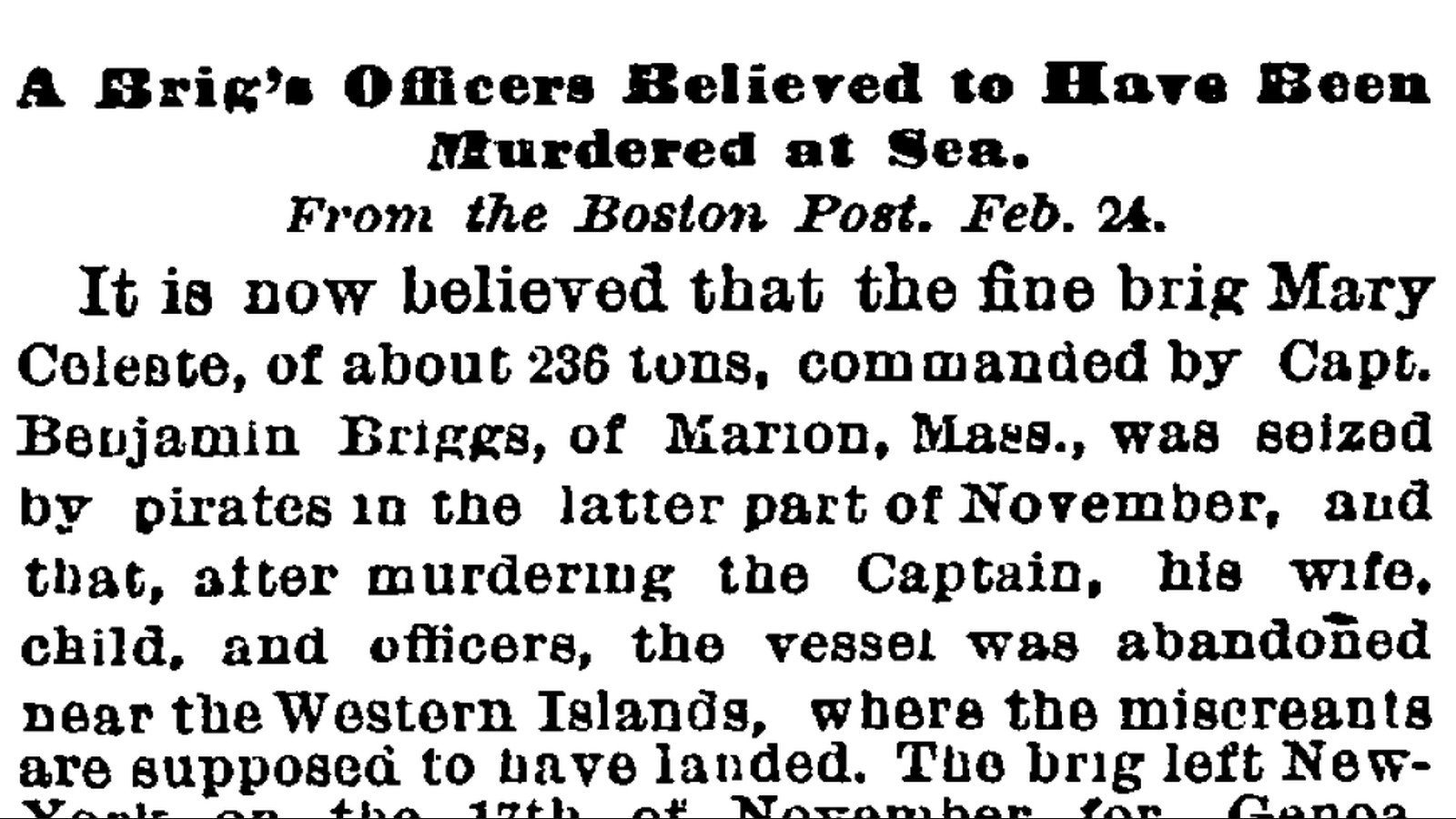
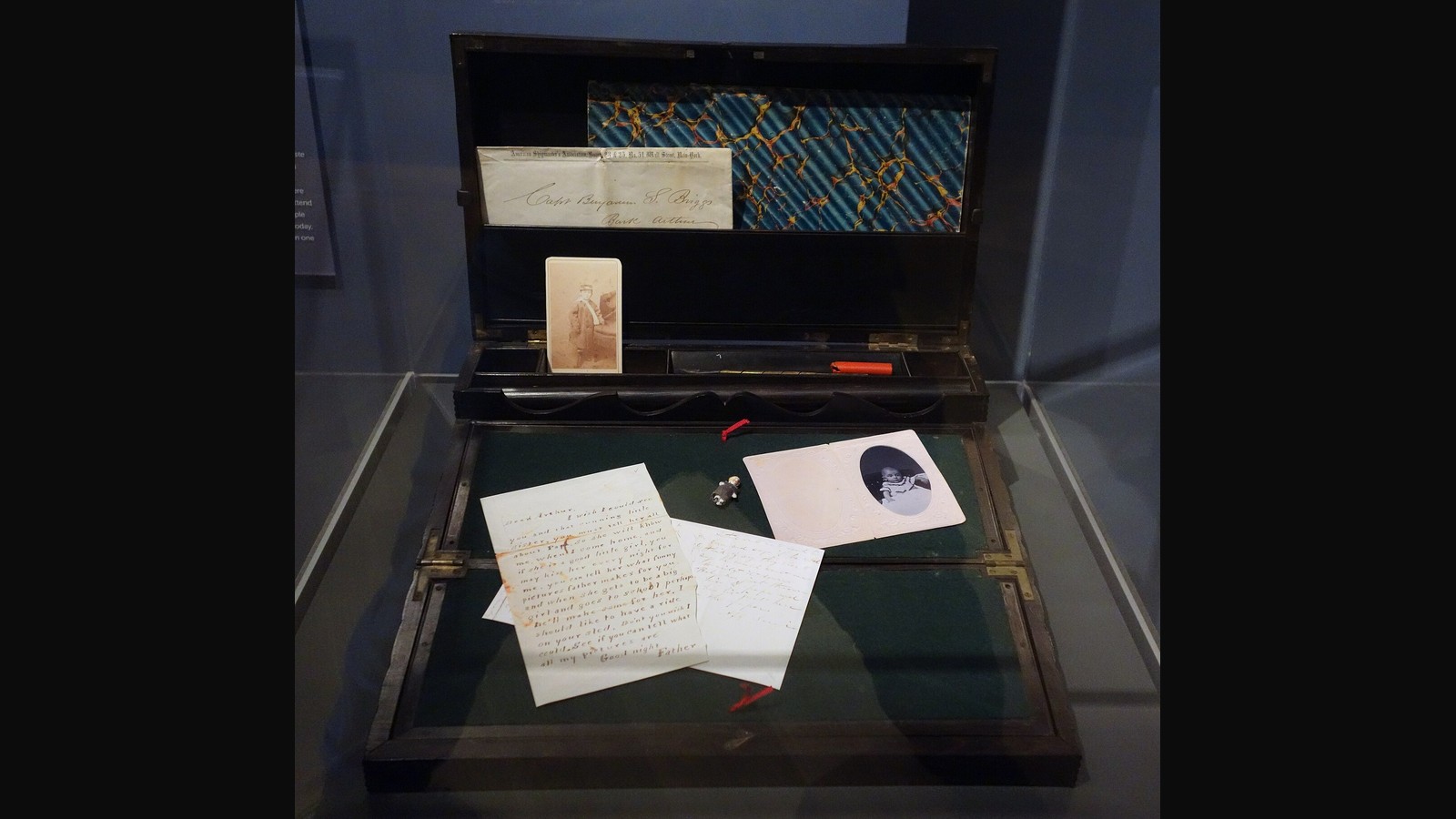
Some believe something sudden and unexplained took ten people off a seaworthy ship in the North Atlantic in 1872. The Mary Celeste was found sailing herself, cargo intact, cabin undisturbed, with her boat and papers gone. Adherents point to blood, to deliberate cuts in her timbers and to a Washington that suspected murder. Theories run from a crew gone violent, to the salvors, to pirates, to a force no court ever named. No body, boat or survivor was ever found.
Smeared with blood
The first account most British readers saw came from the Gibraltar Chronicle, summarized by The Spectator on February 15, 1873. On December 5, it reported, the British ship Dei Gratia fell in with the American brigantine Mary Celeste at latitude 38.20 N, longitude 17.15 W. Her master boarded and found her abandoned, "from no apparent cause." She was perfectly sound and had suffered no storm. A small phial of oil was found still standing upright.
Then came the detail that started the theories. "A sword which was in the cabin was found to be smeared with blood, the top-gallant rail had marks on it of blood, and both bows of the vessel had been cut with some sharp instrument." There had been a lady and a child aboard. The paper's own theory was that the crew, or part of them, had murdered the captain and escaped in the boats.
Ten days with no one aboard
A fuller dispatch from the Globe's Gibraltar correspondent, reprinted by The Guardian, describes what the boarders found. The ship had been met some 400 miles east of the Azores and brought into Gibraltar on December 13. When found she was under foremast staysail and jib, and had been sailing on that light canvas, by the correspondent's reckoning, for ten days without a soul aboard.
"No other papers were found on board; manifest, bills of lading, every document which could have thrown any light upon the history of the derelict had been removed." Yet nothing else had been touched. The cargo of spirits was intact except for one started cask. A harmonium and music books sat in the captain's cabin untouched by salt water. "A little phial of oil was still standing by a sewing machine," and a reel of cotton and a thimble had not rolled off the table. The cabin, with possessions of value belonging to a woman and a child, had not been plundered. A sword lay in its scabbard, rusty, with marks of blood wiped off. The correspondent ended: "Why she was ever deserted at all is still an absolute mystery."
https://www.theguardian.com/world/2023/feb/13/mary-celeste-mysterious-occurrence-at-sea-1873
The mate on the stand
The salvage case went before the Vice-Admiralty Court at Gibraltar in December 1872, and the first witness was Oliver Deveau, mate of the Dei Gratia. A transcription of his testimony from December 18 and 20, posted on a Mary Celeste research blog, records him identifying the ship's log, with the entries from December 5 to 13 in his own handwriting, and a chart marked "Mary Celeste, abandoned 5th. December 1872."
His evidence matters to adherents because the men who found the ship were also the men who stood to profit from her. Much of what the court heard about the empty ship came from the Dei Gratia's own crew.
https://web.archive.org/web/2016/http://marycelestemystery.blogspot.com/2010/04/court-notes.html
"Grave suspicions"
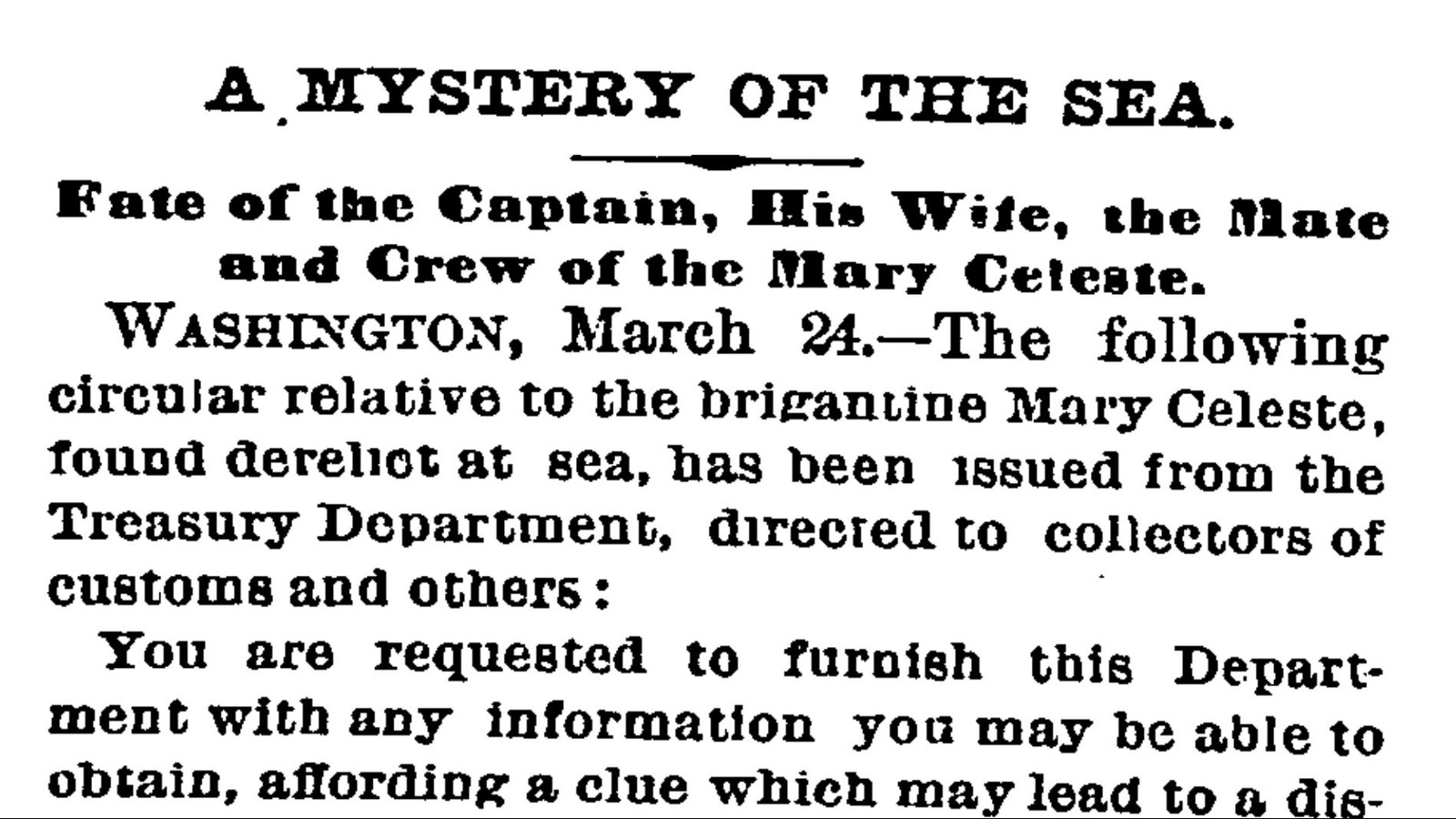
In March 1873 the United States government put its own suspicion in writing. On March 25, The New York Times printed in full a circular from Treasury Secretary William A. Richardson to customs collectors, dated Washington, March 24. The circumstances, it said, "tend to arouse grave suspicions that the master, his wife and child, and perhaps the chief mate, were murdered in the fury of drunkenness by the crew, who had evidently obtained access to the alcohol." The crew, it went on, had either perished or escaped on another vessel.
For believers this is the striking part. The official voice of the day did not suggest weather or bad luck. It suggested a crime.
https://commons.wikimedia.org/wiki/File:Mary_Celeste_NYTimes_1873March25.pdf
What the court decided
Smithsonian Magazine's investigation, drawing on the notes of Gibraltar's attorney general, Frederick Solly-Flood, fills in the record. The ship had left New York for Genoa on November 7, 1872, with 1,701 barrels of alcohol. Solly-Flood "suspected mischief and investigated accordingly," but after more than three months the court found no evidence of foul play. The salvors were paid about one-sixth of the $46,000 for which ship and cargo were insured. Smithsonian reads that as a sign the court was not fully convinced of the Dei Gratia crew's innocence.
No official body ever determined why the ship was abandoned. Modern researchers have offered their own explanations, outside any court: a precautionary abandonment near the Azores after rough weather, with a faulty chronometer and a fouled pump, or fear of an explosion from leaking alcohol. Nine of the barrels were found empty and recorded as red oak, a more porous wood. The ship's log itself is believed to have been lost in 1885.
https://www.smithsonianmag.com/history/abandoned-ship-the-mary-celeste-174488104/
How the legend grew
In 1884 Arthur Conan Doyle published a story anonymously in the Cornhill Magazine. "J. Habakuk Jephson's Statement" renamed the ship "Marie Celeste" and invented a violent backstory for the empty deck. It was fiction, with its own dates and its own position, but it set off waves of theorizing, and much of what people later believed about the ship came from it.
That is part of the file too: the real case was strange enough that a novelist could take it from there. Yet the plain 1873 record still holds a bloodstained sword, cut bows, missing papers and an untouched cabin. What could make ten people, among them a two-year-old child, leave a sound ship in such a hurry that they took nothing with them but the boat?