

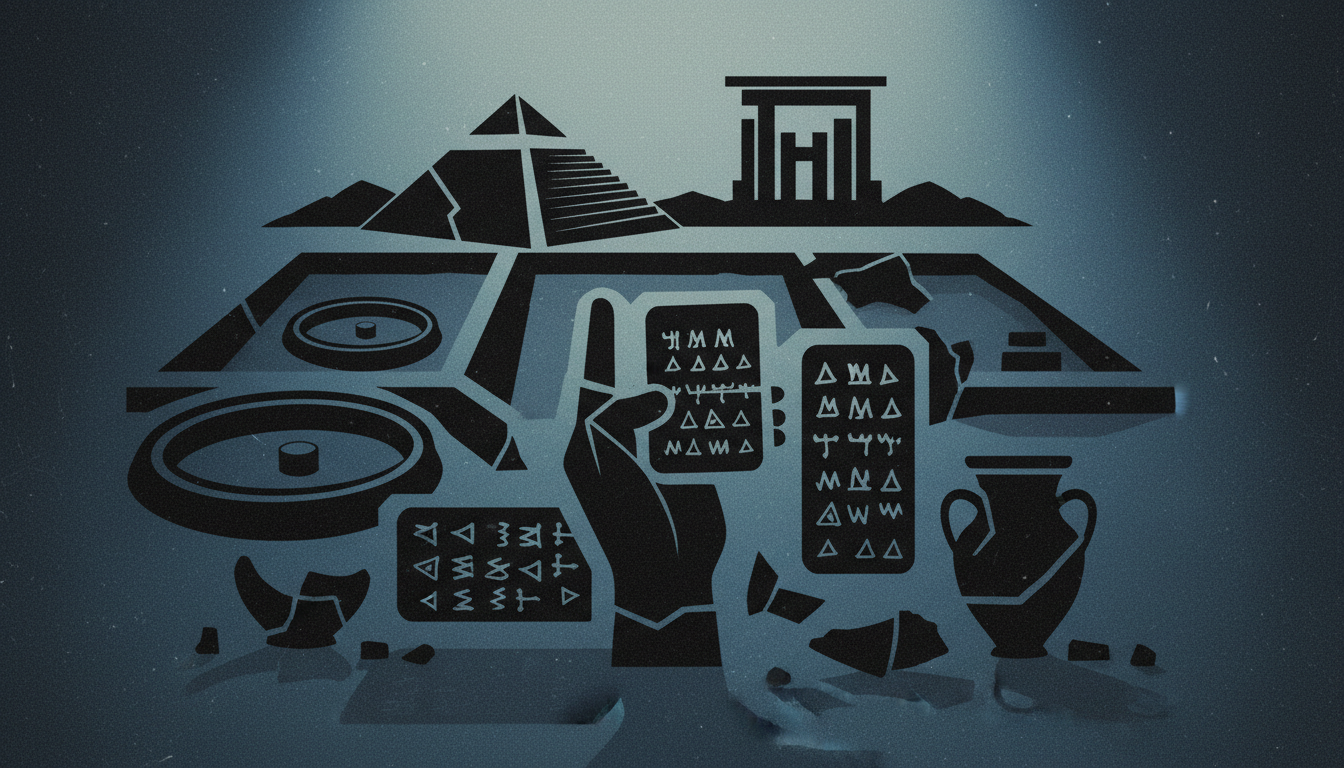
The purchases were treated as a lawful private buy. In July 2010 Hobby Lobby’s president and a consultant inspected a large group of cuneiform tablets and other antiquities in the United Arab Emirates. On the way home the president told a Customs officer he was carrying a bible he had paid more than a million dollars for, and that he had not believed a declaration was required because he had already paid. Officers let him attach a handwritten invoice and keep it. The later tablet shipments wore the same posture: a purchase, paperwork, a private company taking delivery. The United States’ verified complaint, filed in the Eastern District of New York on 5 July 2017, said something else. It sought civil forfeiture of about 450 ancient cuneiform tablets and about 3,000 clay bullae as merchandise introduced into the United States contrary to law. The labels, the complaint alleged, called the tablets handmade clay tiles, samples, made in Turkey. A later package of bullae from the same purchase was declared as coming from Israel. The complaint is a civil action in rem. It does not state a criminal conviction.
Hobby Lobby had been assembling a collection of manuscripts and antiquities since about 2009. In October 2010 an expert the company retained warned that cultural property likely from Iraq, including cuneiform tablets and cylinder seals, carried a risk of looting, and that a false country of origin could end in seizure and forfeiture. In December 2010 the company agreed to buy more than 5,500 artifacts — tablets and bricks, clay bullae, and cylinder seals — for $1.6 million. The Justice Department’s account says the stories about where the objects had been stored conflicted, that the pieces were displayed informally, and that the company’s representatives had not dealt with the dealer who supposedly owned them. Payment went to seven personal bank accounts. Packages went to three corporate addresses in Oklahoma City without the required customs entry, labeled “ceramic tiles” or “clay tiles (sample).” After about ten packages arrived, Customs and Border Protection intercepted five. Those labels falsely named Turkey. In September 2011 a package of about 1,000 clay bullae arrived from an Israeli dealer with a false declaration that the origin was Israel.
The expert’s October 2010 warning is part of the denial, not a footnote. The company had been told, in writing, that an Iraqi origin wrongly declared could forfeit the objects. The shipments went anyway, under tile labels and a Turkey or Israel origin. A paid invoice was treated as if it cured the entry. The forfeiture papers say it did not.
The complaint’s defendants in rem are the tablets and bullae. It describes Hobby Lobby and the collection the company was building. It does not plead the Museum of the Bible as the importer. What it pleads is introduction contrary to 19 U.S.C. § 1595a, on the theory that false invoices and declarations, and smuggling, made the import unlawful. Those are the predicates of a civil forfeiture. They are not a judgment that any person was convicted.
On the same day, the government filed a stipulation of settlement. Hobby Lobby consented to forfeit the artifacts in the complaint, about 144 cylinder seals, and $3 million. It agreed to adopt import policies, train staff, hire outside customs counsel and brokers, and report cultural-property acquisitions quarterly for eighteen months. The Acting United States Attorney said the company had accepted responsibility for the conduct that produced an unlawful importation. The press releases do not state a criminal conviction of the company or of its president.
On 2 May 2018 Immigration and Customs Enforcement returned 3,800 artifacts to Iraq, including cuneiform tablets, cylinder seals, and clay bullae shipped to Hobby Lobby. The notice repeats that labels falsely described tablets as tile samples. It says many tablets can be shown to come from Irisagrig and are mostly legal and administrative texts of the Ur III and Old Babylonian periods. The number returned is 3,800. It is not a claim that every object in the 2010 purchase was in that ceremony.
The title says scandals in the plural. A second failure is on the Museum of the Bible’s own pages, and it is not the tablet case. The museum held sixteen fragments it had treated as Dead Sea Scrolls. In October 2018 it announced that testing of five then on display found characteristics “inconsistent with ancient origins,” and removed them. Its newsroom for 14 March 2020 quotes Colette Loll: none of the textual fragments in the museum’s Dead Sea Scroll collection are authentic, and each suggests a deliberate twentieth-century forgery. The museum’s November 2019 report states the same conclusion. That is a documented authenticity failure. It does not rewrite the tablet forfeiture, and it is not a criminal conviction.
Department of Justice, civil action filed 5 July 2017: https://www.justice.gov/usao-edny/pr/united-states-files-civil-action-forfeit-thousands-ancient-iraqi-artifacts-imported.
Immigration and Customs Enforcement, the same day’s settlement: https://www.ice.gov/news/releases/hobby-lobby-settles-3-million-civil-suit-falsely-labeling-cuneiform-tablets.
Verified complaint in rem: https://storage.courtlistener.com/recap/gov.uscourts.nyed.403932.1.0.pdf.
Return of 3,800 artifacts to Iraq, 2 May 2018: https://www.ice.gov/news/releases/ice-returns-thousands-ancient-artifacts-seized-hobby-lobby-iraq.
Museum of the Bible, 14 March 2020: https://www.museumofthebible.org/newsroom/museum-of-the-bible-hosts-two-day-conference-on-testing-of-its-dead-sea-scrolls-collection.
Museum of the Bible scientific report, November 2019: https://museumofthebible.cdn.prismic.io/museumofthebible/8ee1c3b3-8398-481a-bc7a-4da593c38728_MOTB-DSS-Report-FINAL-web.pdf.
What Documented Settles
Documented: a private purchase whose labels called cuneiform tablets clay-tile samples; a 5 July 2017 civil complaint alleging false declarations and an import contrary to law; a same-day civil settlement of the artifacts, 144 cylinder seals, and $3 million; a 2 May 2018 return of 3,800 artifacts to Iraq; and a separate finding that the museum’s sixteen Dead Sea Scroll fragments are not authentic. Not on these pages: a criminal conviction. The complaint does not make the Museum of the Bible the importer of the forfeited tablets. The scroll report does not decide the tablet case.