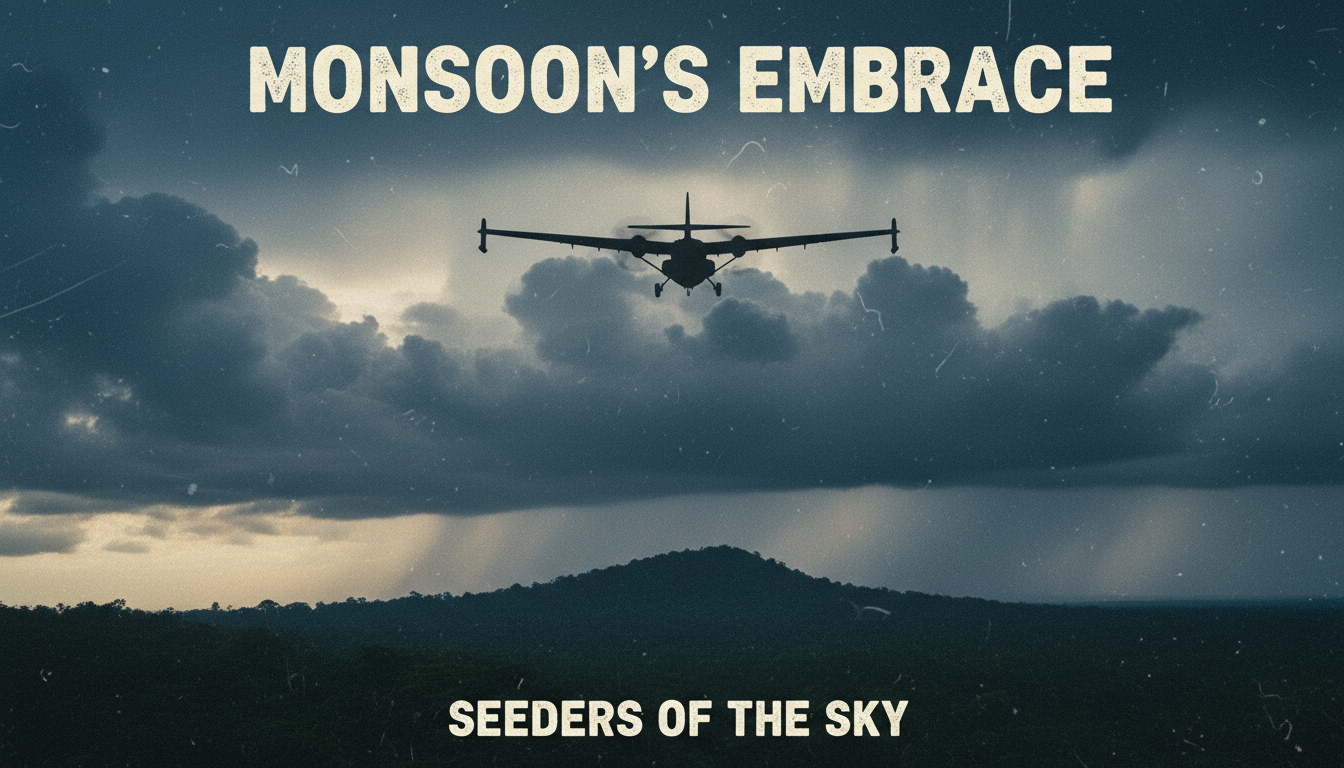
Operation Popeye Weather Modification
From 1967 to 1972, U.S. aircrews flew cloud-seeding missions—Operation Popeye, also called Intermediary-Compatriot—over infiltration corridors in Laos, North Vietnam, Cambodia, and South Vietnam to stretch monsoon rains and muddy Ho Chi Minh Trail logistics. Official posture after disclosure framed the effort as a limited Indochina interdiction program, later acknowledged to Congress, then folded into the push for an international ban on hostile environmental modification. FRUS authorization traffic and the 1974 Senate hearing record tell a harder story: Project Popeye was approved as a non-publicized operational weather-modification effort, debated inside State and Defense as precedent-setting “weather warfare,” run for thousands of sorties, and only fully aired when Senate hearings forced the DoD admission. The weather-warfare rabbit hole starts from official paper—not chemtrail lore.
The Seed
WC-130 and other seeding aircraft flew from Thailand bases. Silver-iodide and lead-iodide canisters went into clouds over Trail corridors. Caption-ready geography: Trail map, FRUS authorization language, Senate hearing tables. A Laos test phase in October 1966 was rated “outstandingly successful” in DoD channels before the operational request moved to State.
FRUS 1964–1968, volume XXVIII, Document 274—Deputy Under Secretary Kohler’s 13 January 1967 memorandum to Secretary Rusk on “Weather Modification in North Vietnam and Laos (Project Popeye)”—is the primary State door for birth politics: secrecy assumptions, spillover risks, and the precedent problem of opening “weather warfare”: https://history.state.gov/historicaldocuments/frus1964-68v28/d274.
Official Posture: Limited / Acknowledged / Banned
Wartime posture was non-publicized operational cover. After 1974, DoD acknowledgment of rainmaking as interdiction entered the congressional record. Later policy line treated hostile climate modification as something the United States would not practice—and helped negotiate a treaty to say so. That arc is not invented. It is also incomplete if “limited program” erases the secrecy debate and the sortie counts the Senate forced into daylight.
What the Paperwork Shows
Kohler’s memo shows State already saw Popeye as precedent-making weather warfare with uncertain ecological and political spillover. Secrecy assumptions included the judgment that disclosure would be damaging. Operational rainmaking ran roughly March 1967 through July 1972.
The U.S. Senate Subcommittee on Oceans and International Environment Weather Modification hearings (25 January and 20 March 1974)—DoD briefing made public 19 May 1974—are the primary congressional door. Sortie and canister figures enter the record there; cite the hearing, do not invent totals from secondary lore: https://www.govinfo.gov/content/pkg/CHRG-93shrg29544O/pdf/CHRG-93shrg29544O.pdf. Hearing literature commonly associated with the public admission includes on the order of 2,600 sorties and tens of thousands of canisters—keep those figures labeled to the hearing record.
FRUS 1969–1976, volume E–14, Part 2, Document 74, carries environmental-warfare and weather-modification policy into the mid-1970s—NSDM 165 context, Senate Resolution 71 pressure, the path toward international constraint after Indochina disclosure: https://history.state.gov/historicaldocuments/frus1969-76ve14p2/d74.
The Department of State’s ENMOD narrative connects Senate pressure and U.S.–Soviet talks to the 1977 Environmental Modification Convention: https://2001-2009.state.gov/t/ac/trt/4783.htm. The UN Treaty Collection hosts the convention status page and certified text (XXVI-1): https://treaties.un.org/pages/ViewDetails.aspx?src=TREATY&mtdsg_no=XXVI-1&chapter=26&clang=_en and https://treaties.un.org/doc/Treaties/1978/10/19781005%2000-39%20AM/Ch_XXVI_01p.pdf. Article I’s “widespread, long-lasting or severe” understandings are the treaty’s operational constraint language—born from the disclosure fight, not proof of ongoing secret spraying.
Why the Story Stayed Managed
Classified operational cover held until press exposure and Senate hearings forced acknowledgment. Arms-control and State lawyers worried that first use would set a norm. ENMOD became the diplomatic lid: signed 1977, into force 1978, U.S. ratification deposit January 1980. The managed story is not “Popeye never happened.” It is how long a rainmaking interdiction program stayed non-publicized while policy shops already argued about weather-warfare precedent.
Program halt in 1972 tracked press exposure as much as battlefield victory metrics. The Senate did not invent rainmaking; it forced DoD to brief the operational record in a forum where sortie tables and canister counts could not stay in classified annexes. Contemporary press—secondary after FRUS and the hearing PDF—carried the May 1974 admission to a wider public. The primary doors remain the Kohler memo, the GovInfo hearing, and the ENMOD depositary text.
Inside government the fight was never only “does seeding work.” ACDA and State worried about norms: once weather was used as a weapon in Indochina, what stopped reciprocal or escalating environmental techniques elsewhere? NSDM 165 weather-modification guidelines and Senate Resolution 71’s sense-of-Senate pressure show policy shops treating Popeye as a precedent problem, not a one-theater gadget. ENMOD’s “widespread, long-lasting or severe” formula is lawyer language forged in that argument.
Policy Siblings
Stormfury is civilian hurricane-research contrast—not an Indochina clone. ENMOD Article I understandings are the legal family that grew from the disclosure fight. Later geoengineering debates are not Popeye continuity. Fishbowl (nuclear EMP) is environmental-effects contrast of a different kind—do not merge nuclear high-altitude EMP with silver-iodide cloud seeding. Same broad “environmental modification” policy neighborhood; different techniques, different treaties’ origins.
Myth Discipline
Reject chemtrail / “they still spray us daily” folklore. Reject attributing every Mekong flood to Popeye. Reject treating ENMOD as proof of an ongoing secret weather war rather than a prohibition regime born from Senate pressure after Indochina disclosure. Stick to FRUS authorization language, Senate sortie and canister counts, and ENMOD text. The scare is an admitted multi-year operational weather-modification war that State already flagged as precedent-setting. That is enough without inventing present-day cabal spraying.
What the Paper Trail Settles
Settled on the documents: Laos test October 1966; Kohler–Rusk memo 13 January 1967; operational seeding ~1967–1972; Senate hearings January/March 1974 with DoD briefing public 19 May 1974; ENMOD signed 1977 / in force 1978 / U.S. deposit 1980. Overclaim to refuse: chemtrail continuity, flood-for-every-canister causation, and reading ENMOD as evidence of secret ongoing warfare instead of a ban regime.
The tension that remains is the one the packets leave open. Officials ran a non-publicized rainmaking interdiction program for years. FRUS shows the precedent worry at birth; the Senate forced the sortie paper into public view; ENMOD tried to close the door. Popeye is that gap—read with the FRUS and GovInfo hearing doors open, not as chemtrail folklore.