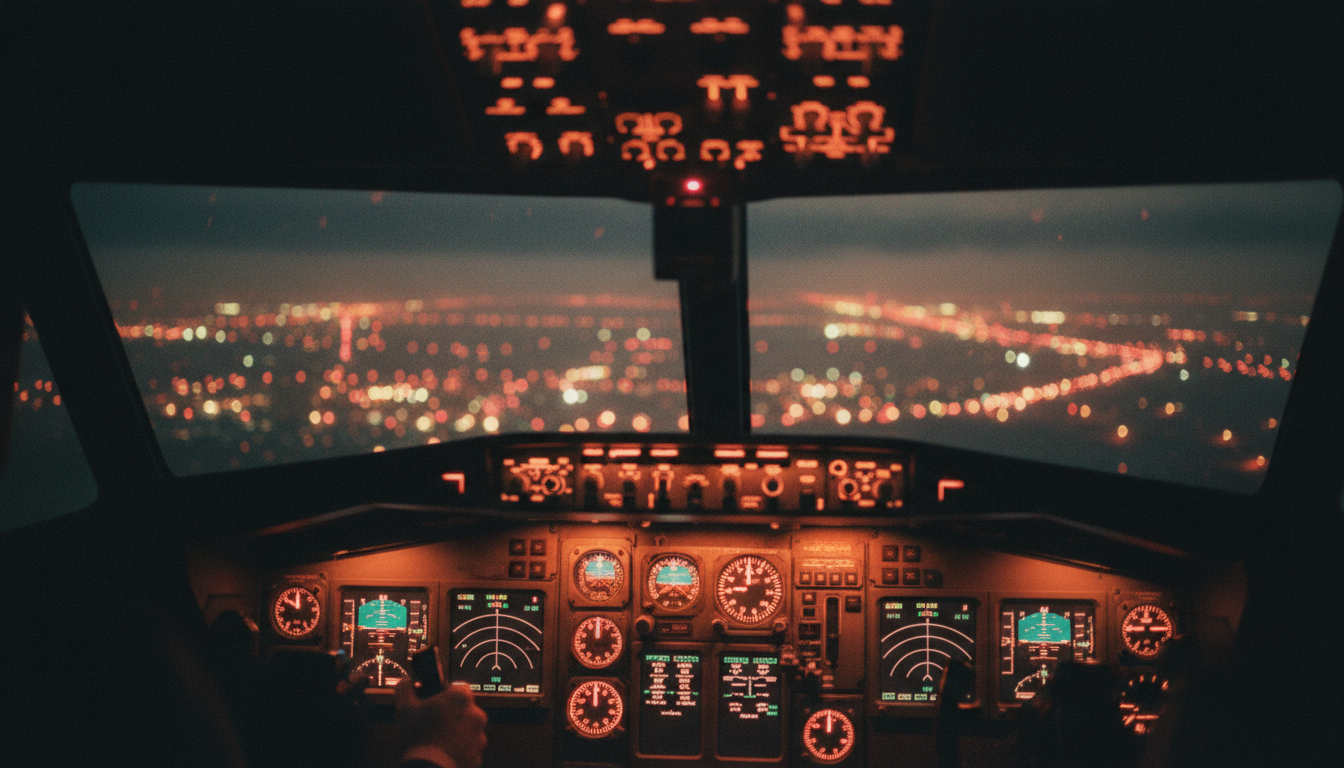
On 11 November 1979 a commercial flight diverted to Manises; the official file and witness claims still disagree. A Super Caravelle on a Salzburgo–Tenerife routing landed at Valencia's Manises airport after the crew reported unidentified lights. A fighter later scrambled from Los Llanos. An Air Force expediente sits beside those witness lines. The doors do not identify the object as a craft, and no craft landing appears in them. Where file numbers or company spellings disagree, both printings stay on the page.
The November 1979 press notice
On 14 November 1979 El País reported that aeronautical authorities had opened an official inquiry into an emergency landing at Manises airport the previous Sunday night by an aircraft of the company TAE (Transportes Aéreos Españoles). The pilot, the paper said, had observed several unidentified objects following the aircraft on the Salzburgo–Tenerife flight and decided to land at Manises. The Subsecretaría de Aviación Civil had sent the pilot's statements to the Ministry of Defense. The article adds that information on the event, as on unidentified flying objects generally, was reserved matter under the Junta de Jefes de Estado Mayor. That is a contemporary press door. It does not identify a craft.
El País, 14 November 1979: https://elpais.com/diario/1979/11/14/espana/311382029_850215.html
Radio lines printed from expediente 791111
A 13 August 2023 Las Provincias article prints an extract of the conversation between flight JK297, piloted by Javier Lerdo de Tejada, and Barcelona then Valencia control on 11 November 1979 between about 22:02 and 22:45 Zulu. The paper says the document is part of confidential expediente 791111, now declassified and consultable in the Ministry of Defense library. In the extract the crew reports two fixed red lights without flashings, asks about nearby traffic, is told none is notified, and requests landing at Valencia because the traffic is following. Valencia control later says military radar Pegaso checked and affirmed something was near the aircraft at about 9,000 feet, unknown to them also. The Super Caravelle, the article says, touched down at 22:45 Zulu. Those are radio and landing lines as the paper prints them from the file. They are not an identification of a craft.
Las Provincias, radio extract: https://www.lasprovincias.es/comunitat/piloto-avistar-ovni-manises-veo-dos-luces-20230812001821-nt.html
The companion article's file reading
The same day's Las Provincias companion piece titles the night the expediente Manises. It spells the company TEA and says the Super Caravelle on the Salzburgo–Palma de Mallorca–Tenerife route landed at 22:45 Zulu after reporting an unidentified object. It cites expediente 79111 as 148 pages in the Ministry of Defense virtual library. It reports that the reading most accepted in its survey is that the lights were an optical effect from flares at the Escombreras refinery near Cartagena under particular weather, and that a U.S. Air Force major general, in a document dated 15 November 1979, denied a Sixth Fleet aircraft explanation. It says a Mirage F-1 piloted by Captain Fernando Cámara scrambled from Los Llanos and that Cámara also reported strange lights. On the file's last pages, analyzing an oral interpretation by deputy Enrique Múgica, it quotes conclusions that put in doubt an OVNI that night: the lights were not an aircraft but simply an optical illusion, with no radar contact and no qualification as air traffic; the Mirage launch followed a telephone report of lights, not a ground-radar track. File numbers appear as 79111 in one sentence and 791111 in another in the same paper's package. Both spellings are left as printed.
Las Provincias, companion reading: https://www.lasprovincias.es/comunitat/cara-ovni-manises-20230812001935-nt.html
The composite Air Force cover
A UFO Transparency entry for Spanish Air Force expediente 791111/791117/791128(Bis) prints the cover lines LUGAR: VALENCIA / MOTRIL / MADRID and FECHA: 11, 17 y 28 de Noviembre de 1979. The entry's narrative focus is a Torrejón F-4 scramble in the early hours of 28 November over Madrid, with fleeting radar contacts and no visual. The cover itself, as transcribed, groups the 11 November Valencia date with later Motril and Madrid dates under one number string. That grouping is the file's own. It does not convert the Manises diversion into a craft identification, and the only landing it leaves standing is the commercial runway landing the press doors already print.
UFO Transparency, expediente cover: https://ufotransparency.com/files/intl-es-expediente-manises-1979-1979-11-11-17-28-avistamiento-en-valencia-motril-madrid-ii
A later summary of the same night
A 2024 Mundo Parapsicológico summary of the case lists the Super Caravelle of Spanish company TAE, commander Francisco Javier Lerdo de Tejada and copilot Ramón Zuazu, and a Mirage F-1 of Ala 14 from Los Llanos piloted by Captain Fernando Cámara, with radar units including EVA 5 and Pegaso. It cites expediente número 791111 as declassified by the Ejército del Aire in 1994. Those are role and publication lines. They match the Mirage scramble named in Las Provincias and the TAE spelling in El País, while Las Provincias also prints TEA. Both company spellings remain.
Mundo Parapsicológico case summary: https://www.mundoparapsicologico.com/ufologia/el-caso-manises-expediente-oficial-un-caza-de-combate-y-la-oleada-ovni-europea/
A critical reading of Fernández Peris
Miguel Ángel Ruiz's 2009 essay on Informe OVNI, reviewing Juan Antonio Fernández Peris's book El expediente Manises, summarizes the night as an aeronautical incident in which JK-297 lost minimum separation with unknown traffic and landed at Manises, after which a Spanish Air Force fighter attempted pursuit and other unknown objects were reported by roughly forty ground witnesses, many of them aeronautical personnel. Ruiz's essay is a methodological critique of refutation techniques. It does not, in the opening it prints, identify the traffic as a craft, and it names no landing of any unidentified machine.
Informe OVNI, Ruiz 2009: https://www.informeovni.net/articulos/elexpedientemanises.html
Beside the diversion
The commercial diversion and the scrambled fighter are documented in press and file doors. Optical-illusion conclusions appear in the Las Provincias reading of the expediente's last pages; witness and radio lines keep unidentified lights. File numbers 79111 and 791111/791117/791128(Bis), and company spellings TAE and TEA, disagree across doors and are left in place. No door here identifies a craft or invents a craft landing.