


The case
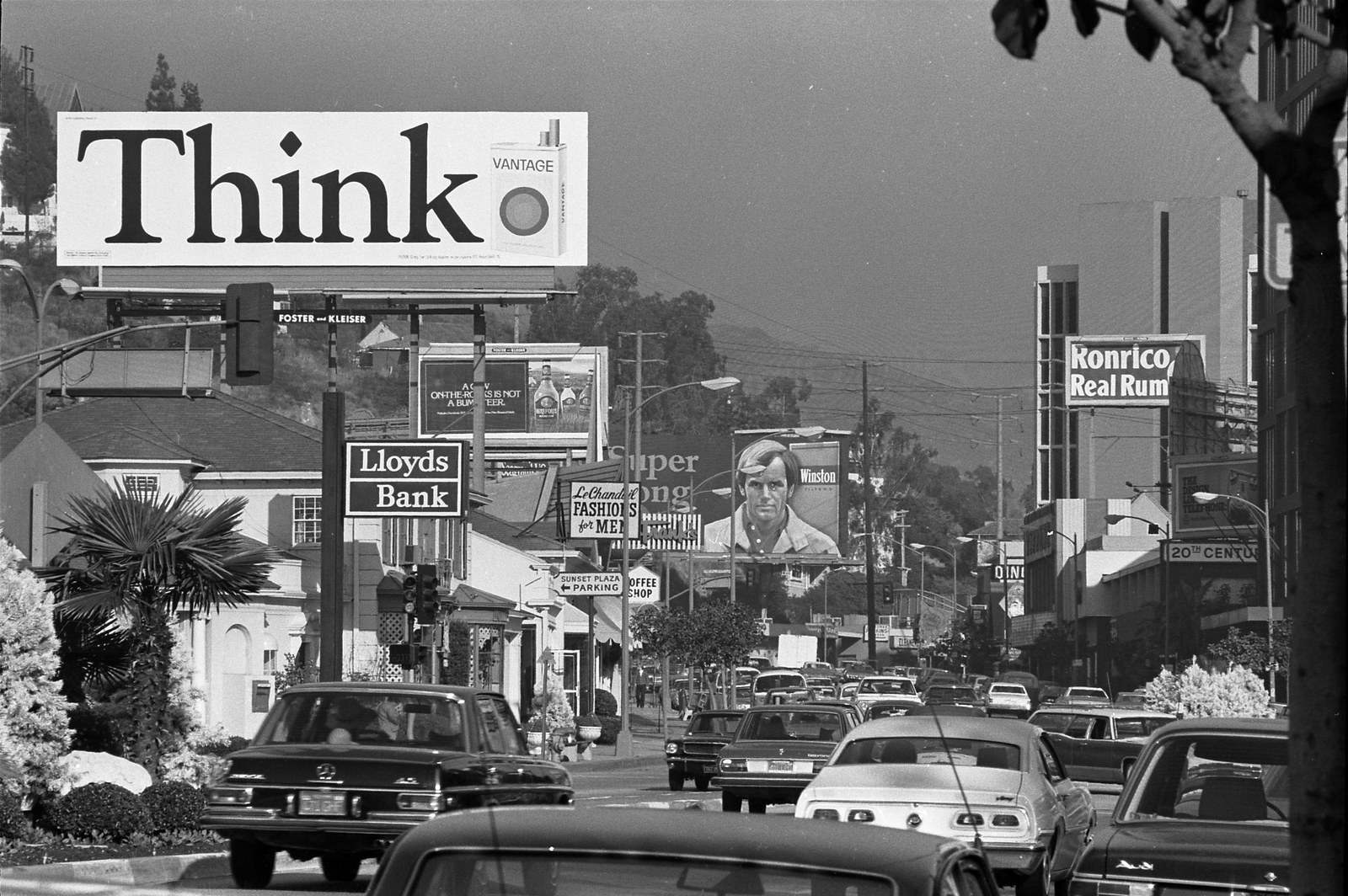
They Live was released in 1988. As the critic Brian Eggert of Deep Focus Review describes it in a 2017 essay, Nada, "a homeless man named after the Spanish word for 'nothing,'" wanders into Los Angeles in search of work. When he puts on a pair of sunglasses made by a group meeting in a nearby church, "he looks at ads and billboards through the glasses and sees subliminal messages like OBEY, MARRY AND REPRODUCE, STAY ASLEEP, and CONSUME. At the same time, when he looks at well-to-do people, he sees aliens in disguise." The aliens call him "one that can see."
Eggert reports that the film was shot in and around downtown Los Angeles in March and April of 1988, and quotes Carpenter on the passers by: "They literally paid no attention when the covers said 'OBEY.' They looked for a moment, and moved right on. We had a big sign on a building which said 'CONFORM.' People glanced up at it, and didn't give it a second thought."
The adherents' reading
For adherents, the film describes the method it depicts. The author of the online book Devices of Deception, writing from a Christian standpoint, opens an appendix on media this way: "Hollywood does not merely entertain. It reveals. What is presented as fiction functions as disclosure." The author adds: "They call it 'predictive programming.' A more accurate term might be revelation through entertainment."
The same appendix lists They Live among its examples, with the hidden commands "OBEY," "CONSUME," "MARRY AND REPRODUCE," and "NO INDEPENDENT THOUGHT," and reads its lesson in a few lines: "The messages are hidden in plain sight," "Media is the delivery mechanism," and "Most people cannot see." In this reading, the film tells viewers that they are being steered, and tells them in a form they will laugh at and forget.
The mainstream reading
Carpenter has said plainly what he meant. As Devin Meenan of Slashfilm reports, he told Starlog magazine in November 1988: "The picture's premise is that the 'Reagan Revolution' is run by aliens from another galaxy. Free enterprisers from outer space have taken over the world." He added: "I began watching TV again. I quickly realized that everything we see is designed to sell us something." Meenan also traces the story to a source: Ray Nelson's 1963 short story "Eight O'Clock in the Morning," published in The Magazine of Fantasy & Science Fiction, about a man who wakes from hypnosis and sees the hidden aliens and "their hidden messages of mass control." Nelson and the artist Bill Wray adapted it as a comic called "Nada" in 1986, and Carpenter read that comic.
In a 2020 interview with Jake Malooley of Esquire, Carpenter called the film a "primal scream" against Reaganomics. Asked about his old line that the film is more documentary than fiction, he answered: "Well, I say that just to kind of tweak people. Parts of the film are real. I mean, there isn't really an alien invasion, but the Reaganite philosophy of unchecked capitalism and greed has taken over America." In 2017 Carpenter publicly rejected a hateful misreading of the film; as Esquire quotes his post, he wrote that They Live "is about yuppies and unrestrained capitalism" and called that misreading "slander and a lie."
The researchers' view
Scholars treat the glasses as a metaphor. In The Pervert's Guide to Ideology (2012), a documentary film, the philosopher Slavoj Žižek says, as quoted by Colin Marshall of Open Culture: "These glasses function like critique-of-ideology glasses." He goes on: "We live, so we are told, in a post-ideological society," in which we are addressed "as subjects of pleasures," and "when you put the glasses on, you see dictatorship in democracy."
The Žižek archive's summary of the same film records that he calls They Live "definitely one of the forgotten masterpieces of the Hollywood left," and quotes his twist on the metaphor: "ideology is our spontaneous relationship to our social world," so that critique is "the painful act of putting them on." On this view, the film is a story about seeing the everyday world differently, not a coded report of hidden rulers.
The adherents' answer
Adherents do not dispute that Carpenter meant satire. They point out that satire and disclosure are not opposites. The film shows commands hidden in advertising, a public that walks past them, and a few people who can see, and that, they say, is exactly how the steering of a public works. A message that most viewers enjoy as an action comedy and then forget is, in their reading, the clearest example of revelation through entertainment: the warning is delivered, and almost no one acts on it.