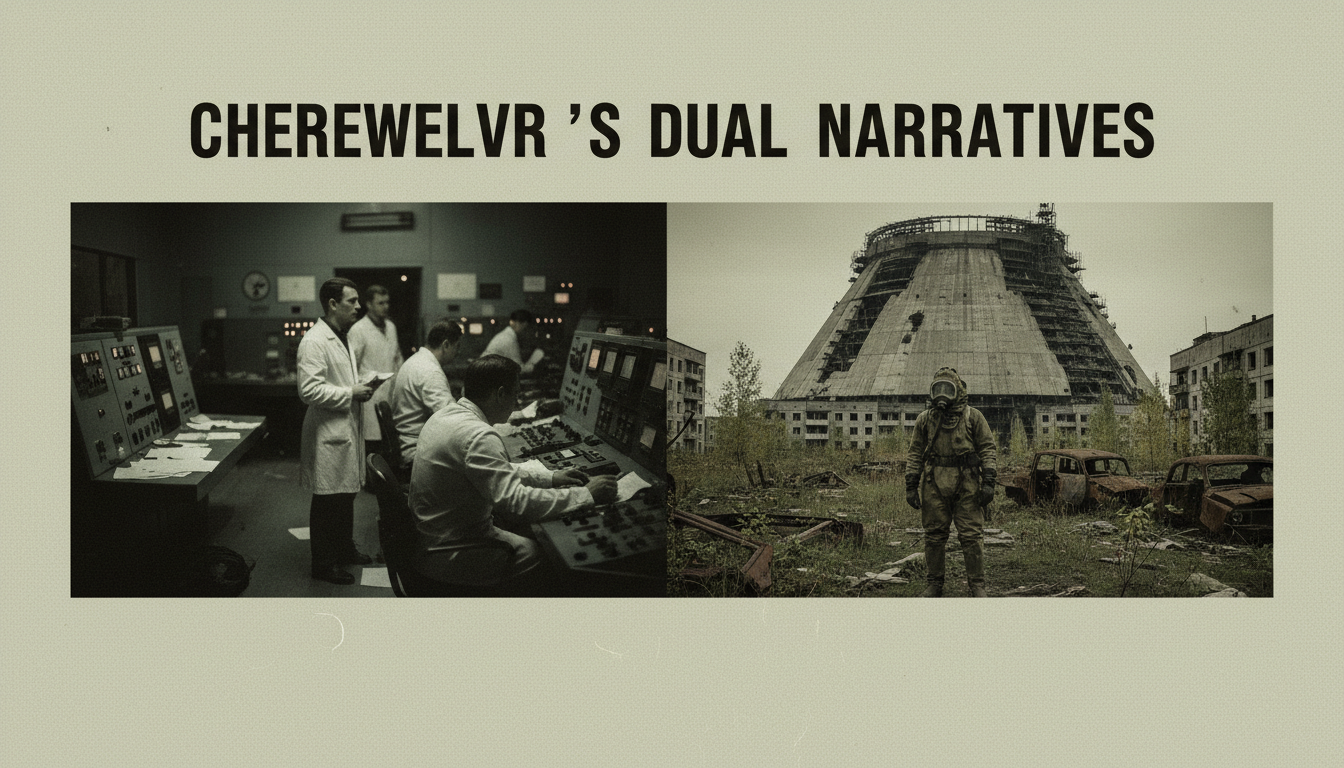
On 26 April 1986, Unit 4 at the Chernobyl Nuclear Power Station exploded. Fire, radioactive release, delayed public warning, and an international scramble followed. Within months, Soviet experts briefed the IAEA in Vienna. The first International Nuclear Safety Advisory Group report—INSAG-1—leaned hard on operator violations of operating rules. Six years later, INSAG-7 updated that report. New Soviet design studies forced a shift: faulty control-rod and safety-system design, plus systemic safety-management failure, moved to the center. The Archive tension is not disaster tourism. It is how the same institutional voice—IAEA INSAG—rewrote its causal emphasis when glasnost-era data arrived, while UNSCEAR later built a separate health-effects ledger that fits neither early Soviet minimization nor maximal folklore.
The Product: Two Official Cause Stories
The 1986 product was an accident narrative optimized for what Soviet briefers were prepared to say in Vienna: personnel disconnected protections, breached procedures during a turbine rundown test, and drove the plant into catastrophe. That story was not invented by Western tabloids; it was presented by Soviet experts and largely adopted internationally. The 1992 product was a corrected engineering ledger: RBMK design features—including control-rod behavior and void-coefficient problems—amplified and, in key respects, caused the runaway. Operators still erred. Design made those errors unsurvivable.
IAEA INSAG-1 publication door: https://www.iaea.org/publications/3598/summary-report-on-the-post-accident-review-meeting-on-the-chernobyl-accident
Official Posture: From Operator Blame to Design Weight
INSAG-1 (September 1986), prepared after the 25–29 August Vienna Post-Accident Review Meeting, treated human error and rule violations as the remarkable range of causes, compounded by reactor features. It also coined “safety culture” as a managerial diagnosis that outlived the first cause frame. INSAG-7 stands by broad implications for RBMK safety but shifts emphasis from operating-staff actions to faulty design of control rods and safety systems, and discusses regulation and management deficiencies across the Soviet nuclear industry. Two Soviet reports—translated and annexed—supply the revised physics and organizational findings.
IAEA INSAG-7: https://www.iaea.org/publications/3786/the-chernobyl-accident-updating-of-insag-1
What the Paperwork Actually Shows
The dual narrative is documentary, not vibes. First narrative: Vienna 1986 Soviet presentation → INSAG-1 operator-forward conclusions under information constraints of a still-secretive system. Second narrative: USSR State Committee for Supervision of Safety in Industry and Nuclear Power reassessment (1991) and related expert working-group work → INSAG-7’s redesign of emphasis, with Soviet annexes published through the IAEA. U.S. NRC NUREG-1250 preserves a contemporary Western regulatory compilation of the accident’s technical story for the American docket.
NRC NUREG-1250: https://www.nrc.gov/reading-rm/doc-collections/nuregs/staff/sr1250/index.html
Health and dose form a third official layer. UNSCEAR’s Chernobyl programme and the 2008 Annex D (corrigendum) reconstruct radiation exposures and evaluate thyroid cancer and other health endpoints with explicit uncertainty language. That annex is not a cable-news body count and not a claim of harmlessness. It is the UN scientific committee’s settled method against both minimization and inflation.
UNSCEAR Chernobyl door: https://www.unscear.org/unscear/en/areas-of-work/chernobyl.html
UNSCEAR 2008 Annex D (corr): https://www.unscear.org/unscear/uploads/documents/publications/UNSCEAR_2008_Annex-D-CORR.pdf
UNSCEAR 2008 Volume II page: https://www.unscear.org/unscear/en/publications/2008_2.html
Why the Story Stayed Managed
Early secrecy and briefing discipline locked operator blame into the first international record. Domestic Soviet audiences initially knew less than foreign experts who read the Vienna materials. Glasnost and internal design commissions later made continued operator-only storytelling untenable inside the same IAEA process that had amplified it. Western alarm coverage sometimes maximized; that media history is real and still secondary to the INSAG revision spine. Living scientists appear by report and annex, not character trials.
From Vienna Briefing Rules to Annex Honesty
Accounts of the 1986 delegation describe strict initial instructions limiting free discussion, followed by a partial opening under scientific pressure—enough transparency to impress Western peers, not enough to surface the full design indictment that 1991 commissions later wrote down. INSAG-7’s decision to annex those Soviet reassessments is the institutional admission that the first international narrative was built on incomplete physics. Prefer that paper path to folklore that either “the IAEA covered for Moscow forever” or “operators were blameless saints.” The dual narrative is the update trail itself.
Secrecy, Glasnost, and the International Rewrite
The dual narrative is also a politics-of-knowledge story. The Soviet state initially controlled what Vienna could hear; Western regulators and journalists then amplified that first frame because it was the authoritative international briefing on offer. When Soviet safety commissions later documented positive scram behavior and other RBMK pathologies, the IAEA did not quietly bury INSAG-1. It published an update that kept the 1986 report’s shelf life honest by revising its causal center of gravity. That is rarer than conspiracy folklore admits: an international safety body admitting its first synthesis over-weighted operators because the design brief was incomplete. UNSCEAR’s later health annexes continue the same documentary ethic—publish methods and uncertainties rather than a single cinematic death toll. Keep all three layers—1986 cause story, 1992 design correction, 2008 health reconstruction—visible. Erasing any one layer recreates the propaganda problem Chernobyl already taught.
Siblings and Myth Discipline
Three Mile Island’s information-management failure is the U.S. cousin: institutions talking past the public under uncertainty. Post-Chernobyl RBMK upgrades and safety-culture reforms are the engineering aftermath of INSAG-7’s design emphasis. Refuse viral civilian death totals that ignore UNSCEAR method; refuse denial that thyroid cancers in exposed children are part of the official health record. Keep INSAG-1 and INSAG-7 both on the page—the point is their difference.
Date discipline: accident 26 April 1986; Vienna meeting 25–29 August 1986; INSAG-1 September 1986; INSAG-7 1992 (published 1993); UNSCEAR 2008 Annex D.
What the Paper Trail Settles
Settled on the documents: 1986 operator-forward international narrative grounded in Soviet briefing; 1992/93 INSAG update shifting weight to RBMK design and systemic safety management; UNSCEAR dose/health reconstruction as the scientific health ledger. Overclaim to refuse: operators-alone forever; harm invented wholly by Western media; precise folklore mortality figures beyond annex language. Officials first said rule-breaking. The paper trail says the reactor’s design was a protagonist—and INSAG had to say so twice.