
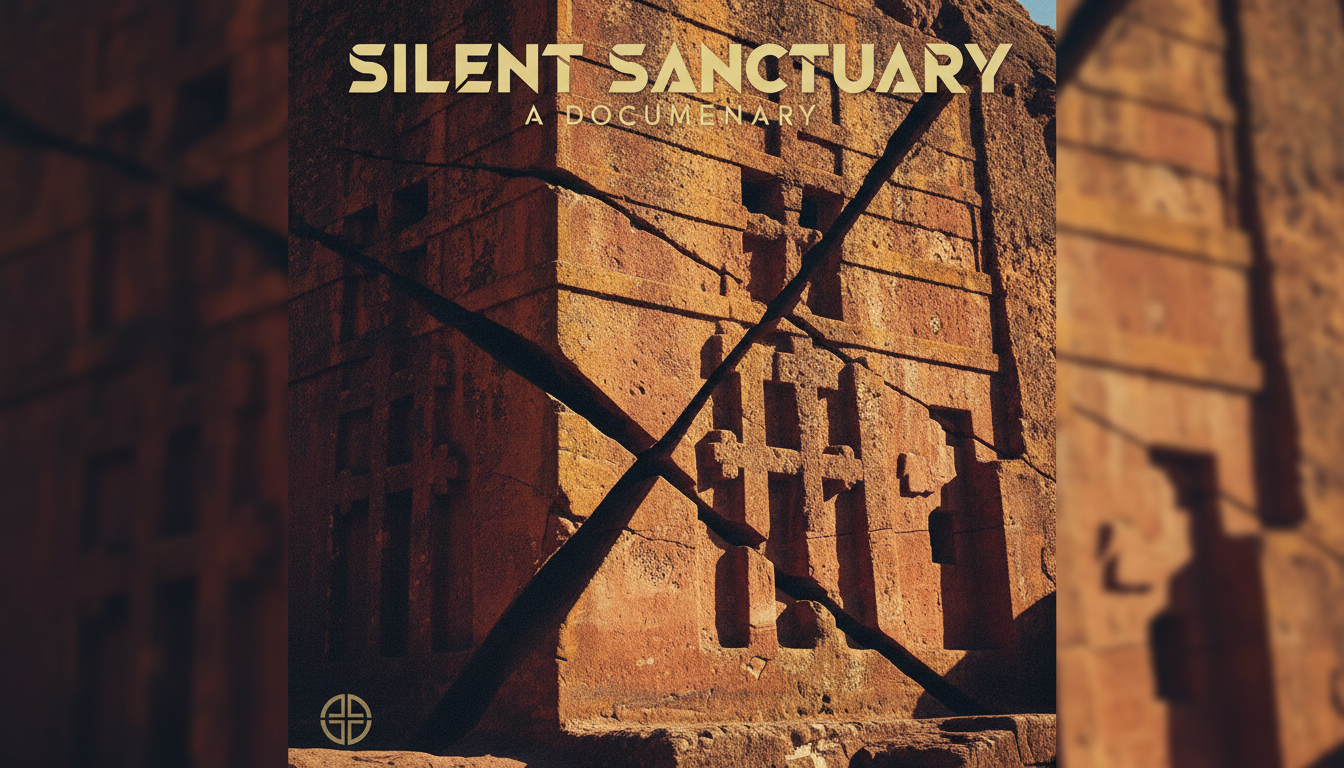
In the Ethiopian Highlands, the rock-hewn churches of Lalibela form a living sacred landscape: monolithic and semi-monolithic churches cut from volcanic scoria and basalt, still used by Ethiopian Orthodox Christians for liturgy and pilgrimage. UNESCO inscribed the Rock-Hewn Churches, Lalibela, as World Heritage List 18, describing eleven churches in northern and southern clusters plus the isolated Biete Ghiorgis. Tradition ties the complex to King Lalibela in the late twelfth and early thirteenth centuries. Archaeology over the last fifteen years has asked a harder question of live rock: can cutting sequence, spoil heaps, and landscape geomorphology show multiple phases instead of a single legendary campaign? This file holds UNESCO custody and that stratigraphy research together. It does not promote Templar or crusader-builder folklore as fact.
UNESCO Sacred Landscape
The World Heritage brief presents Lalibela as an exceptional concentration of medieval rock-cut ecclesiastical architecture—a “New Jerusalem” topography with trenches, tunnels, and courtyards organizing movement between churches. Integrity and authenticity language worries about water infiltration, seismic risk, visitor pressure, and protective shelters that change sightlines. UNESCO’s Lalibela activities hub tracks conservation and interpretation work. Those are heritage-management doors. They already refuse the idea that the site is an abandoned puzzle waiting for European military orders to explain it.
UNESCO List 18: https://whc.unesco.org/en/list/18/.
UNESCO activities hub: https://whc.unesco.org/en/activities/160/.
Faith practice is not a problem for documentation. Priests, pilgrims, and festivals are why the churches remain a sacred landscape rather than a fossil empty set. Legend that angels helped the king cut the churches overnight belongs to living tradition. It is not a field report. The Archive’s job is to keep both the tradition’s cultural force and the archaeologist’s phasing tools visible without collapsing one into the other.
Why Live Rock Needs Special Stratigraphy
Conventional tells stack floors. Rock-cut monuments erase earlier volumes as they enlarge voids. François-Xavier Fauvelle, Laurent Bruxelles, Romain Mensan, Claire Bosc-Tiessé, Marie-Laure Derat, Emmanuel Fritsch, and colleagues therefore read “rock-cut stratigraphy”: relationships among cuts and openings, identification of spoil heaps with internal layering, and geomorphological clues to sediments that once filled trenches. Their 2010 Antiquity article argued that Lalibela’s sequence is recoverable in the stone and the dumps even when early surfaces were destroyed by later finishing.
Antiquity 2010: https://www.cambridge.org/core/journals/antiquity/article/abs/rockcut-stratigraphy-sequencing-the-lalibela-churches/B53C45E7808B62840E6C5BF3F6380B88.
DOI 10.1017/S0003598X00067132: https://doi.org/10.1017/S0003598X00067132.
Method talk sounds dry until you stand in a courtyard that was once a quarry pit. Spoil is not trash only; it is a clock. Where dumps show distinct cutting pulses, single-reign instantaneity becomes harder to defend as the whole story. Where architectural taphonomy shows reuse—chambers adjusted, doors shifted, hypogea refashioned—the landscape looks like a long workshop of sacred space.
Multi-Phase Landscape Results
The team’s later landscape synthesis—The Lalibela Rock Hewn Site and its Landscape in Journal of African Archaeology (2014), openly deposited on HAL—reports campaigns from 2009 through part of 2012. Geomorphology of the scoriaceous basalt horizon, spoil stratigraphy, topographic and taphonomic reading of monuments, and work in the Qedemt cemetery together support formation across multiple phases, with occupation and transformation spanning many centuries rather than a one-season miracle. Some structures may begin as fortifications, dwellings, or other hypogean forms before finishing as churches. That does not delete King Lalibela from history; it situates his reign inside a longer highland practice of carving and Christianizing rock.
HAL landing: https://shs.hal.science/halshs-01508883.
HAL PDF: https://shs.hal.science/halshs-01508883/document.
Subsequent articles on troglodytism and neighboring cave churches (including Washa Mika’el discussions) extend the same grammar: Christianisation of the Highlands worked with earlier rock-cut habits, not against a blank cliff. Continuity of sculpted decor under new religious programs is an archaeological argument about local agency. It is the opposite of importing medieval European knights as ghost architects.
Geological constraint is part of the story. Churches concentrate in a softer scoriaceous basalt horizon tens of meters thick; harder basalts above and below channel where carvers could work. Fracture systems—natural and anthropic—organize collapses and later consolidations. Conservation science on stone decay therefore sits beside liturgical continuity: water, salts, and tourism wear are management facts, not clues that foreigners secretly cut the monuments and fled.
Folklore Foils That Fail the Stone
Templar and Knights of / crusader-builder tales circulate in tourist folklore and speculative publishing. They thrive on wonder at monolithic churches and on under-reading Ethiopian dynastic and ecclesiastical sources. UNESCO paperwork and the French–Ethiopian research program do not cite Templar payrolls. Angelic overnight cutting remains a hagiographic motif, not a chronometric result. Both foils fail the same test: they replace highland labor, royal patronage, and multi-generational cutting with an imported or supernatural contractor. Spoil heaps and cut abutments are poorer television and better evidence. Documented wonder does not need that replacement.
What Documented Settles
Settled for documentary purposes: Lalibela’s rock-hewn churches are a UNESCO World Heritage sacred landscape still in Orthodox use; peer-reviewed rock-cut stratigraphy and landscape archaeology argue for multi-phase cutting and long occupation rather than legend-only instantaneity; Ethiopian agency and highland troglodytic practice frame the Christian monuments. Still open as normal research: exact calendars for each church’s major pulses; how far pre-church hypogea extend; conservation balances under tourism. Those open questions do not authorize Templar baptism or the erasure of living liturgy. Conservation shelters, drainage repairs, and visitor routes will keep changing the photogenic skyline; those changes are heritage maintenance, not proof of a hidden European blueprint. Lalibela is stratified sacred rock—read with UNESCO and HAL/Antiquity doors open, and with crusader fanfic left outside the trenches.