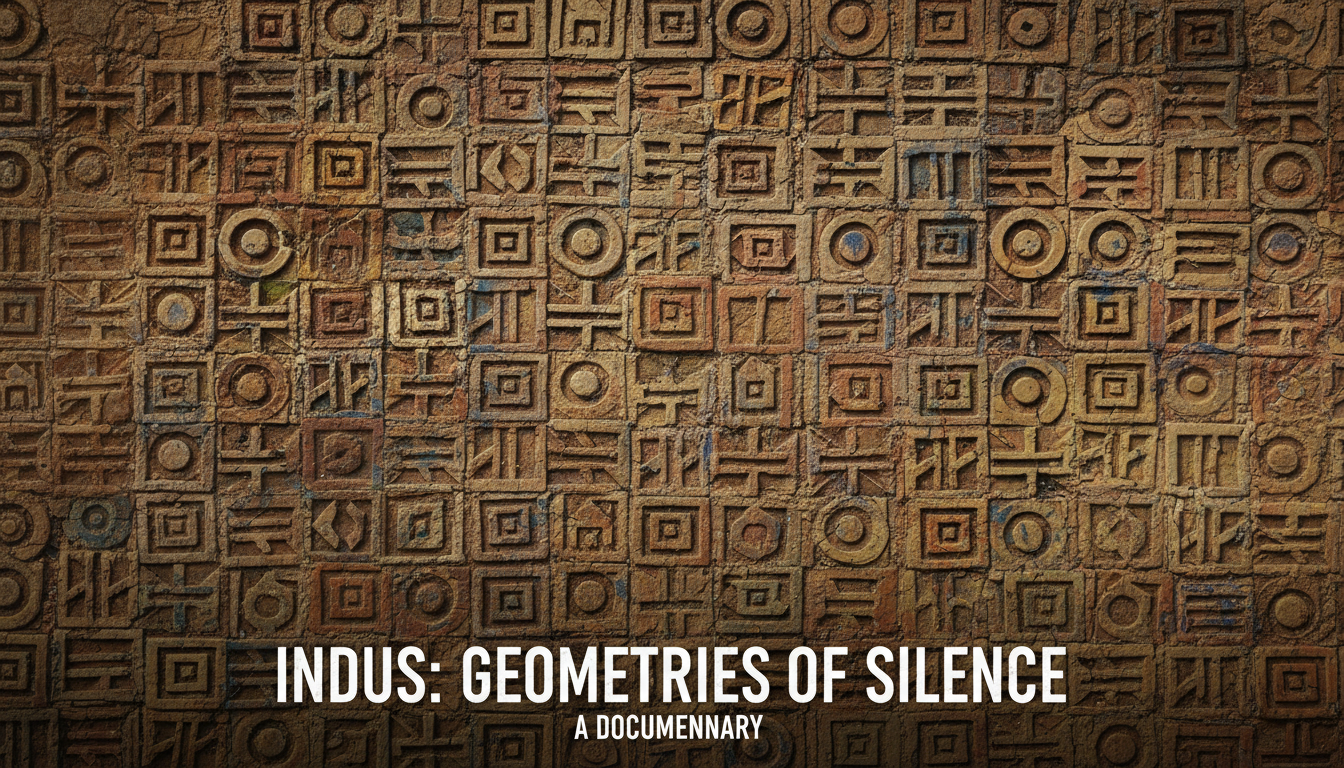
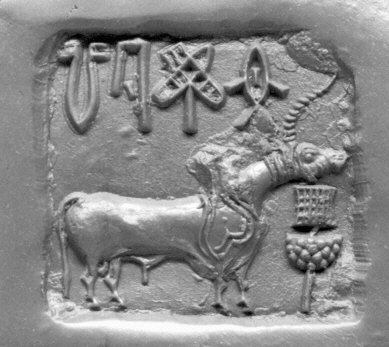
The Indus, or Harappan, script is the still-undeciphered writing system of South Asia’s Bronze Age urban civilization, known chiefly from short inscriptions on steatite stamp seals, sealings, pottery, and a few longer tablet-like surfaces. Sign inventories run into the hundreds; many texts are brief, often a handful of signs, which starves decipherment of the grammatical leverage bilingual monuments once gave Egyptian and Mesopotamian scripts. UNESCO World Heritage listings for Moenjodaro and Dholavira, together with the tentative listing for Harappa and the National Museum’s Harappan gallery in New Delhi, fix the archaeological and museum doors. Computational papers test whether the sign sequences behave like language. None of that equals a finished lexicon. This file holds the undeciphered corpus and its findspots. It is not a civilization-collapse mystery, not Atlantis, and not an alien caption pasted onto a bull seal.
Seals, Sites, Museum Cases
Moenjodaro on the Indus in Sindh remains the emblematic excavated metropolis: planned streets, drains, baked-brick architecture, and a deep harvest of seals from early twentieth-century campaigns onward. UNESCO List 138 frames it as exceptional testimony to Indus urbanism. Dholavira in Gujarat, inscribed as List 1645, extends the same cultural horizon into a second World Heritage city with reservoirs, inscriptional finds, and a civic plan that refuses any claim the Harappans were a footnote. Harappa, the type-site that named the culture in older literature, sits on Pakistan’s UNESCO Tentative List (1878). Those three doors are about cities and custody, not about a solved dictionary.
UNESCO Moenjodaro: https://whc.unesco.org/en/list/138/.
UNESCO Dholavira: https://whc.unesco.org/en/list/1645/.
UNESCO Harappa tentative: https://whc.unesco.org/en/tentativelists/1878/.
The National Museum in New Delhi opens its ground-floor Harappan gallery with objects from Harappa, Mohenjo-daro, Dholavira, Kalibangan, Lothal, Rakhigarhi, and related centres. Seals—including famous animal and “proto-Śiva”/Pashupati-type pieces in public imagination—live in that interpretive space as excavated artifacts, not as tourist riddles detached from inventory numbers. Living-institution care means citing museum and excavation labels when publishing claims. The Archaeological Survey of India and Pakistani provincial archaeology departments remain the field authorities behind the corpora that Asko Parpola and collaborators photographed for the Corpus of Indus Seals and Inscriptions. Print CISI volumes and museum cases are still how serious readers check a sign drawing against an object.
National Museum Harappan gallery: https://nationalmuseumindia.gov.in/en/harappan-civilization.
Why Undeciphered Stays Honest
Short text length is the structural problem. Without a bilingual, without long continuous prose, phonetic proposals lean on statistical sign order, supposed rebus readings, and external language-family hypotheses—Proto-Dravidian in Parpola’s Cambridge monograph tradition among them. Peer review doors such as the BSOAS notice of Deciphering the Indus Script record that scholarly project without converting a hypothesis into a cracked code. Amateur announcements that “solve” the Indus script every few years rarely survive signary and findspot checks. Atlantis, Lemuria, or extraterrestrial “seed language” baptisms add mythology where epigraphy needs more long texts and better constraints.
Cambridge BSOAS Parpola review door: https://www.cambridge.org/core/journals/bulletin-of-the-school-of-oriental-and-african-studies/article/abs/asko-parpola-deciphering-the-indus-script-xxii-374-pp-cambridge-etc-cambridge-university-press-1994-60-95/2A4A18C07C1A0936BE2945DBD8A28655.
In 2009, Rajesh Rao and co-authors argued in Science that conditional entropy in Indus inscriptions patterns more like linguistic systems than like non-linguistic symbol sets. That paper is a statistical claim about structure, not a translation key. Critics continue to dispute whether such measures can settle the language question. Holding both the paper and the dispute is normal science. Treating Rao 2009 as a Rosetta stone is not.
Science Rao et al. 2009: https://www.science.org/doi/10.1126/science.1170391.
Administrative honesty is partly available now: recurrent “merchandise” and animal motifs on seals, standardized stamp formats, right-to-left tendencies noted across the corpus. Linguistic closure is not. The same distinction Linear A readers already know applies here—counts and formats can speak before grammar does.
Not the Civilization’s Disappearance
Popular packaging often smears the undeciphered script into a single myth that the Indus cities “vanished” or were never a real civilization until outsiders explained them. Excavated urbanism at Moenjodaro, Dholavira, and Harappa already answers the second smear. Settlement reorganization after the Mature Harappan peak—shifts in river courses, drying, trade reorientation—is a separate archaeological debate with its own radiocarbon and survey literature. It does not require a cracked seal text to be studied, and a cracked seal text would not automatically narrate a cataclysm. Binding “undeciphered” to “disappeared into mystery” is a tabloid hinge this file cuts. The script problem is epigraphic. The city problem is geoarchaeological and chronological. Keep them adjacent, not identical.
Wonder at the animal seals is allowed. Wonder that needs aliens, lost white kingdoms, or a weekend decipherment press release is not. The file holds UNESCO urban doors and the National Museum gallery in one frame with the honest undeciphered status of the short texts.
What Documented Settles
Settled for documentary purposes: the Indus script is a Bronze Age Harappan writing system attested mainly on seals and related objects; it remains without scholarly consensus decipherment; Moenjodaro and Dholavira are UNESCO-listed Indus cities and Harappa is on the Tentative List; the National Museum Harappan gallery is a primary public custody door; Rao 2009 and the Parpola scholarly tradition are peer-visible efforts, not finished cracks. Still open as normal epigraphy: language family; full phonetic values; whether a future bilingual or longer archive could break the stalemate. Those open questions do not authorize Atlantis linguistics, alien seal-makers, or collapse-as-disappearance folklore, and they do not demote careful corpus work that stops short of a lexicon. The Indus script is documented undeciphered administration and sealing practice—read with UNESCO, National Museum, Science, and Cambridge doors open, and with cracked-script folklore left outside the magazine rooms.