Operation Gladio
In October 1990, Italian politics detonated a word: Gladio. Prime Minister Giulio Andreotti confirmed that a secret stay-behind network—trained and cached for the nightmare of Soviet occupation—had existed on Italian soil under NATO-era logic. Parliament opened inquiries. European papers ran maps of sister networks from Belgium to Turkey.
Stay-Behind, Not Superhero League
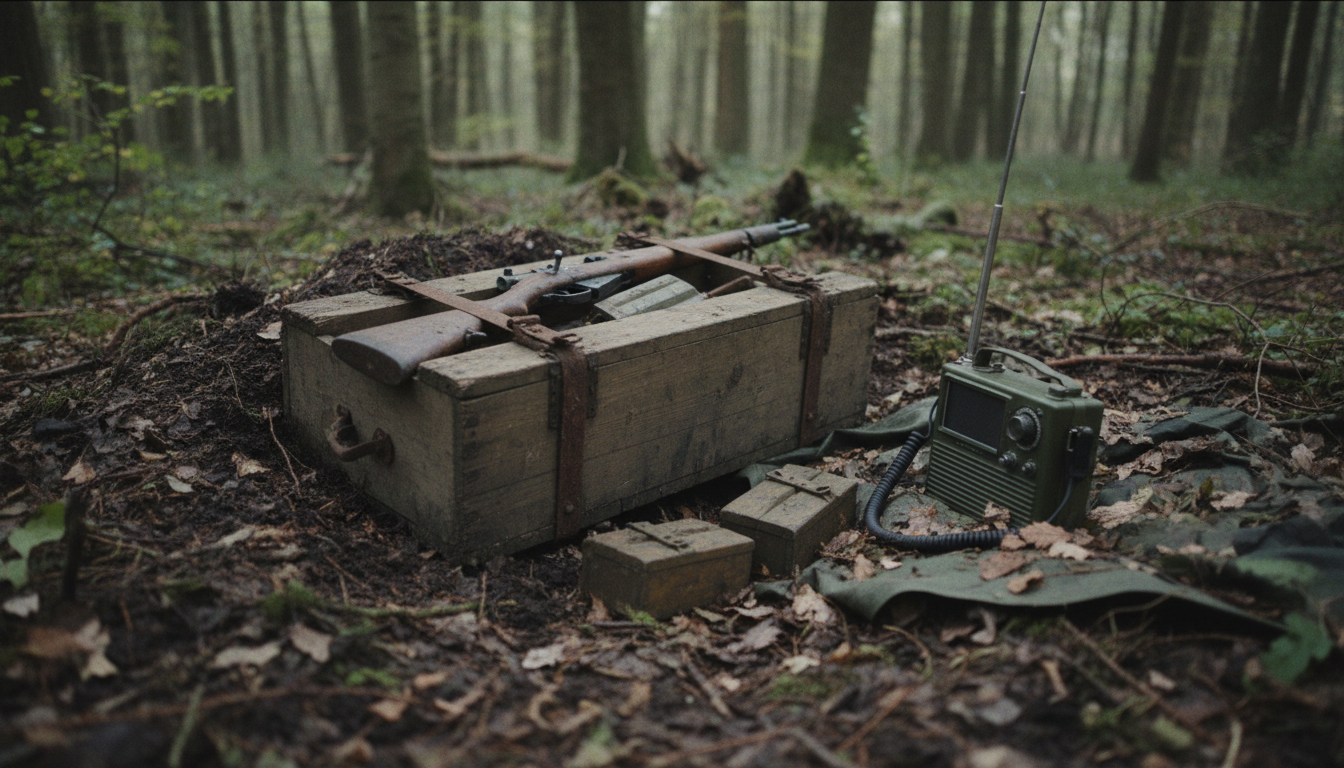
The core mission on paper was grimly conventional for Cold War planners. If Warsaw Pact tanks rolled west, pre-organized clandestine cells would run guerrilla resistance, sabotage, and intelligence. Arms caches were buried. Recruits were vetted through intelligence channels. National services held the strings more than a comic-book "NATO assassination bureau," though coordination and Allied knowledge are part of the historical argument.
Italy’s brand name became the international shorthand. Other countries used other labels. The pattern—not a single bureaucratic letterhead—is the scholarly consensus object.
Years of Lead, Harder Questions
Where Gladio leaves consensus and enters blood is the Italian terrorism file. Bombings that killed civilians during the Years of Lead generated decades of trials, pentiti testimony, and competing narratives: anarchist false trails, neofascist perpetrators, and alleged protection or manipulation by elements of the security state. Some investigators and members of parliament argued stay-behind structures or adjacent parallel networks intersected those crimes. Courts and historians do not speak with one voice on every attack.
Archive discipline here is mandatory. Existence of stay-behind is established by official acknowledgment and European inquiry. Attribution of each massacre to Gladio command is a separate claim requiring case-level proof. Conflating the two is how documentary history becomes cartoon.
Allied Context
Paperclip-era talent pipelines, Northwoods-style contingency brainstorming in U.S. files, and Gulf of Tonkin-style incident politics elsewhere in the Archive show how Cold War states normalized secret violence planning. Gladio is the European territorial version of that normalization: not a false-flag meme by default, but a clandestine military-intelligence infrastructure that lived long enough to outlast its original occupation scenario.
After the Acknowledgments
Post-1990 European politics treated Gladio as scandal and as history lesson about democratic control of secret armies. Declassified fragments, parliamentary reports, and serious secondary histories (as opposed to maximal internet timelines) are the usable sources. Readers should expect redactions, national variance, and unfinished courtroom stories. They should not expect the 1990 acknowledgments to have been a hoax. The networks were real. The fight is over what else they touched.
Across Borders, Uneven Archives
Belgium's stay-behind controversies, France's debates, Turkey's deep-state arguments, and Germany's fragmentary files show Gladio-as-pattern rather than Gladio-as-single-office. National democracies declassified at different speeds. Some archives remain stubborn.
False-flag tagging is tempting and dangerous. Northwoods shows U.S. planners could brainstorm deceptive casus belli on paper. Gladio's confirmed mission was occupation resistance. Bridging those with a universal "NATO bombs itself" thesis requires case evidence, not aesthetic similarity.
Paperclip's personnel pipelines and Gladio's later European networks occupy related Cold War moral territory—instrumentalizing secrecy against communism—without being the same program.