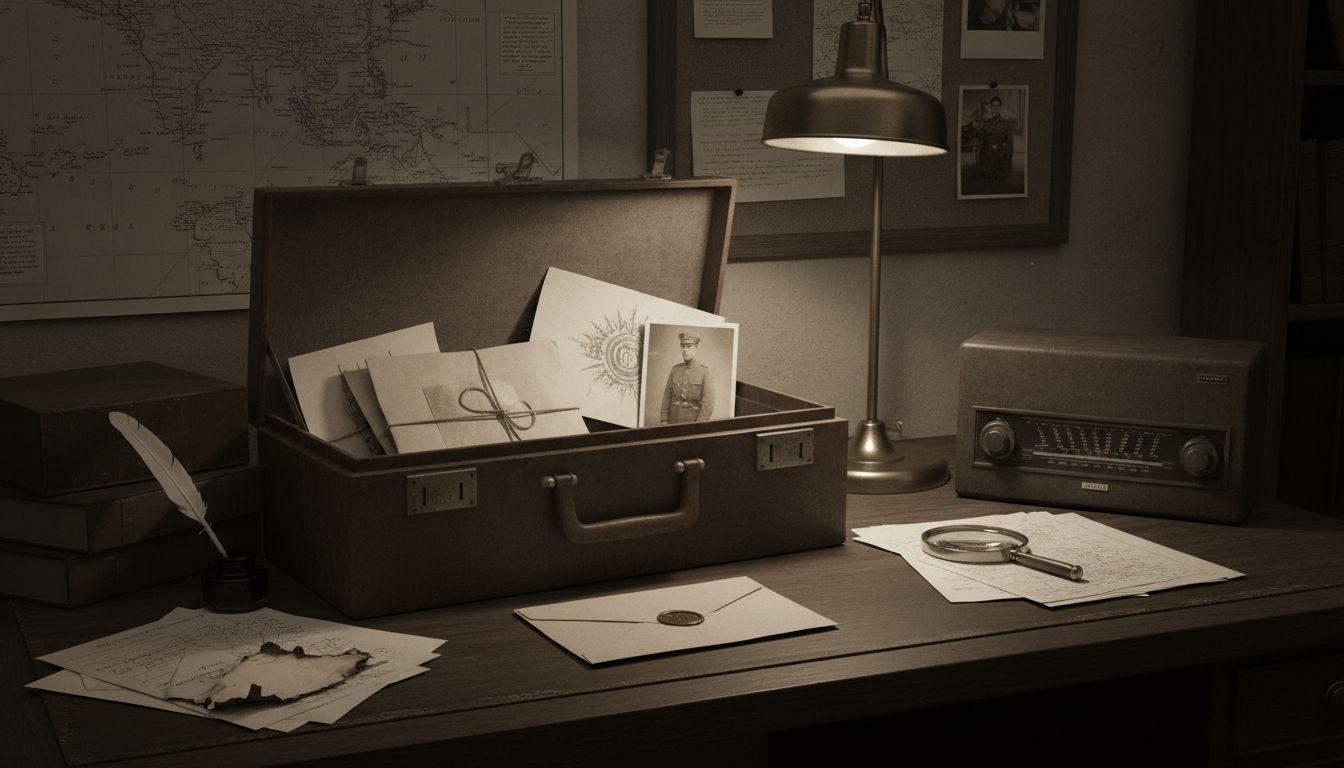
Operation Mincemeat
In April 1943, Spanish authorities recovered a body from the sea. On the body were papers identifying a British officer and letters hinting that the Allies would strike Greece and Sardinia—not Sicily. German analysts believed enough of the story to shift defensive weight. The corpse had been a weapon. The British called the play Operation Mincemeat.
A Dead Man's Briefcase
Naval Intelligence and the Twenty Committee needed the Axis to misread Husky, the Sicily invasion. They built an identity, planted theater-misdirection documents, and arranged for the body to wash where Spanish channels would leak to German ones. Ewen Montagu and Charles Cholmondeley's planning reads, in the files, like macabre stagecraft with staff-officer discipline.
It worked well enough to matter. Sicily still bled. But German attention had been tugged toward the wrong coasts. That is the documentary claim, supported by Ultra decrypts and postwar analysis—not by vibes.
Archives Without Romance
UK National Archives releases and Imperial War Museums explainers have made Mincemeat unusually public for a deception op. Books and films followed. Popular retellings sometimes sand off uncertainties about exactly how much the fake letters moved which German units. The core remains intact: intentional deception via forged strategic documents on a corpse, accepted by the enemy.
Why It Sits in a Conspiracy Archive
Mincemeat is not a claim that your government is lying to you about chemtrails. It is proof that modern states have professionalized strategic lying toward adversaries—and that such lying can be meticulously documented when the war is over and the files open. Northwoods shows proposed deception against domestic perception for casus belli. Nayirah shows wartime atrocity PR. Mockingbird debates concern media influence. Mincemeat is the cleanest "yes, deception operations are real" exhibit because the victors eventually showed their work.
Closing the File
Believe Mincemeat. Cite the archives. Do not use it as a universal decoder ring for every headline. Successful wartime ruses prove capability. They do not automatically prove any particular peacetime theory.
Deception Ethics in Total War
Mincemeat's cheerfulness in museum gift shops can obscure the corpse at the center. Using a dead man's body as a courier was not a video-game invent. It was wartime instrumentalism. That does not make it "the same" as peacetime false flags aimed at one's own public. Ethical taxonomy matters.