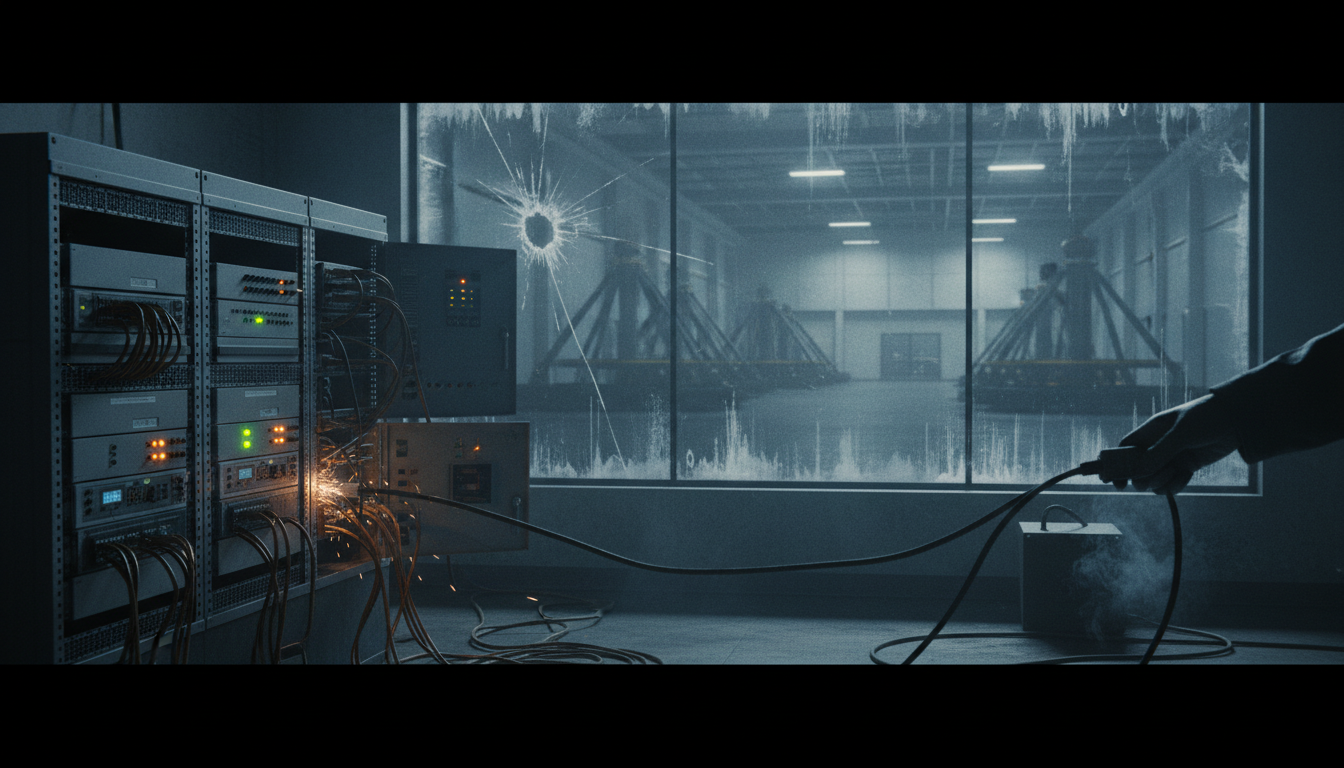
Stuxnet
In 2010 malware analysts chased a Windows worm that did something rude and rare: it understood industrial controllers well enough to ruin uranium centrifuges while lying to the humans watching the gauges. Researchers named it Stuxnet. Facility whispers pointed at Natanz. Geopolitics pointed at a joint U.S.–Israeli hand.
Code That Breaks Steel
Technical papers—especially Ralph Langner's reconstructions—show a payload tuned for Siemens engineering software and frequency-converter behavior. The worm spread widely as collateral, but its assassination target was enrichment hardware. That specificity is why analysts called it a guided munition made of packets.
Antivirus firms and ICS security advisories catalogued infection paths via removable media and engineering laptops—air gaps as aspiration, not magic.
Attribution Without a Press Conference
David Sanger's New York Times reporting described "Olympic Games," a cyber campaign authorized across administrations, with Stuxnet as the public face. Officials practiced calibrated silence. In cyber attribution, that pattern is common: journalists, unique engineering tells, and strategic interests align long before a president reads a victory speech.
Ajax, elsewhere in the Archive, removed an Iranian prime minister with 1953 tools. Stuxnet tried to remove centrifuge capacity with 21st-century tools. Continuity of adversarial imagination is not identical to continuity of task force letterhead.
What Stuxnet Is Not
It is not proof that every power outage is a nation-state Easter egg. It is not a blockchain legend. It is a peer-studied sabotage platform that demonstrated cyber-physical war is real.
Floor of the Record
Malware existed; centrifuges were the logical target; major journalism and technical consensus point to U.S./Israeli authorship; Tehran and industrial-security communities behaved accordingly. Readers who need signed presidential confetti will wait. Readers who need engineering and investigative convergence already have it.
Collateral Spread
Stuxnet infected machines far from Natanz because USB tradecraft is messy. That collateral became part of the public discovery story. Cyber weapons do not stay on battlefields. Industrial defenders still teach Stuxnet as the case that ended complacency about "air gaps."