
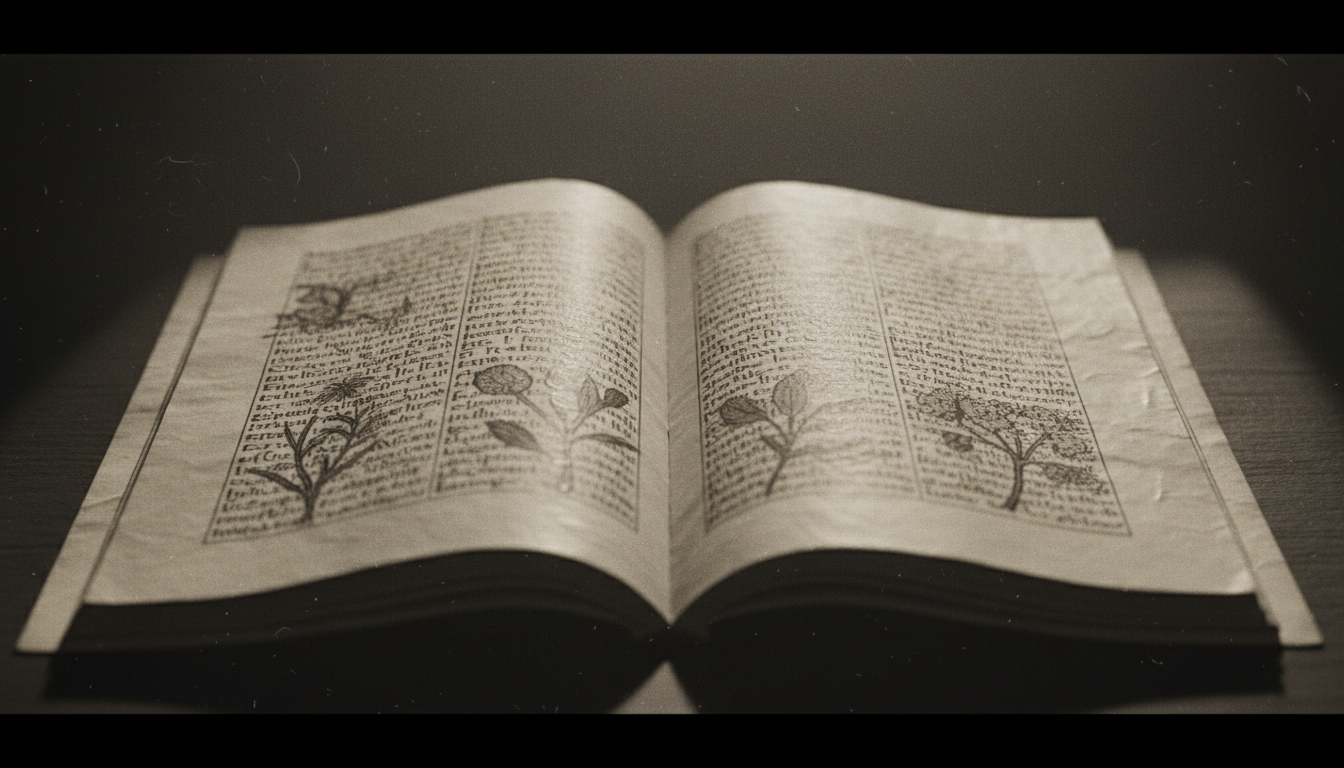
The Voynich Manuscript
In 1912, rare-book dealer Wilfrid Voynich acquired an illustrated manuscript written in an unknown script. Plants that match no clean taxonomy, naked figures in tubs, and zodiac-like rounds fill the pages. Carbon dating puts the parchment in the early fifteenth century. A clean decipherment has not arrived.
Object, Not Myth
The Voynich manuscript is a physical codex at Yale's Beinecke Library with public digital facsimiles. Hoax-versus-cipher debates concern content, not whether the book exists.
Statistical Rabbit Holes
Researchers have tested entropy, word structure, and language family guesses. Some results look language-like; none has produced a widely accepted translation. AI-era claims should be read against replication.
Healthy Skepticism
Extraordinary translation announcements arrive often. Demand letter-by-letter solutions that other specialists can check. Until then, the manuscript remains an open problem with a solid physical biography.
Voynich is a dated fifteenth-century parchment codex with unresolved script. The mystery is linguistic and historical—not a question of the object's reality.
Yale Beinecke’s object page is at https://beinecke.library.yale.edu/collections/highlights/voynich-manuscript; preprint statistical work clusters on https://arxiv.org/.
Beinecke custody and imaging settle the object’s existence and provenance chain; ciphertext statistics still do not yield a consensus plaintext.