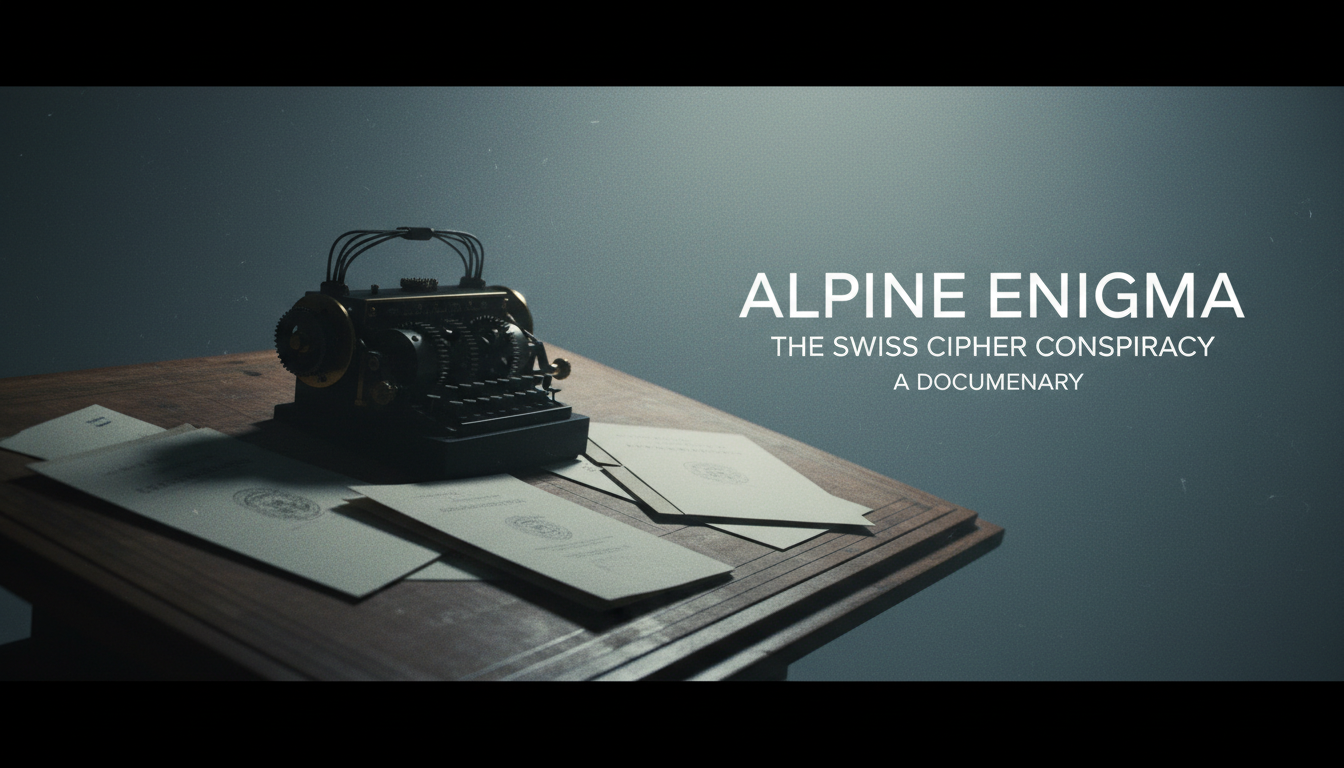
Operation RUBICON / Crypto AG
For decades Crypto AG sold cipher machines from Steinhausen and Zug under a Cold War reputation as a neutral Swiss commercial vendor. Governments in more than a hundred countries bought the gear. Official posture was commercial neutrality and ordinary Swiss export control. Declassified NSA Friedman papers, National Security Archive FOIA cables on Condor-era communications, and the Swiss parliamentary GPDel inspection report put a different paper trail on the table: CIA and West German BND secretly owned and influenced the company (CIA cryptonym Minerva; operations Thesaurus then Rubicon), sold weakened machines worldwide, and Swiss intelligence knew enough by 1993 that GPDel later assigned political co-responsibility. Stick to that acknowledgment trail—not a single press scoop as the sole spine.
The Company
Crypto AG grew from the Hagelin lineage into a global vendor of cipher machines marketed as trusted Swiss crypto. Cold War buyers treated Swiss commercial status as a feature. The product line included CX-52 and related Hagelin-family gear that later appears in U.S. intelligence reporting on Southern Cone communications. Caption-ready geography: Steinhausen/Zug, Condortel traffic, SECO export licenses.
Official Posture: Neutral Swiss Vendor
For decades the public line was commercial neutrality. Denials and silence held. Swiss export-control framing treated sales as ordinary Güterkontrolle until the 2019–2020 crisis forced parliamentary inspection. That framing is not invented. It is incomplete if "neutral vendor" erases secret intelligence ownership and engineered weakness the FOIA and GPDel packets now document.
What the Paperwork Shows
The National Security Archive briefing book "The CIA's 'Minerva' Secret" (11 February 2020) ties Crypto AG / Minerva / Rubicon revelations to FOIA'd U.S. documents on Condor communications and NSA–Hagelin contacts: https://nsarchive.gwu.edu/briefing-book/chile-cyber-vault-intelligence-southern-cone/2020-02-11/cias-minerva-secret. NSA's William F. Friedman draft report of a March 1955 visit to Crypto A.G. (Hagelin)—Document 6 in that posting, also reachable via NSA's Friedman Documents historical releases portal—anchors an early "gentlemen's understanding" with Hagelin: https://www.nsa.gov/Helpful-Links/NSA-FOIA/Declassification-Transparency-Initiatives/Historical-Releases/Friedman-Documents/.
Codename stack in the public acknowledgment trail: Thesaurus then Rubicon for the operation; Minerva for the company. Joint CIA/BND purchase around 1970; BND exit and CIA buyout around 1993; CIA ownership into the 2010s liquidation. Condor-era CIA reporting—for example cables on CX-52 / Hagelin gear used by Condor members—shows U.S. agencies watching traffic those Swiss-origin machines protected. Start from the NS Archive document list on the Minerva posting rather than inventing cable text.
The Swiss Parliament's Geschäftsprüfungsdelegation (GPDel) Crypto AG inspection report (adopted 2 November 2020; published 10 November 2020) is the official Swiss finding that SND/NDB knew foreign services stood behind Crypto AG from 1993, that political leadership was informed only in late 2019, and that political co-responsibility attaches for long-running export of weak devices: https://www.parlament.ch/centers/documents/de/bericht_gpdel_fall_crypto_d.pdf. Press release: https://www.parlament.ch/press-releases/Pages/mm-gpdel-2020-11-10.aspx?lang=1031. The Federal Council response of 26 May 2021 answers GPDel's twelve recommendations: https://www.parlament.ch/centers/documents/de/Stellungnahme-des-Bundesrates-vom-26-05-2021.pdf.
Washington Post / ZDF / SRF reporting in February 2020 forced the public reckoning by citing CIA and BND internal histories. Treat that journalism as secondary after GPDel and NS Archive FOIA doors—not as a substitute for them. Do not treat still-uncleared full CIA "Minerva A History" PDFs circulating online as settled Reading Room releases unless CIA posts them.
Why the Story Stayed Managed
Compartmented ownership and Swiss commercial cover kept the arrangement off ordinary oversight tables for decades. Partial leaks—Agee; Bamford and Friedman papers; the 1990s Buehler Iran detention; 1995 Baltimore Sun "Rigging the Game"—never forced full acknowledgment. Only the 2020 press break plus GPDel inspection put co-knowledge and co-responsibility into official Swiss language. The managed story is not "Crypto AG never existed." It is how long a trusted cipher vendor remained a secret intelligence cutout while buyers thought they were purchasing neutrality.
Oversight Siblings
GPDel's co-responsibility finding and SECO export-license fallout are the Swiss oversight family. Operation Condor communications and NSA cryptologic history sit in the same SIGINT-supply-chain neighborhood. Neighbor those packets as shared architecture. Do not collapse every Swiss firm into a cutout, and do not treat Condor cables as proof that every Crypto customer was a Condor state.
Inside Swiss oversight the fight after 2020 was never only "did foreign services own the firm." GPDel asked who knew, when political leadership learned, and what export-control practice allowed weak devices to leave the country for decades. The Federal Council reply answers recommendations without erasing the co-responsibility finding. SECO license disputes and calls for fuller CIA Minerva declassification sit in that same accountability lane. Partial 1990s press—Baltimore Sun after Friedman FOIA crumbs—matters as secondary chronology; it did not produce GPDel-grade official findings. The durable doors remain the Minerva briefing book, the Friedman portal, Condor cables, and the November 2020 parliamentary PDF.
Myth Discipline
Stick to official acknowledgments and the FOIA trail: GPDel, Friedman, Condor cables, NS Archive. Comic "CIA invented all encryption" claims sit outside the acknowledgments and the FOIA trail. Soviet and PRC customers are not in the standard Crypto AG account. The packets do not make Switzerland a knowing co-conspirator for the entire 1970–1993 period without GPDel's 1993-forward finding, and they do not show that every cryptographic product worldwide was backdoored.
What the Paper Trail Settles
Settled on the documents: early NSA–Hagelin contact (Friedman 1955); CIA/BND secret ownership from about 1970 with CIA buyout about 1993; Condor-era U.S. reporting on Crypto gear in Southern Cone networks; Swiss GPDel finding of intelligence knowledge from 1993 and political co-responsibility; Federal Council reply May 2021. Overclaim to refuse: press-only history that skips GPDel, and folklore that every cipher sold anywhere was a Minerva product.
The tension that remains is the one Bern and the FOIA doors now admit. Officials sold neutrality. The paperwork shows ownership, engineered weakness, and late political reckoning. RUBICON is that ownership—read beside Condor communications and NSA cryptologic history, with GPDel and the Minerva briefing book open.