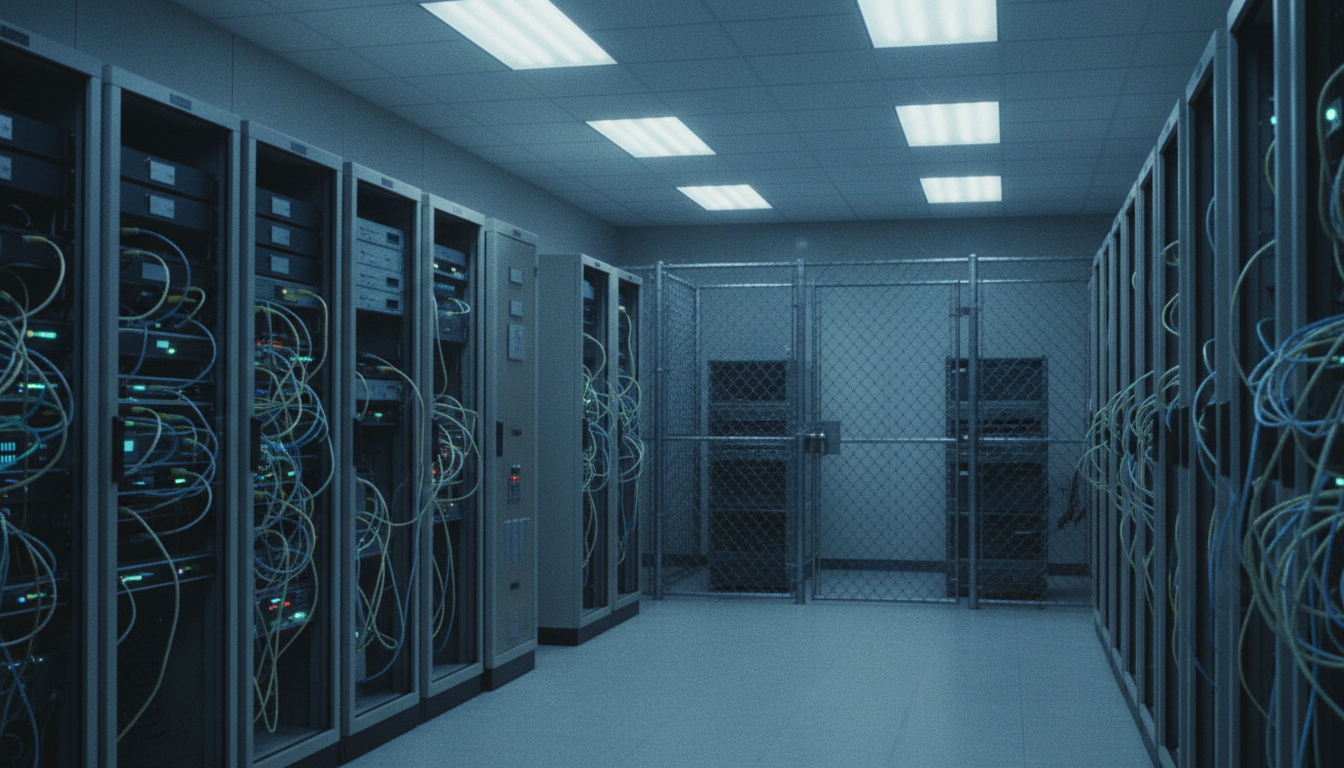
Room 641A
Mark Klein worked for AT&T. In 2006 he walked into public view with a declaration: inside the Folsom Street switching center in San Francisco, a locked room—641A—held equipment fed by a splitter on fiber circuits, shunting copies of traffic toward hardware he associated with the National Security Agency.
Diagrams circulated. Wired published. Lawyers at the Electronic Frontier Foundation filed suit.
Splitters Beat Slogans
Before Snowden's cloud-portal vocabulary, Room 641A gave Americans a concrete image: a room, a cabinet, a tee in the glass. Wholesale transit surveillance looked like plumbing. Klein named the fittings.
AT&T and the government contested legal theories, standing, and state-secrets privileges. Congress later layered immunity regimes that frustrated some suits. The physical claim Klein made—that a splitter room existed and diverted traffic—entered journalism and oversight debate as a rare employee-eye description.
Beside PRISM and ECHELON
PRISM entries describe front-door collection from platform providers under court orders and directives. ECHELON debates map alliance satellite and cable dictionaries. Room 641A is the domestic backbone splice. Acoustic undersea stories cover yet another medium. Together they sketch layered collection rather than a single cartoon switch.
What Klein Did Not Claim
He did not claim to have read every selector list or to have audited every legal authorization. Whistleblower testimony of this type is strongest on architecture and weakest on full program legal analysis. Archive readers should use him for plant topology, then read statutes, IG reports, and Snowden documents for authorities and scale.
Why the Room Still Matters
Because surveillance abstraction melts without objects. 641A remains one of the clearest objects: a numbered room in a telecom building where the public internet became a government copy. That is the documentary gift of Klein's declaration, whatever courts later did with remedies.
Physical Plant Versus Cloud Portal
Room 641A is a reminder that dragnets need real estate. Snowden-era slides made collection look like menus. Klein made it look like a locked door in a switching center. Read both aesthetics; they describe layers of one system.